A party game is designed for the room rather than for the individual. It seats several people in front of one screen or drops them into one lobby at the same time, hands them rules that can be explained in the time it takes to pass out the controllers, and settles each round in minutes, so the loser wants another go before the winner has had time to get comfortable. Everything else follows from that purpose: simple inputs a first-timer can manage against a veteran, scoring that resets often enough for a newcomer to catch up, and a tolerance for chaos that makes a bad turn as entertaining as a good one. Mario Party set the template most people picture, a board game with minigames between the dice rolls, and the form has since spread through the obstacle-course elimination rounds of Fall Guys, the frantic shared kitchens of Overcooked and the phone-in trivia and drawing rounds of The Jackbox Party Pack. What ties them together is not a setting or a mechanic but an intention: a game that exists to be played by a group, right now, with no homework.
That intention is what separates this collection from its neighbors, several of which overlap with it. The closest is Party, which describes an atmosphere, the loud and sociable mood a game evokes, and a game can wear that mood without being built for a crowd. Party Game names the kind of game, the group-play design itself, and the two tags often sit on the same title without meaning the same thing. Family Friendly says who a game is suitable for, and plenty of party games are, but some are decidedly not. Casual measures how much a game asks of you in skill and commitment, which is a property any genre can have. Card Game, Board Game and Tabletop describe where a game's rules came from, and while UNO is both a card game and a party game, a solitaire deck-builder or a six-hour strategy board adaptation is not built for a crowd. Competitive covers stakes and skill ceilings, and Funny covers tone; party games are usually competitive in a low-stakes way and often funny, but neither tag implies the group-play shape. Shared-screen and online multiplayer, finally, are features rather than genres, and you will find them among the feature filters: they tell you how players connect, not what the game was designed to be, and a cooperative shooter campaign carries them just as readily as a minigame collection does.
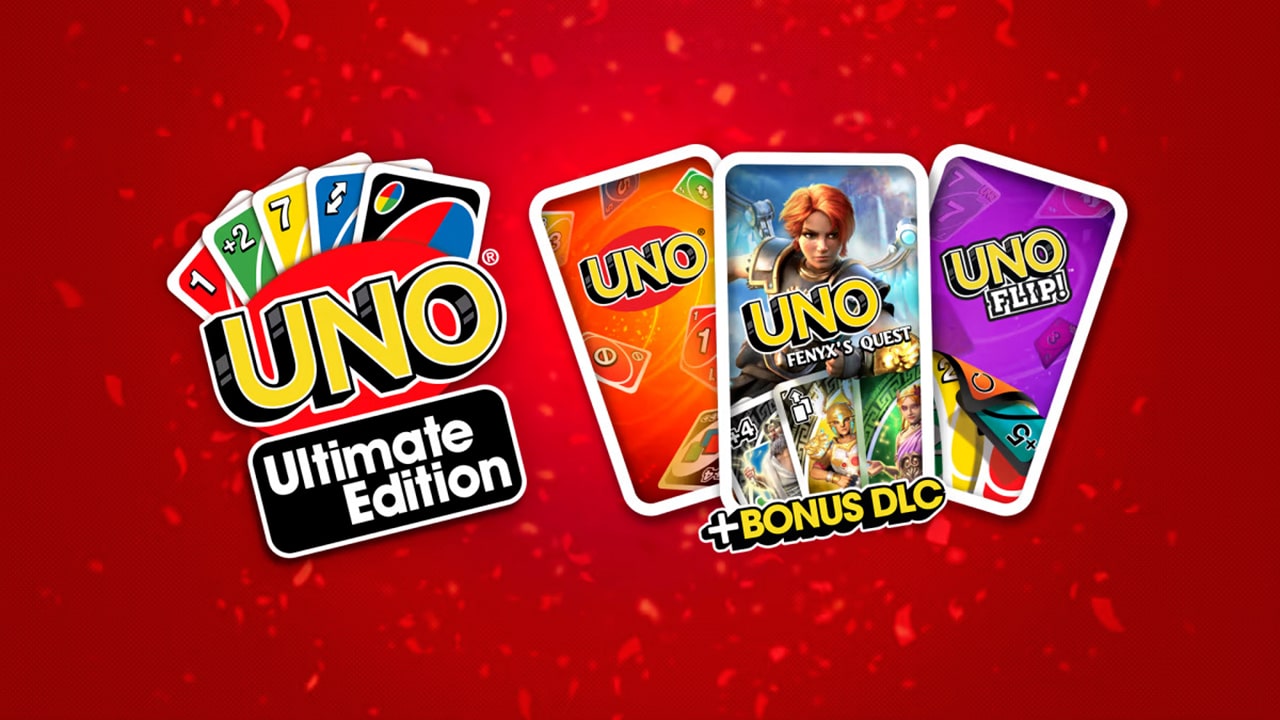
Two strands run through the shelf. The first is the game invented for the screen: minigame collections, cartoon brawlers, elimination rounds and drawing games whose rules exist nowhere else and whose whole point is the shared reaction. The second is the tabletop standard moved onto a screen, where the design was already proven around a kitchen table and the digital version's job is to keep the pace, deal the cards and let the players be in different cities. UNO Ultimate Edition opens the collection as an example of the second kind: Mattel's card game as Ubisoft built it, for up to four players online or gathered around one screen, with a 2v2 team mode for settling household rivalries and the UNO FLIP!, UNO Fenyx's Quest, Just Dance 2017 and Rayman theme packs that change the deck and the house rules. Whichever strand a title belongs to, the tag tells you the same thing: plan on company, expect the rules to take a minute and the round to take a few more, and bring someone who has never played, because they will be competitive by the second game.