

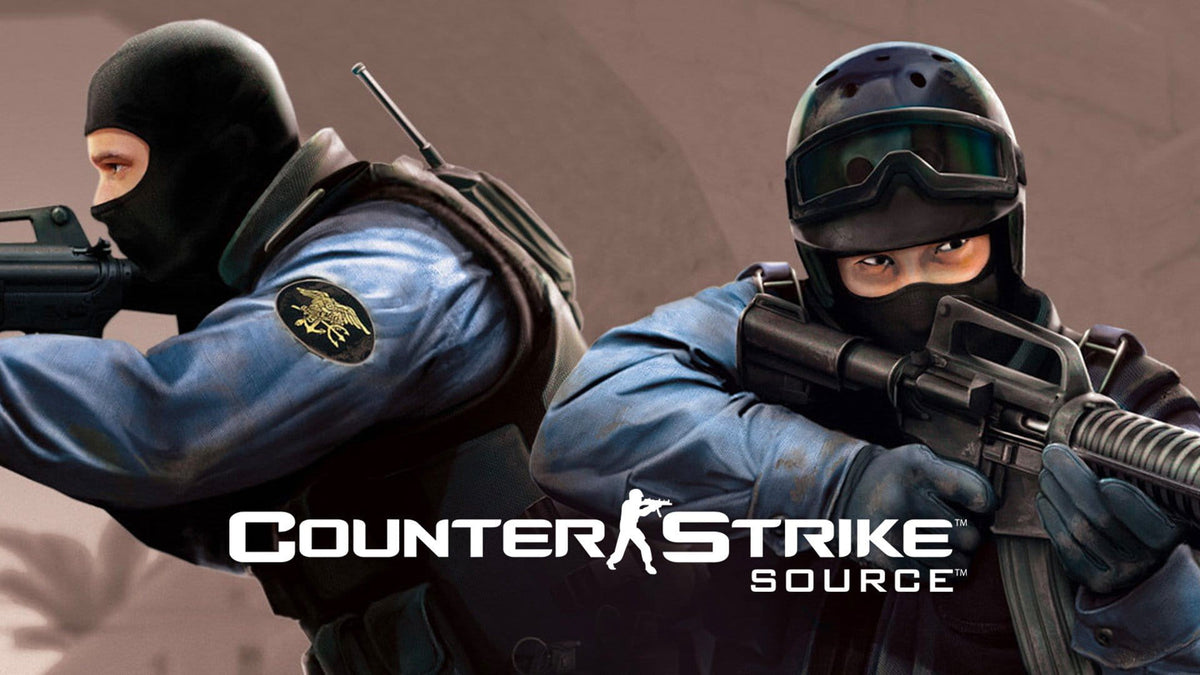
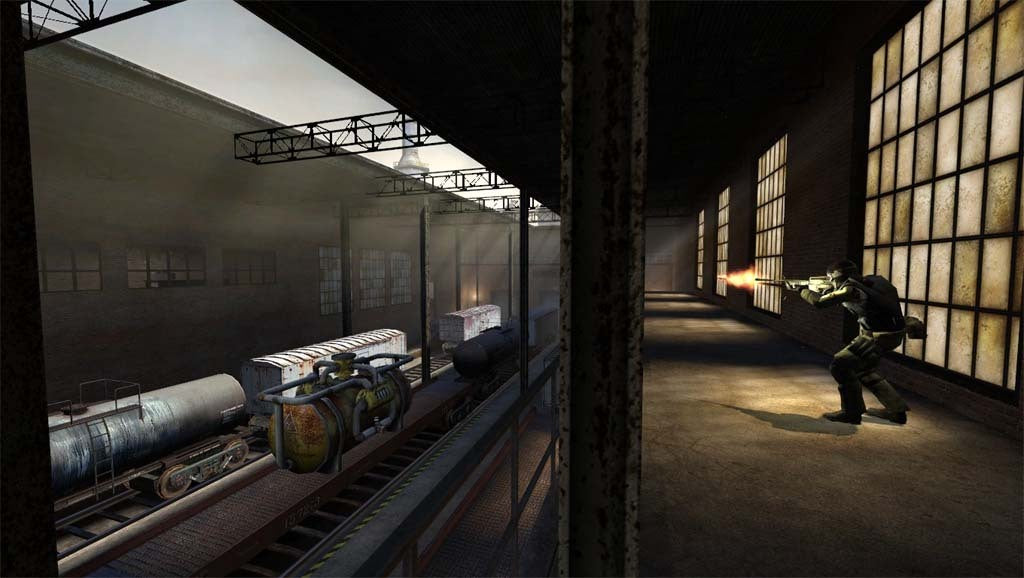
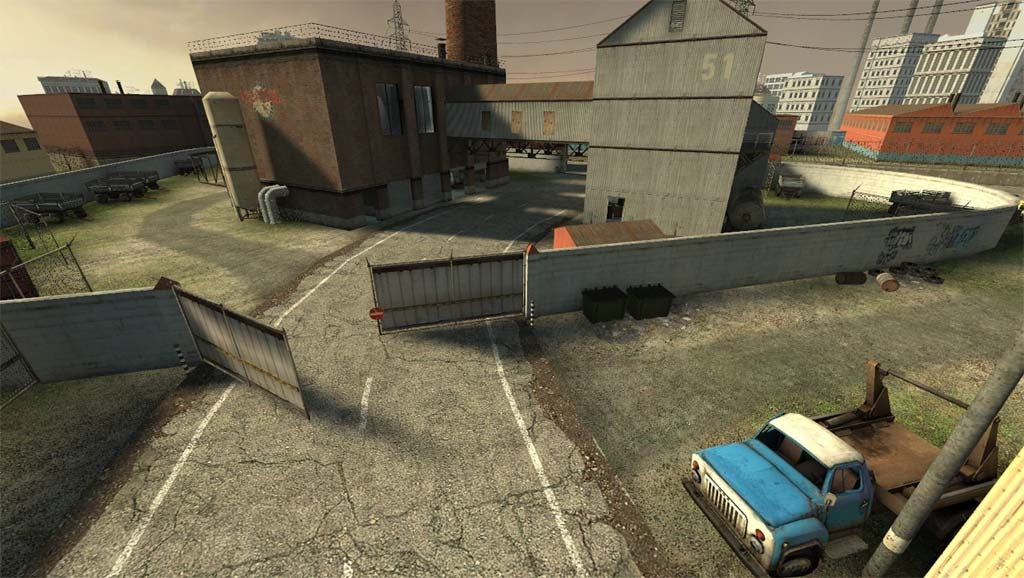
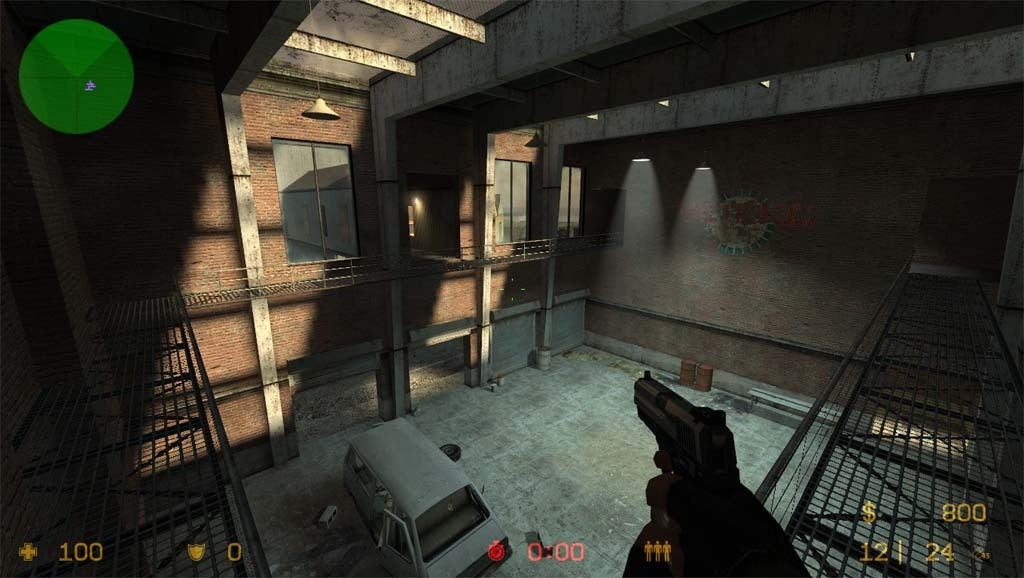
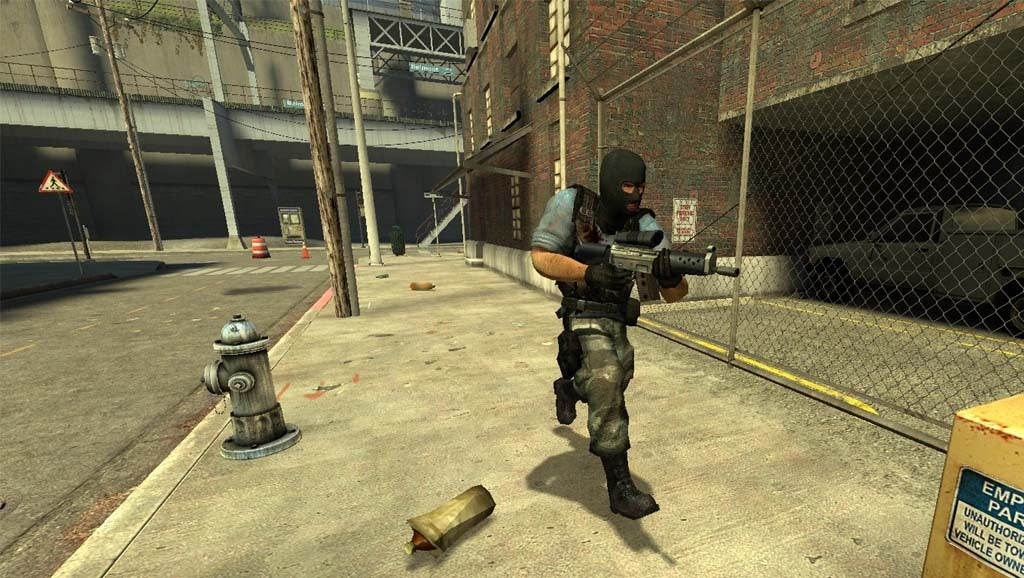
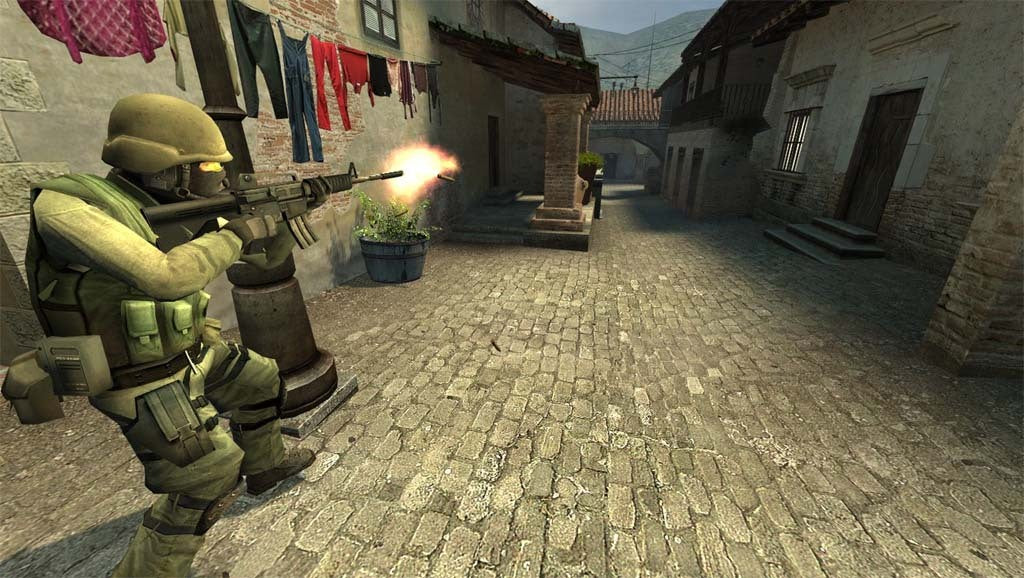


Counter-Strike: Source is Valve's rebuild of the team shooter that defined competitive online play. It moves the long-running fight between Terrorists and Counter-Terrorists onto the Source engine. Released in 2004, it keeps the original's round-based tension and unforgiving gunplay and adds new graphics, all-new sound and real physics. It is still one of the purest forms of tactical first-person combat.
From Mod to Modern Classic
Counter-Strike started in 1999 as a fan-made modification for Half-Life, created by Minh Le and Jess Cliffe. Valve brought the project in-house, and it grew into the most-played online action game of its era. Counter-Strike: Source carries that design forward intact. You get the same two sides and the same objective-driven rounds, and accuracy, positioning and communication still matter more than raw reflexes.
How a Round Plays Out
- Buy Phase
- Each round opens with a short buy window. Money earned from kills, objectives and round results pays for rifles like the AK-47 and M4A1, the AWP sniper rifle, Kevlar armor, defuse kits and grenades. A lost round can shape your team's options for the next two or three.
- Bomb Defusal
- On de_ maps the Terrorists carry C4 to one of two bombsites, while the Counter-Terrorists hold the sites or fight to retake them. Once the bomb is planted the roles flip, and the defenders race the timer to reach it and defuse before it detonates.
- Hostage Rescue
- On cs_ maps the Counter-Terrorists push into a fortified position and escort hostages back to a rescue zone, while the Terrorists dig in to stop them. Narrow corridors and long sightlines mean every push has to be coordinated.
- One Life Per Round
- Fall in a firefight and you spectate until the next round starts. That single rule gives Counter-Strike its weight: every peek, reload and rotation matters, and a lone survivor can still turn a round around.
Source Engine Technology
The move to Source brought sharper models and textures, improved lighting and a complete audio overhaul. That matters in a game where footsteps and reload sounds give away your position. Ragdoll physics make fallen players react to the shot that dropped them. Physics-driven props such as barrels and crates get knocked around by bullets and grenade blasts, which adds some unpredictability to familiar spaces.
Maps Every Player Knows
- de_dust2 - The most famous map in the series, built around long mid sightlines, the tunnels to B and the long approach to A. It is rebuilt here with Source lighting and detail, and its timings are intact.
- de_inferno - A tight Italian village of narrow streets, the Banana route and apartment flanks, where grenade use and coordinated pushes decide who controls the bombsites.
- de_nuke - A multi-level nuclear facility with stacked bombsites, vents and ramp routes. It rewards teams that understand vertical rotations and listen closely to sound cues.
- cs_office - A snowbound office building for hostage rescue, packed with tight corridors, side rooms and breakable windows that turn every Counter-Terrorist push into a close-quarters fight.
Built to Last
Valve Anti-Cheat protects secured servers and Steam stats and achievements track your record. The included Source SDK gives mapmakers and server operators the tools to build custom content. That openness is a big reason community servers and player-made maps became such a lasting part of Counter-Strike: Source.
Maybe you want to learn the angles on Dust2, call the rotation that wins a retake, or hold a bombsite alone with seconds on the clock. Counter-Strike: Source is ready for you. Buy your loadout, check your corners and join the next round.
