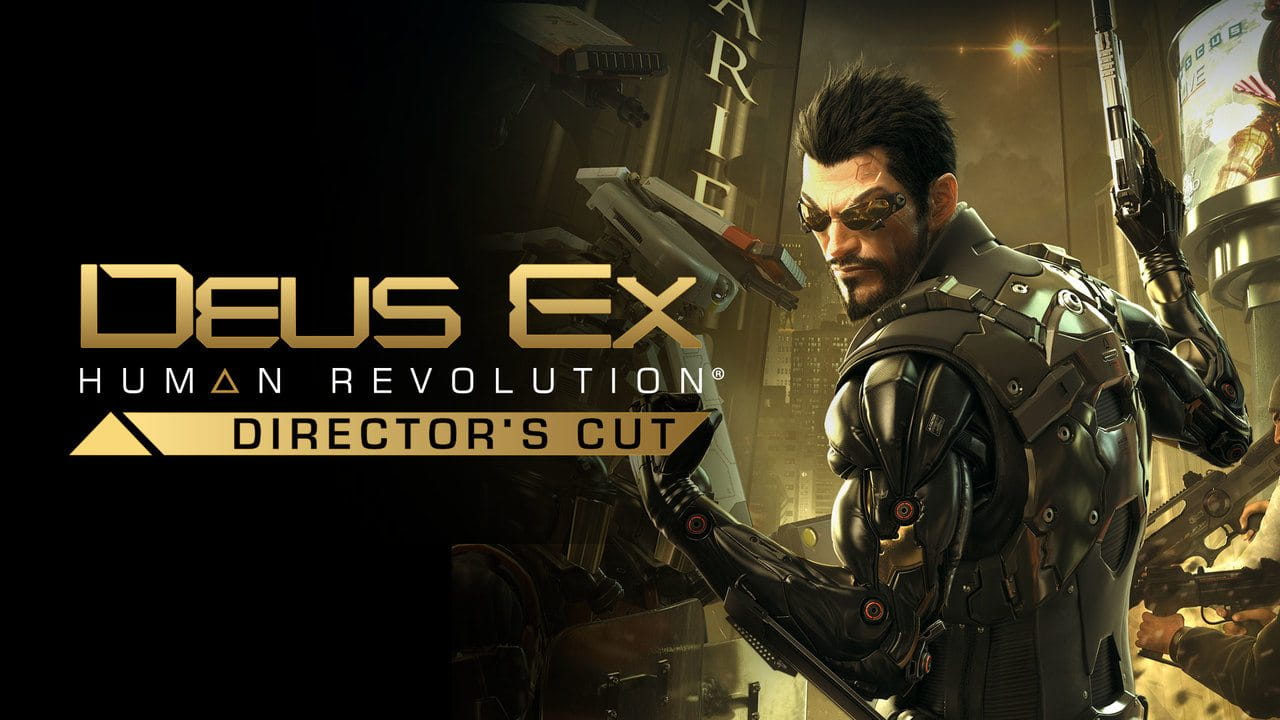
Transhumanism is the idea that the human body and mind can be altered or extended by technology, and the games that carry the tag are the ones that take that idea as their subject rather than their scenery. The augmentations are the point: a cybernetic arm, a rewritten gene, a mind copied out of its skull and run somewhere else, and the questions each one drags in behind it. Who is still human afterward, who can afford the upgrade, and who holds the off switch. The term has been around since the biologist Julian Huxley used it in 1957, but games gave it a lead character. Ion Storm's Deus Ex in 2000 handed the player a nano-augmented agent and let the choice of upgrades double as a statement about what he was becoming. BioShock in 2007 put genetic modification on sale in a vending machine and built an entire failed city around what people did with it. Deus Ex: Human Revolution in 2011 and Deus Ex: Mankind Divided in 2016, both from Eidos-Montréal, are the modern reference points: Adam Jensen never asked for his augmentations, and by 2029, two years after the Aug Incident drove mechanically augmented people to violent insanity, the world of Mankind Divided has answered the question of who counts as human by walling the augmented off from everyone else. Frictional Games' SOMA in 2015 took the other branch and asked what a copied mind is owed when the original is still around.
The hallmarks hold across very different kinds of game. The upgrade is personal and it has a cost, so it is rarely a clean power curve; the tree you climb is also the tree the story is judging you for climbing. The setting sorts people by their relationship to the technology - those who have it, those who cannot afford it, those who built it and those who want it banned - and the plot usually lives in the friction between those groups rather than in a single villain. Identity is negotiable. Memories can be edited, bodies swapped, consciousness duplicated, and the game asks you to keep track of which version of a character you are talking to and whether the distinction still matters. The best of these games let the mechanics carry the argument: a Deus Ex build that leans hard into augmentation makes you feel the pull the story is warning about, and SOMA's most unsettling moments are conversations, not monsters. What separates a transhumanist game from one that merely has cyborgs in it is whether the technology changes what a person is, and whether the game notices.
This collection gathers the titles in our catalog that carry the Transhumanism tag. It is a subject tag rather than a genre, in the same way our Psychological and Gothic collections are, so the games here span shooters, RPGs, stealth and horror, and most of them appear in those collections as well. It overlaps heavily with Cyberpunk, but the two are not the same thing: cyberpunk names a register, the neon city, the corporate tower and the low life beneath it, and plenty of cyberpunk games sell you chrome without ever questioning it, while a transhumanist story can unfold in an undersea research station, a drowned art deco city or a near-future Prague. It is not our Robots collection, which is about machines as characters rather than humans becoming something else, and it is narrower than Sci-fi or Futuristic, which describe only where and when a game is set. If you want games where the upgrade is the story, and the question of what it made you is one the game actually asks, start here.