Sierra is the company that gave the adventure game pictures. It turned the text-only puzzles of the late 1970s into illustrated worlds and built one of the most celebrated libraries in PC gaming. Ken and Roberta Williams founded it in 1979 as On-Line Systems in Simi Valley, California. Ken was an IBM programmer planning business software for the TRS-80 and Apple II when he introduced Roberta to Colossal Cave Adventure. She wanted more than text. Drawing on And Then There Were None and the board game Clue, she designed Mystery House, and with Ken's programming it shipped by mail order in May 1980. It was the first computer adventure game with graphics and sold about 15,000 copies. In 1982 the company became Sierra On-Line and moved to Oakhurst, near the Sierra Nevada, taking a logo modeled on Half Dome. IBM then asked Sierra to build a showcase game for the PCjr. The result was Roberta's King's Quest: Quest for the Crown (1984), with animated color graphics, a hero you could walk around the screen and the new Adventure Game Interpreter engine. A run of classic series followed: Mark Crowe and Scott Murphy's Space Quest in 1986, Al Lowe's Leisure Suit Larry in the Land of the Lounge Lizards in 1987, Police Quest the same year from retired highway patrol officer Jim Walls, Corey and Lori Ann Cole's adventure and role-playing hybrid Quest for Glory in 1989, and Gabriel Knight: Sins of the Fathers in 1993. Sierra went public on NASDAQ in 1989. In 1990 King's Quest V became its first game to sell more than 500,000 copies, and in 1991 it launched The Sierra Network, the first game-only online environment. By 1995 Sierra had moved its headquarters to Bellevue, Washington, and led the PC games market in market share.
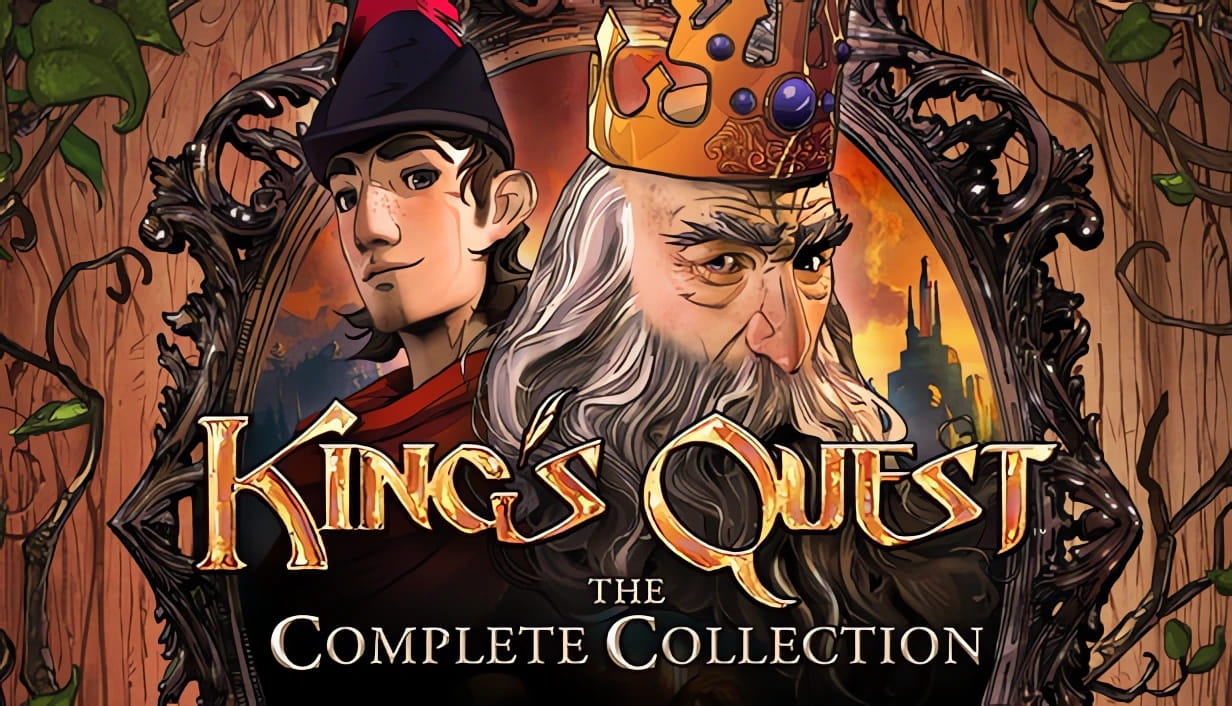
Sierra's later years follow the consolidation that swept the industry. In 1996 CUC International bought the company for roughly $1.06 billion in stock and placed it in CUC Software alongside Davidson & Associates and Blizzard Entertainment. Before leaving in 1997, Ken Williams secured the rights to publish Valve's Half-Life, which Sierra released on November 19, 1998. It became a huge success, with multiplayer running on Sierra's own World Opponent Network. In 1998 massive accounting fraud was uncovered at CUC, and Sierra was sold to Havas. Roberta Williams left after King's Quest: Mask of Eternity that December. Then on "Chainsaw Monday," February 22, 1999, a reorganization closed several studios, including the original Oakhurst home, and about 250 people lost their jobs. From that point Sierra worked mainly as a publisher of independent developers. It released Relic's Homeworld in 1999, took the name Sierra Entertainment in 2002 under Vivendi Universal, and on August 24, 2004 was dissolved as a company and continued as a division of Vivendi Games, releasing games like World in Conflict. Vivendi Games merged with Activision to form Activision Blizzard on July 10, 2008, and Sierra was shut down later that year, with much of its catalog sold off. Activision revived the label in 2014 to re-release classics, reimagine old franchises and work with indie studios, and The Game Awards named it an Industry Icon that December. The revival's flagship was The Odd Gentlemen's reimagined King's Quest, released in five chapters between July 2015 and October 2016. In it an aging King Graham tells his granddaughter Gwendolyn about his adventures, the same Daventry storybook quests Roberta Williams started. After Microsoft's acquisition of Activision Blizzard, Sierra now belongs to Microsoft's gaming division, and King's Quest: The Complete Collection gathers all five chapters plus an exclusive Epilogue.