



Total War: ATTILA opens in 395 AD, with famine, plague and war already gnawing at the edges of the Roman world and a new power gathering on the eastern steppe. Creative Assembly's blend of turn-based grand strategy and real-time tactics casts you as one of the factions caught in that collapse: the fading Western and Eastern Roman Empires, the barbarian kingdoms pressing on their borders, or the migrating hordes with nothing left to lose. However you play it, this campaign is a question of survival long before it is a question of conquest.
A World on the Brink
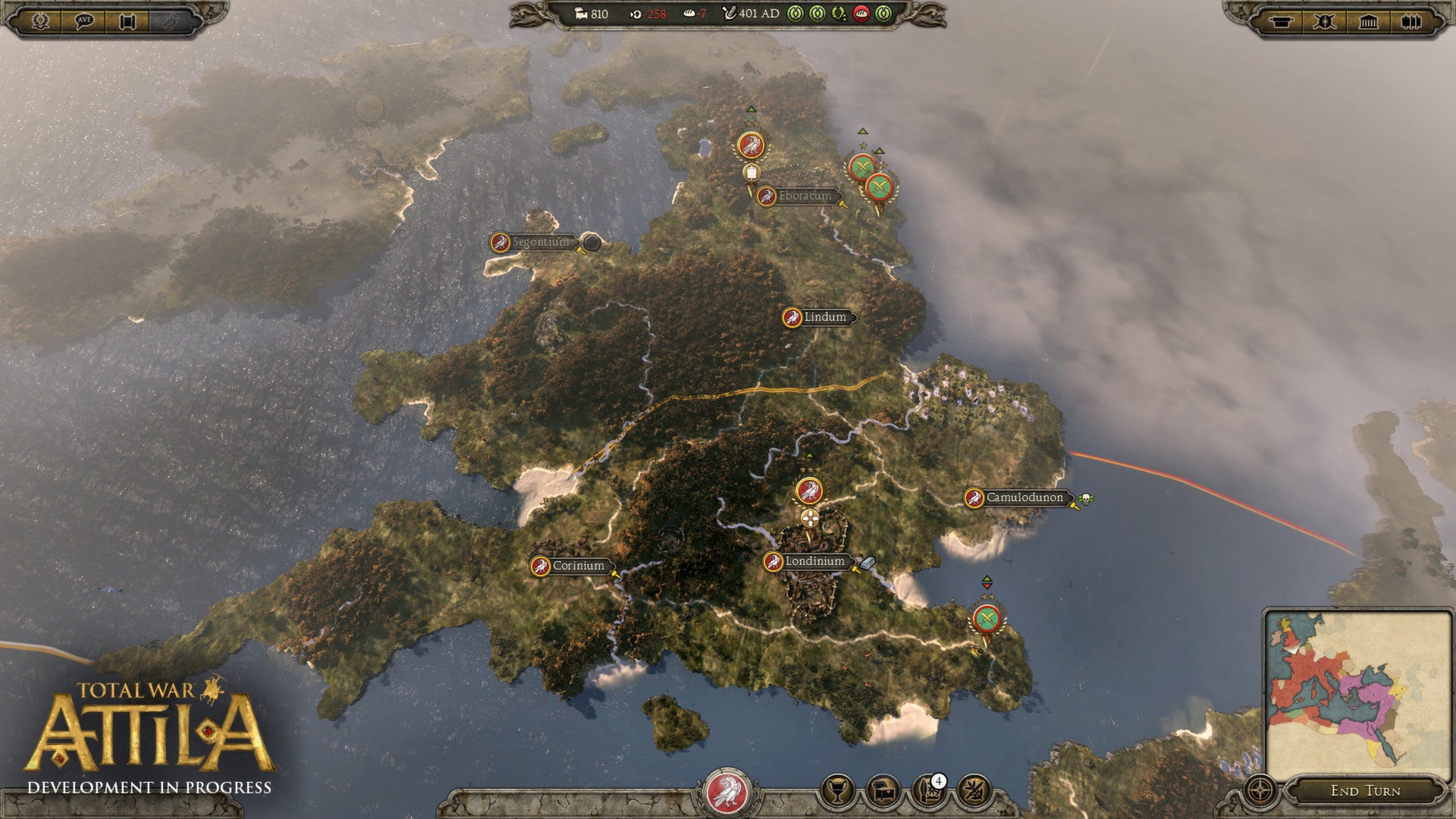
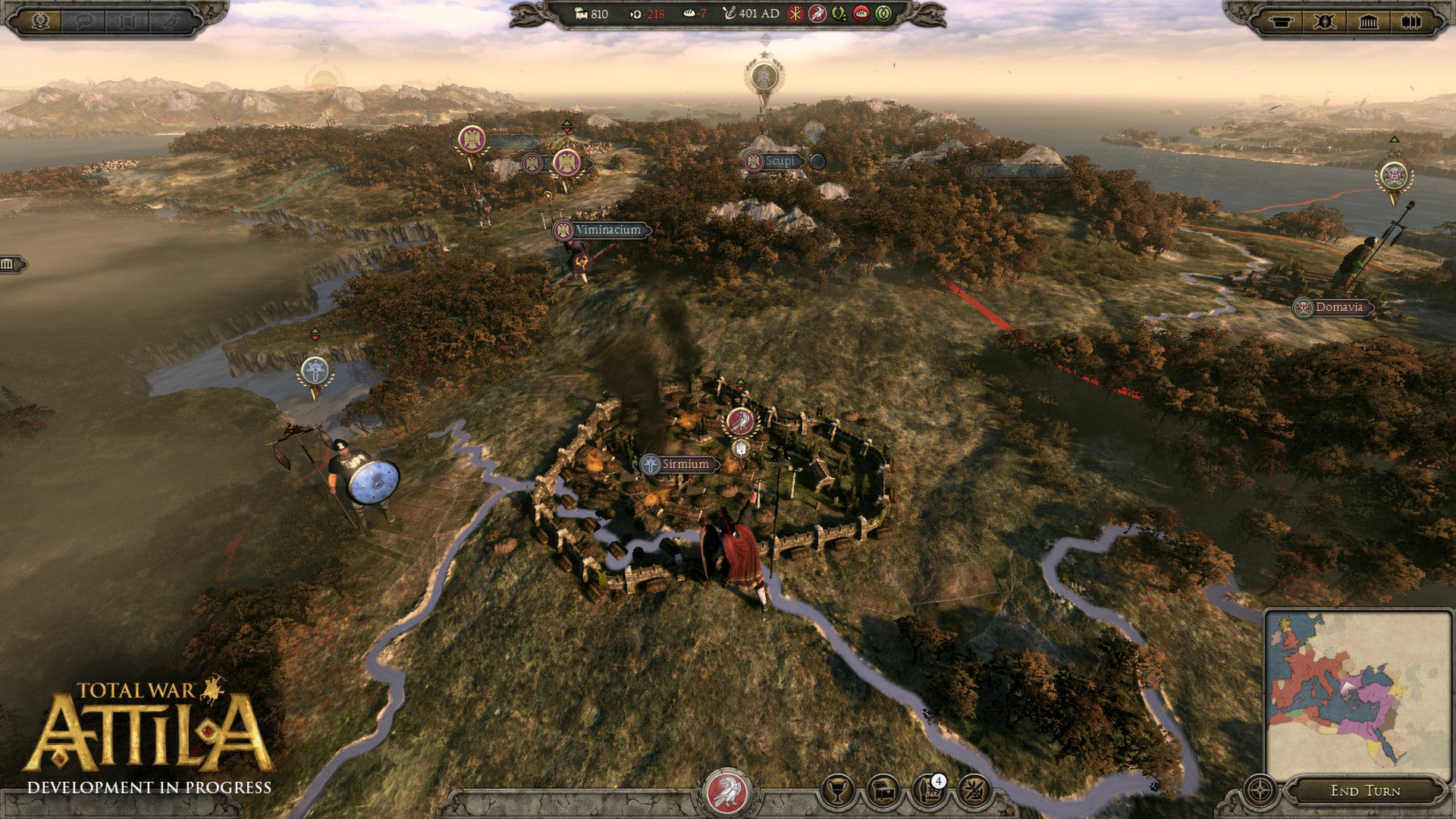
Every Total War campaign asks you to build an empire. ATTILA asks whether you can keep one standing. The map stretches from the British Isles to Persia, and its opening turns are shaped by the pressures of the period: a cooling climate that turns northern provinces barren, disease that breeds in crowded, squalid cities, and religious tension between old pagan traditions and a rising Christian church. Political in-fighting inside your own family tree can undo a border defense as surely as an enemy army. The overhauled campaign layer folds politics, civic management and technological progression into these threats, so the decisions between turns carry as much weight as the battles themselves.
The Legendary Start: Western Rome
Playing as the Western Roman Empire is the campaign the game was built around. You begin with vast territories and the most famous army in history, and almost none of it is secure. Your provinces are overtaxed and restless, your generals are scheming, and the Huns, Goths and Vandals arrive faster than your legions can march. Holding the line is the immediate challenge; restoring Rome's glory is the long game. It is one of the most demanding openings in the series, and one of the most satisfying to survive.
Fire, Ruin and the Horde
- Apocalyptic destruction
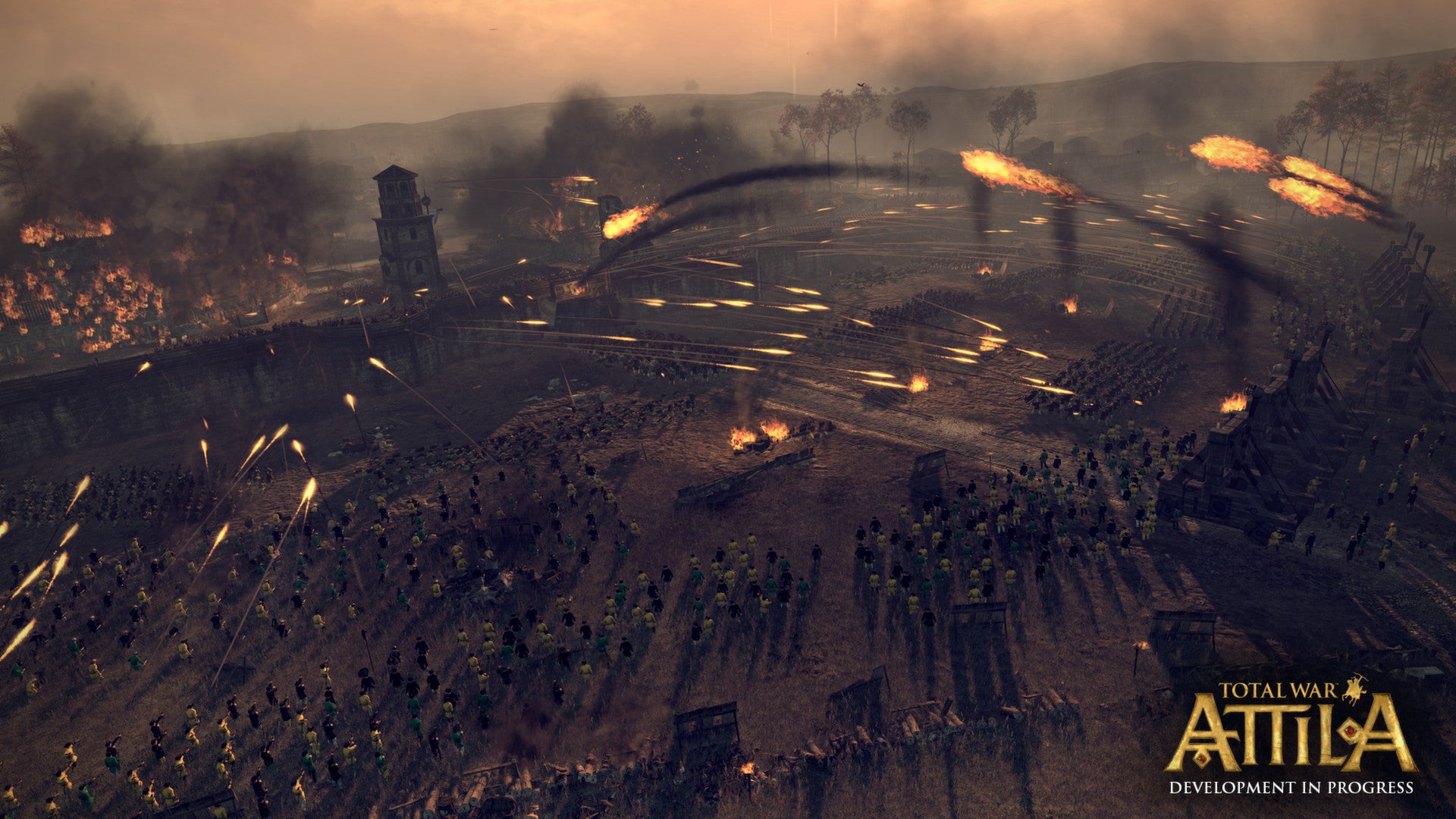
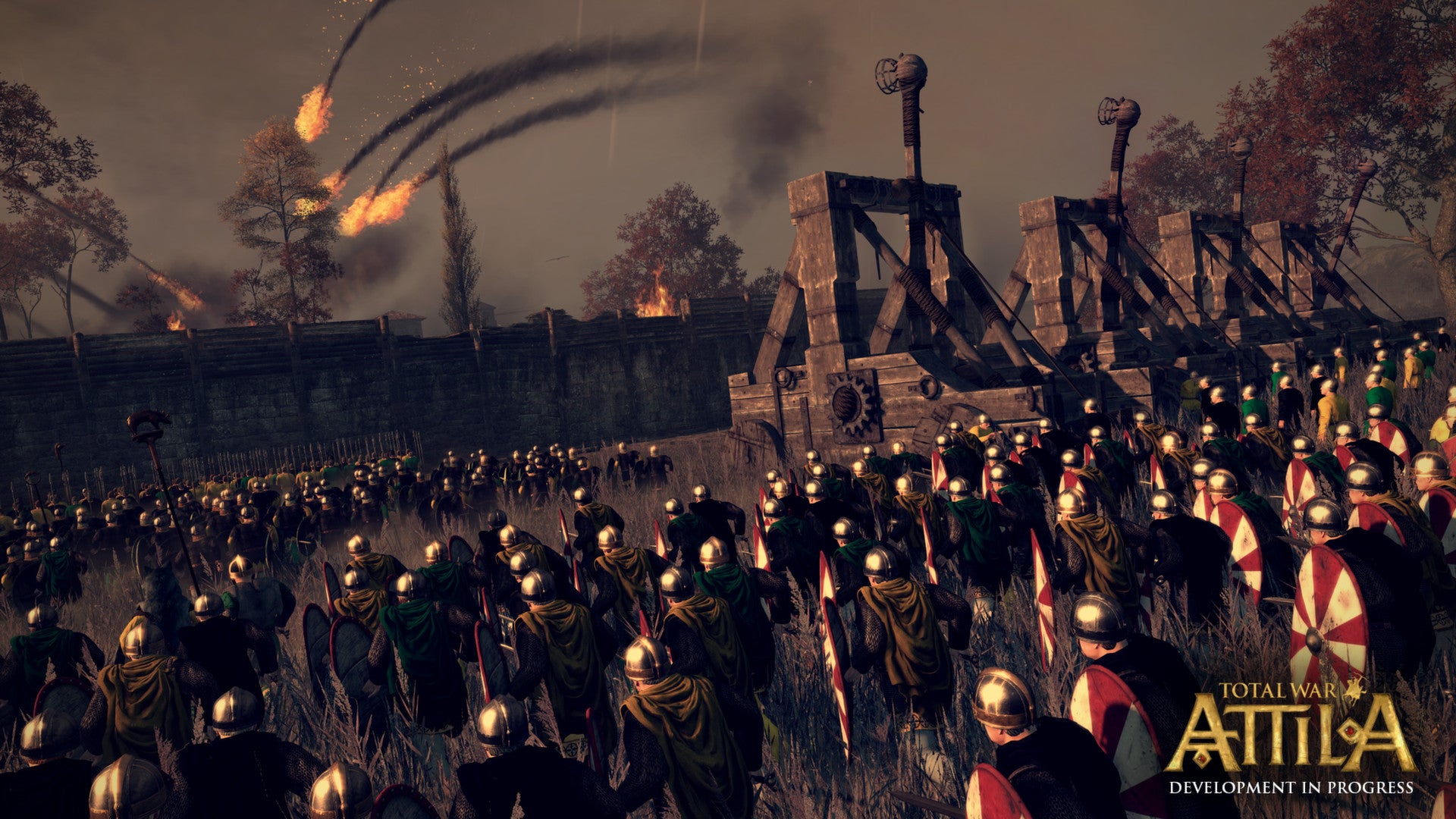
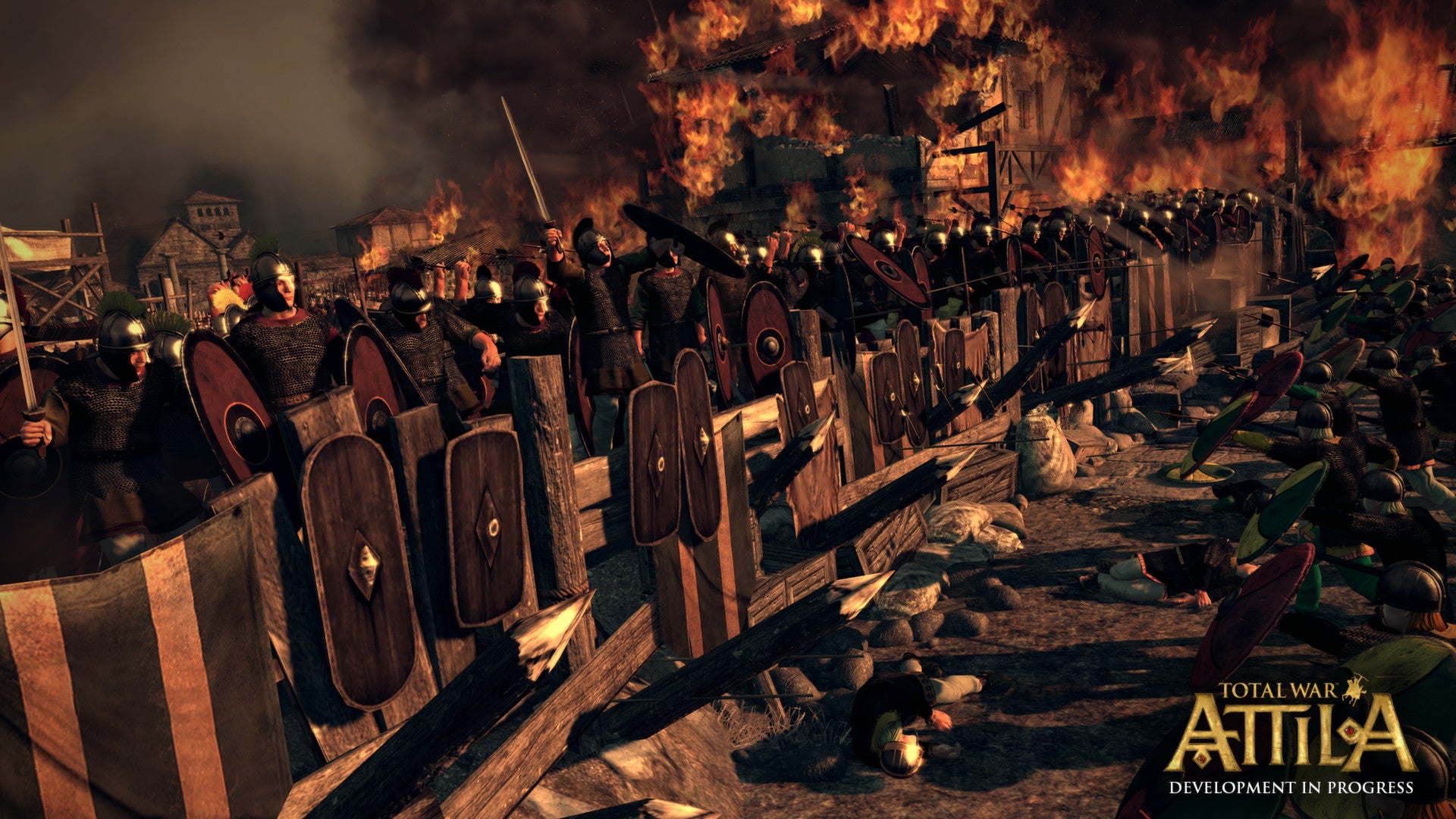
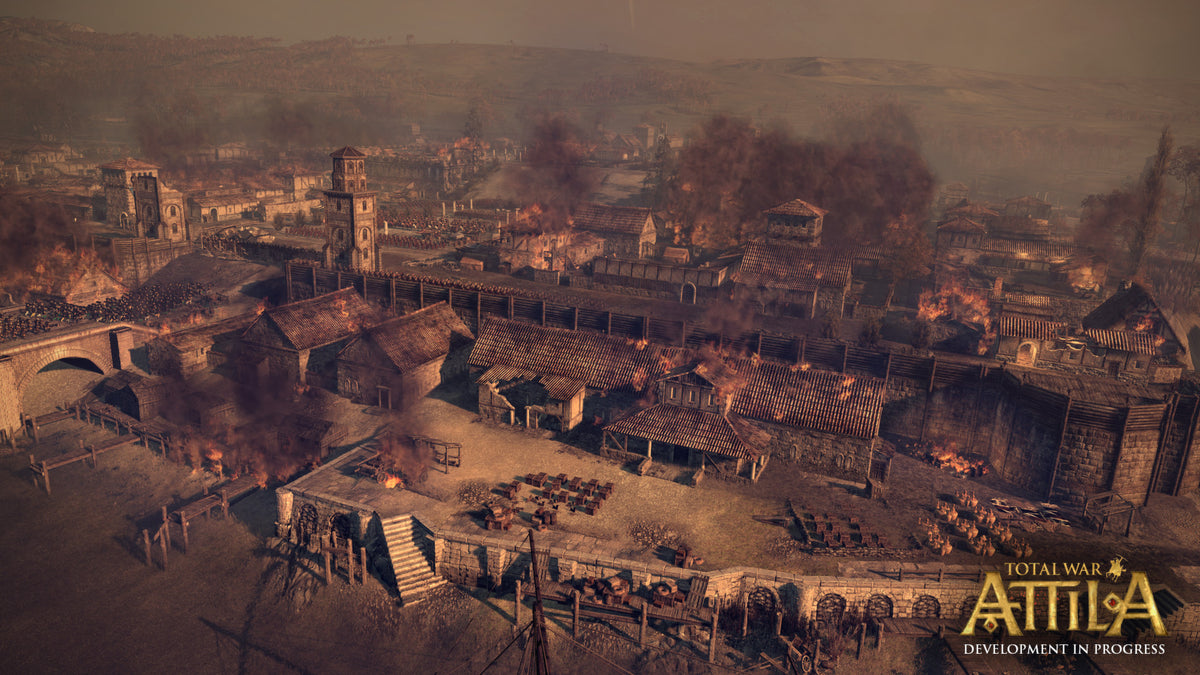
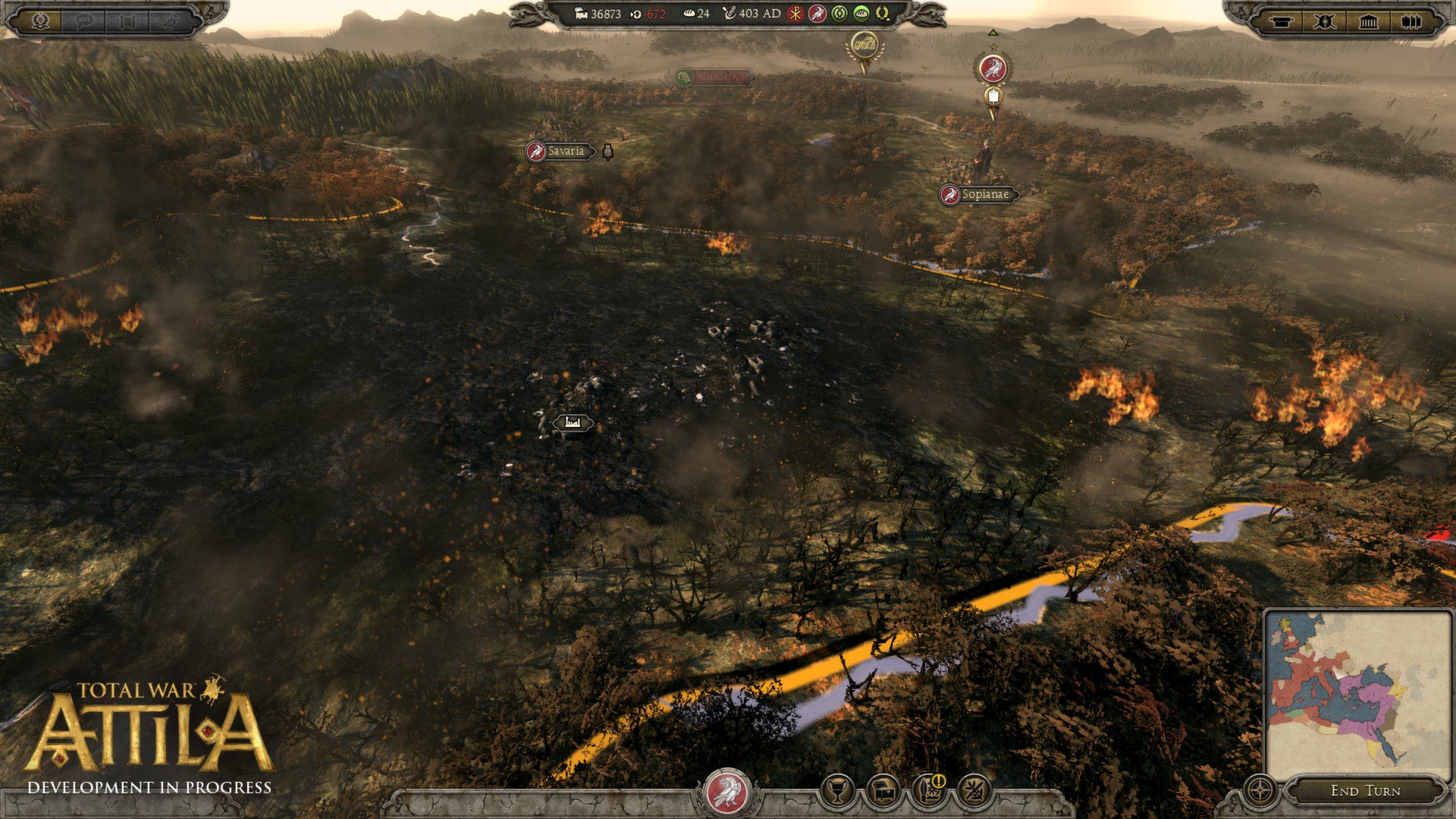
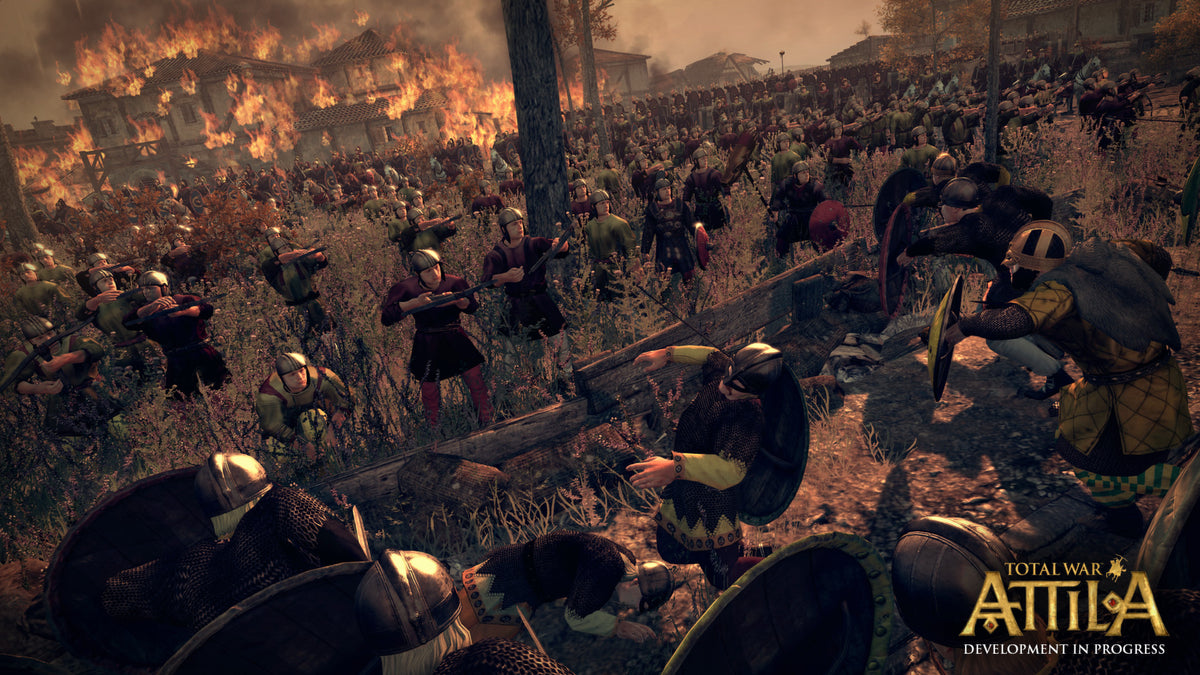
- Fire is a weapon in ATTILA. Flaming arrows and siege engines set buildings ablaze mid-battle, terrifying defenders and turning a street fight into an inferno, while the new raze mechanic lets you wipe a captured settlement from the campaign map entirely and leave nothing for those who follow.
- Migration and hordes
- Factions such as the Visigoths, Vandals and Ostrogoths can abandon their homelands and live on the move as hordes, carrying their people and their economy with the army until they find land worth settling. The Huns never settle at all: they are the storm every other faction is bracing against.
- Real-time battles at scale
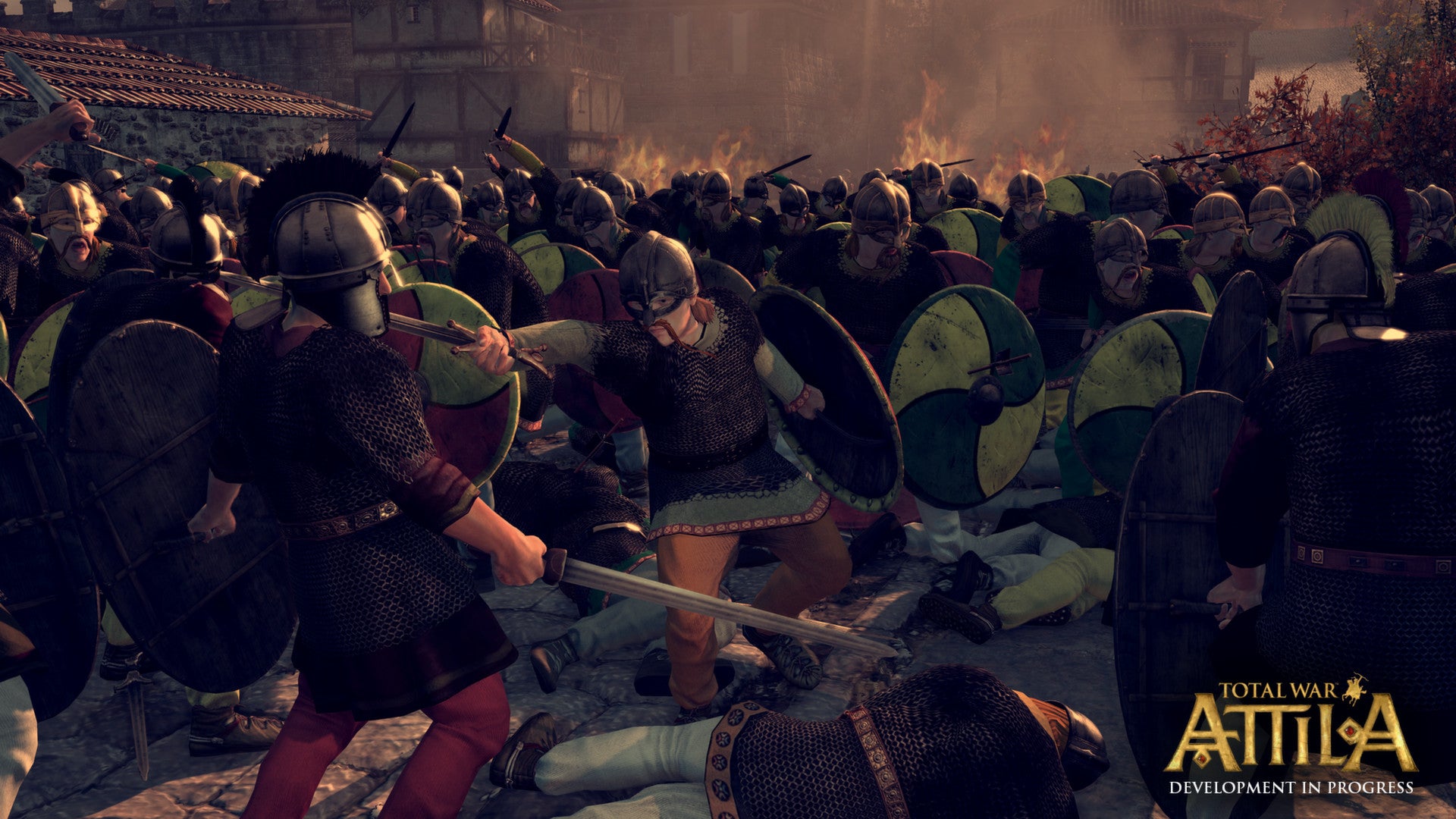
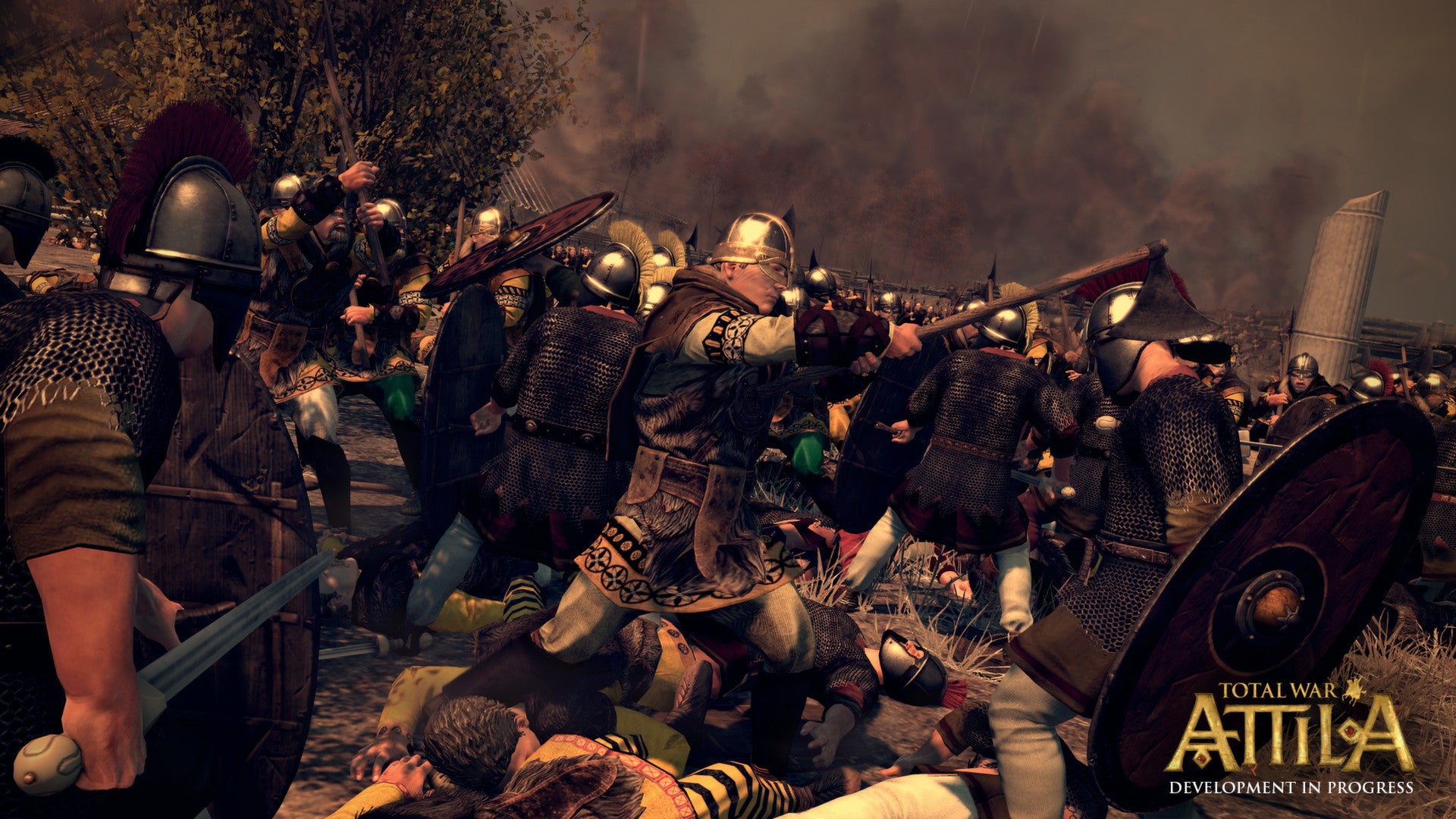
- Turn-based campaign decisions resolve into real-time battles with thousands of soldiers, where shield walls, cavalry charges and desperate siege defenses play out with the arms and armor of the period. Naval engagements and river crossings add their own pressures on both attacker and defender.
Authentic Late Antiquity
Period detail runs through the whole game: technologies, arms and armaments, religions and cultures specific to the fourth and fifth centuries, alongside the social upheaval that reshaped Europe. The factions of the Grand Campaign each play differently, from the settled Sassanid Empire in the east to the Saxon and Frankish tribes pushing into Roman lands. Visually, ATTILA refined both campaign and battle rendering to sell the sense of a civilized world in ruin: burning cities, ash-grey winters and battlefields littered with the fallen.
Beyond the Grand Campaign
Alongside the single-player campaign, ATTILA supports online and LAN campaigns in co-op or head-to-head, plus custom and multiplayer battles for settling arguments about which army of the age was truly the strongest. This is the base game, and its Grand Campaign is complete in itself; culture packs and campaign packs such as Age of Charlemagne are sold separately for those who want to extend the timeline.
If you have ever wondered whether you could have held Rome together when history says it fell, this is the place to find out. Pick a faction, brace for the Scourge of God, and see how far you are willing to go to survive.
