

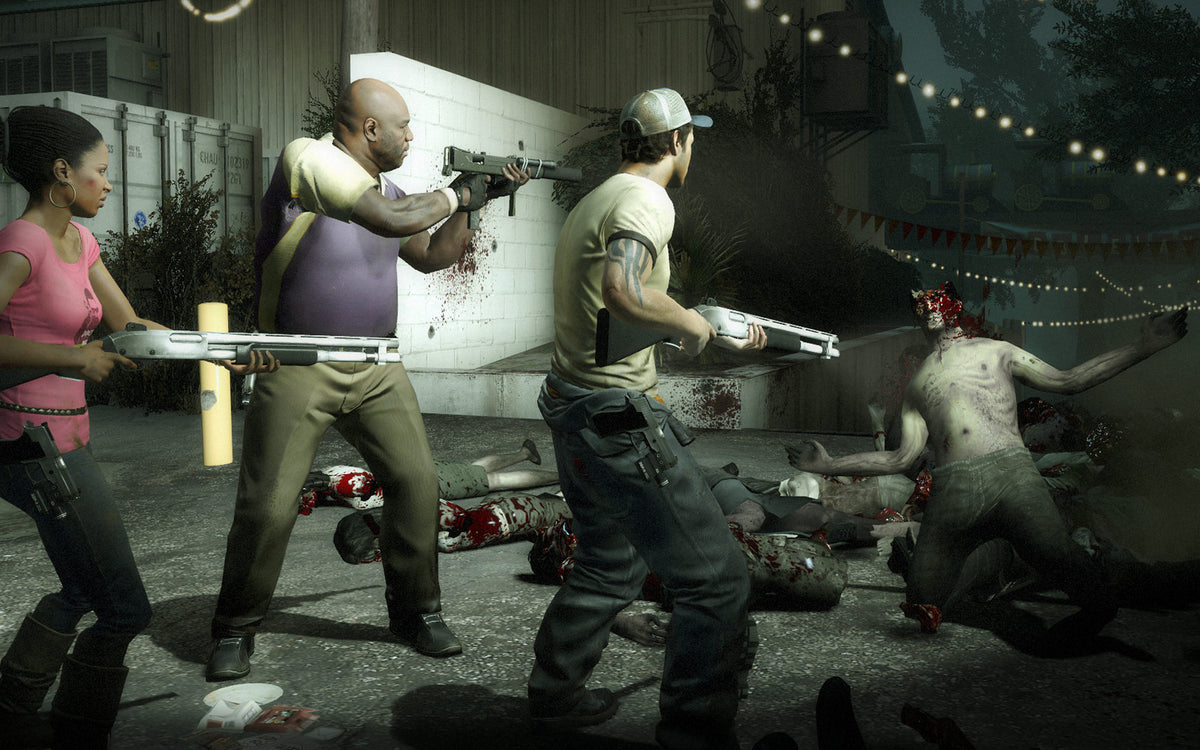
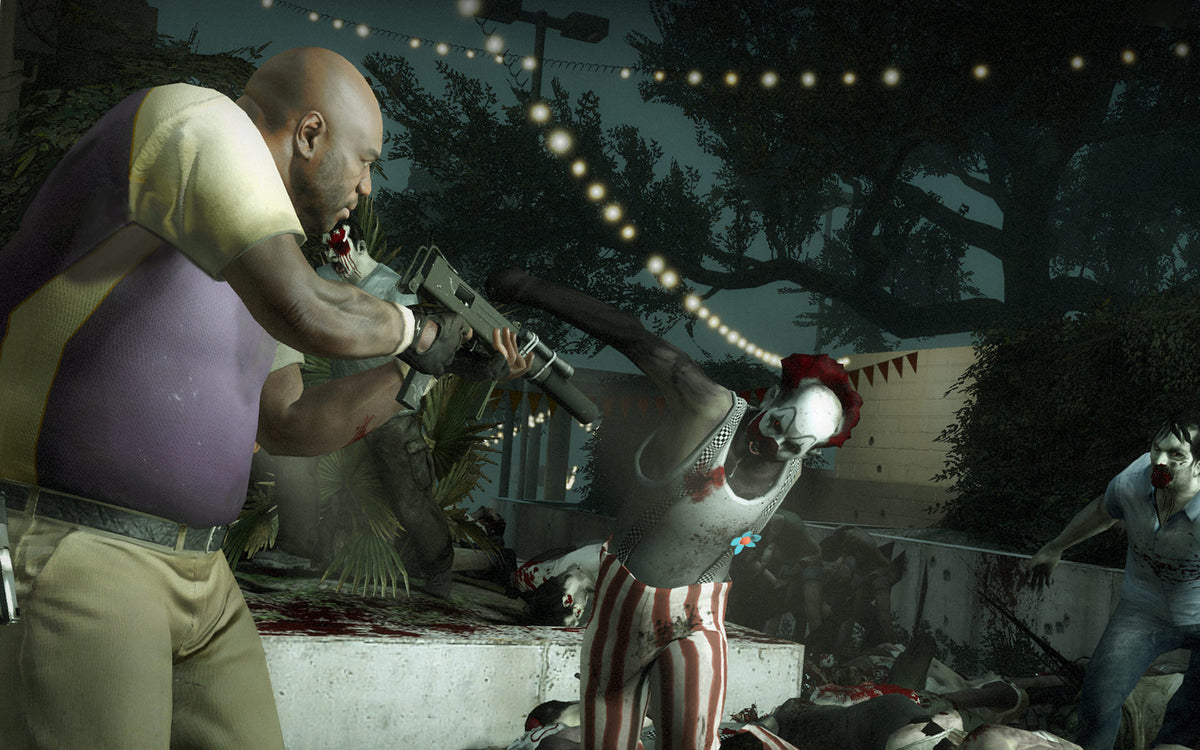
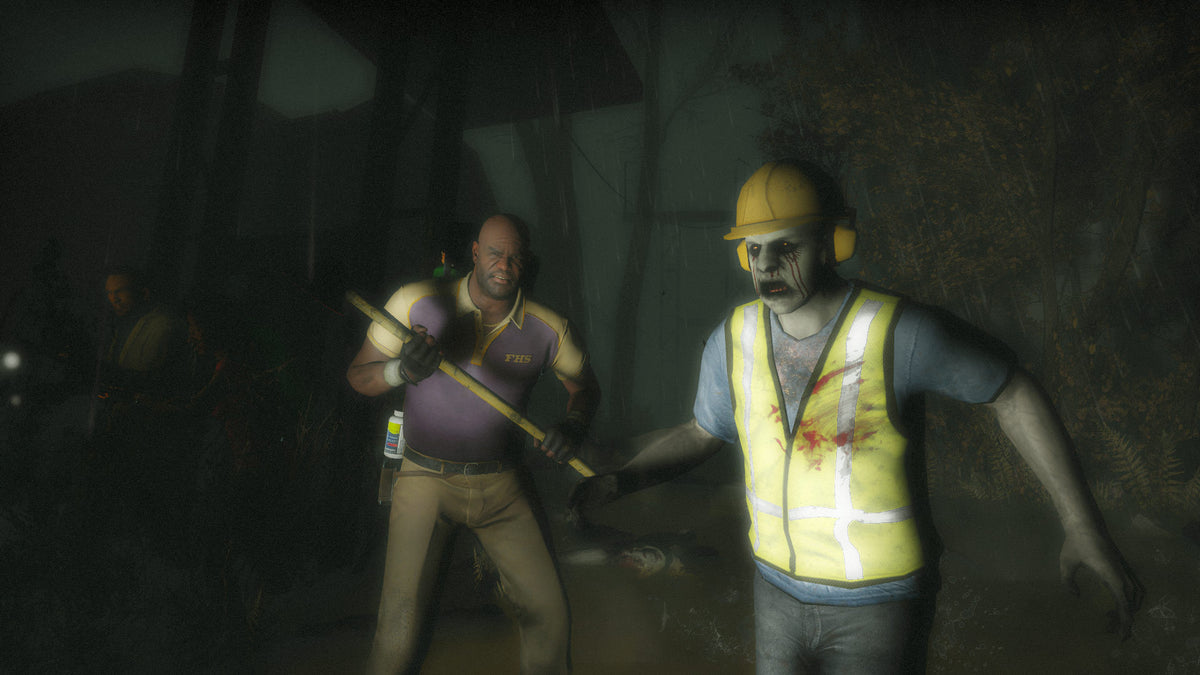


Left 4 Dead 2 drops four strangers into the Deep South at the height of the zombie apocalypse and asks one thing of them: stick together. Valve's co-operative action horror shooter carries Coach, Nick, Ellis and Rochelle through burning hotels, flooded sugar mills, backwater swamps and the streets of New Orleans, with an AI Director rewriting every run behind the scenes. It remains the standard by which four-player co-op is measured.
From Savannah to New Orleans
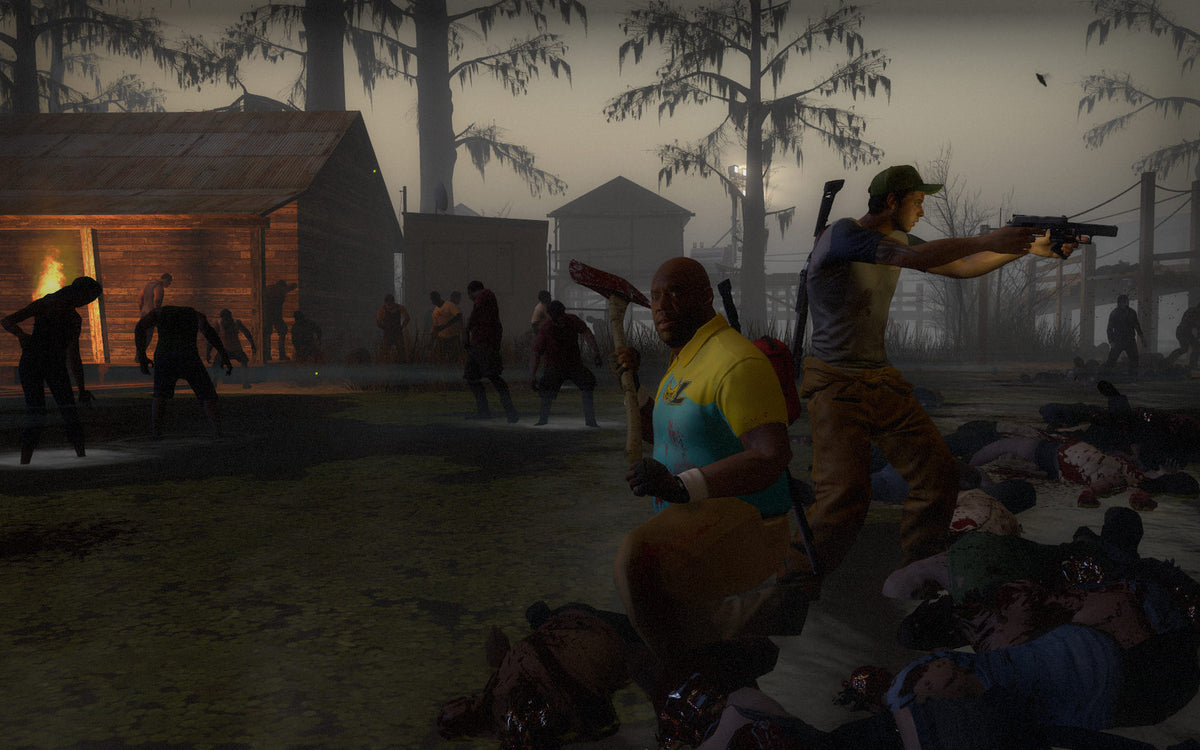
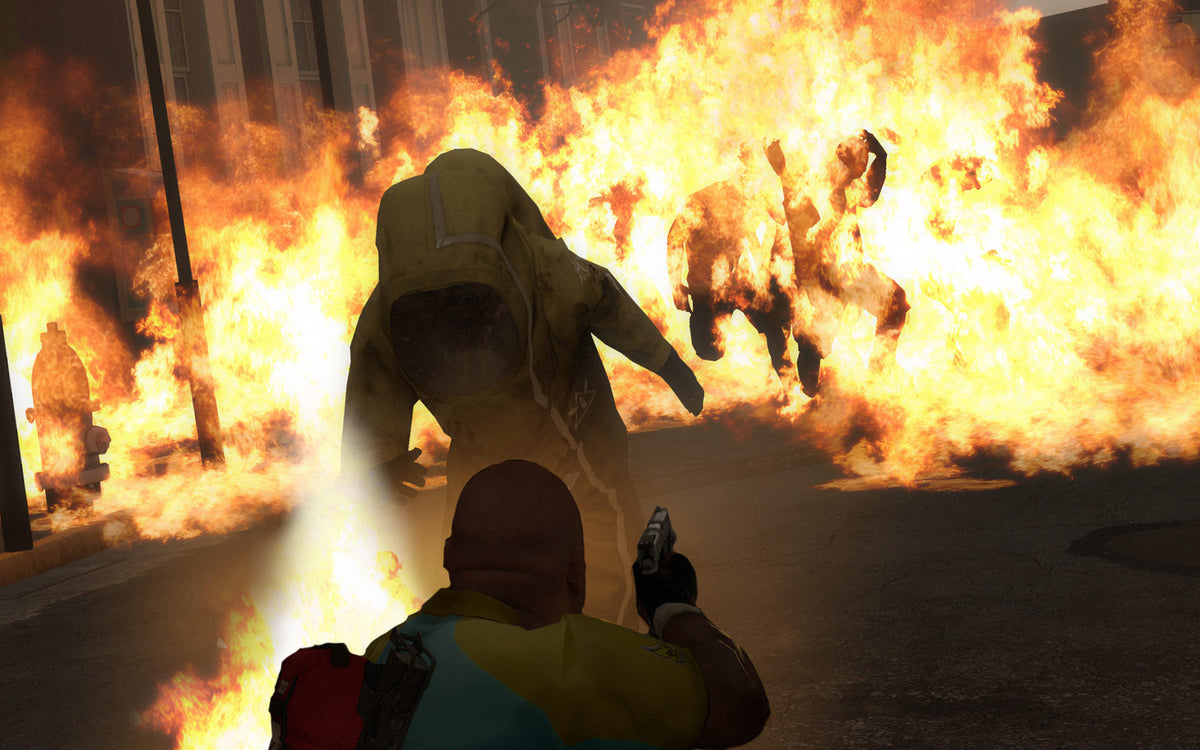
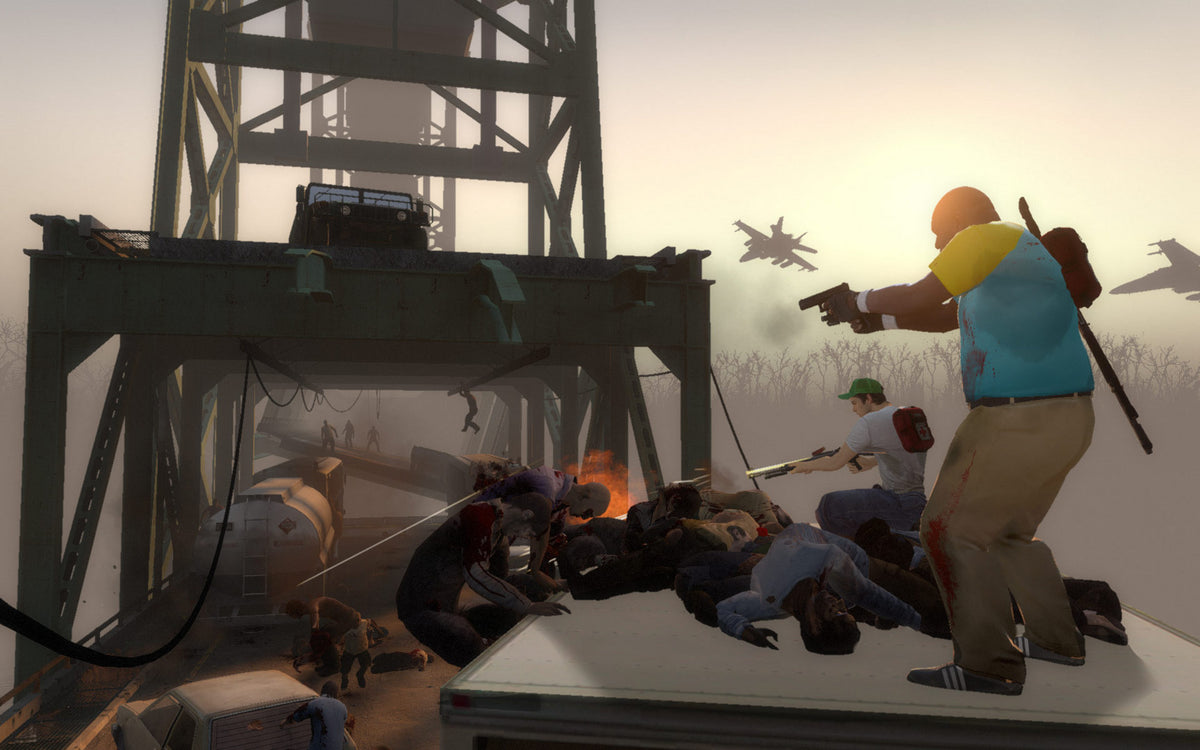
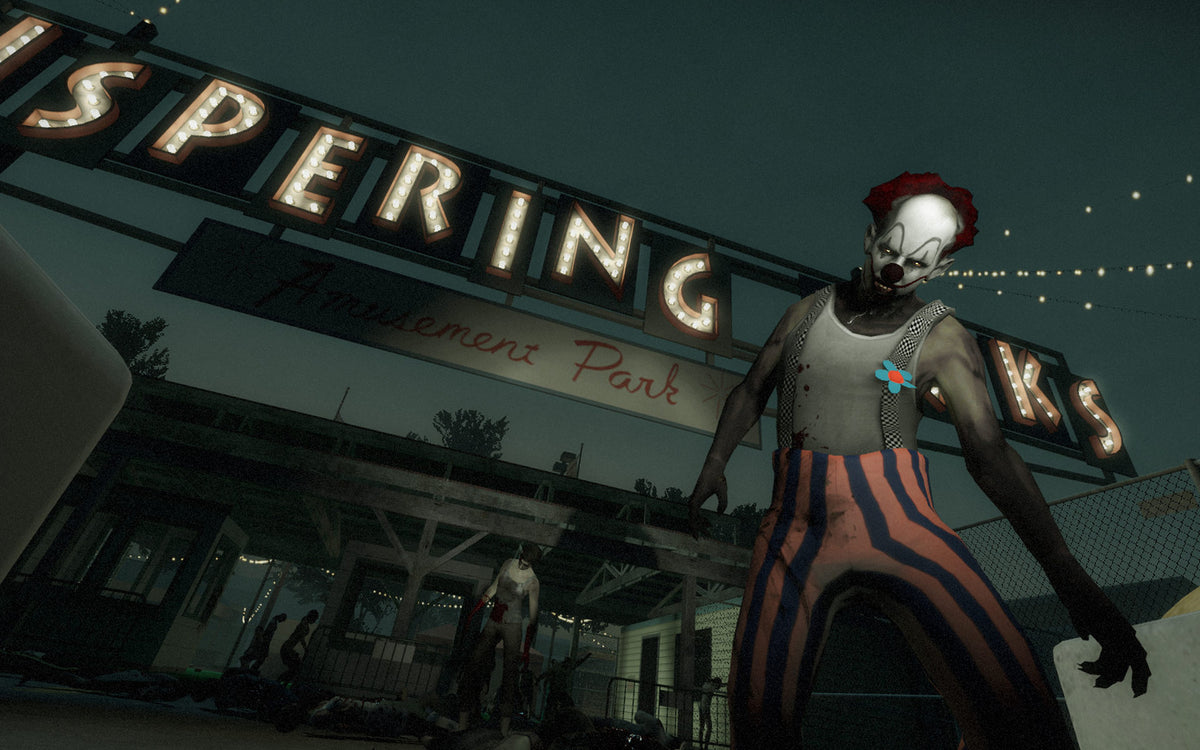
The campaign takes you through the cities, swamps and cemeteries of the Deep South across five expansive campaigns. Dead Center opens in a Savannah hotel with the fire already climbing the floors below you. Dark Carnival sends the team through the abandoned Whispering Oaks amusement park, Swamp Fever wades into bayou country, Hard Rain turns a simple fuel run into a fight through a sugar mill as the storm rolls in, and The Parish ends things on a bridge out of New Orleans. Each campaign has its own look, its own finale and at least one uncommon common infected you will not meet anywhere else, from the hazmat-suited CEDA workers to the Mudmen crawling through the swamp.
Valve has kept adding to the base game since launch. The Passing and The Sacrifice arrived in 2010, the original Left 4 Dead campaigns followed, Cold Stream landed in 2012, and the community-built The Last Stand update in 2020 brought a new campaign, new melee weapons and a refreshed Survival roster. The four survivors also got new stories, new dialogue and some of the most quotable banter in the genre; Ellis will tell you about his buddy Keith whether you ask or not.
The Special Infected
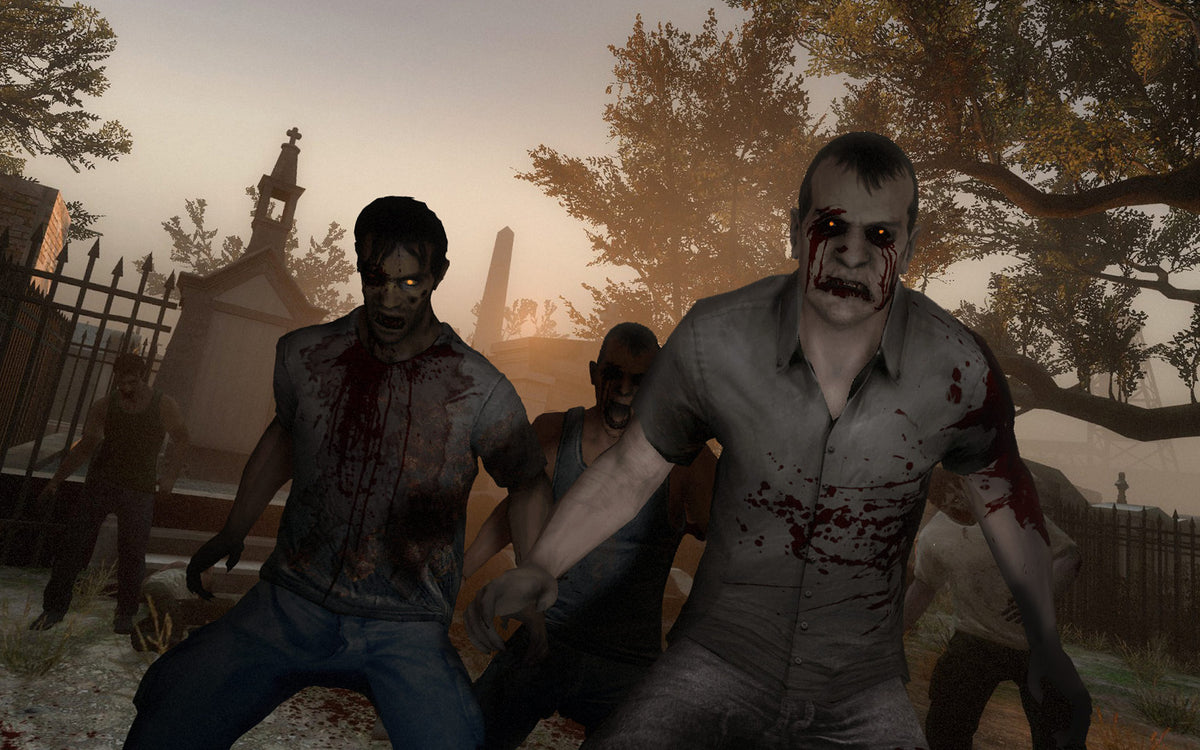
The common horde is the pressure. The Special Infected are the punishment for letting your team split up. Three new ones joined the returning Hunter, Smoker, Boomer, Tank and Witch, and each is built to punish a specific bad habit.
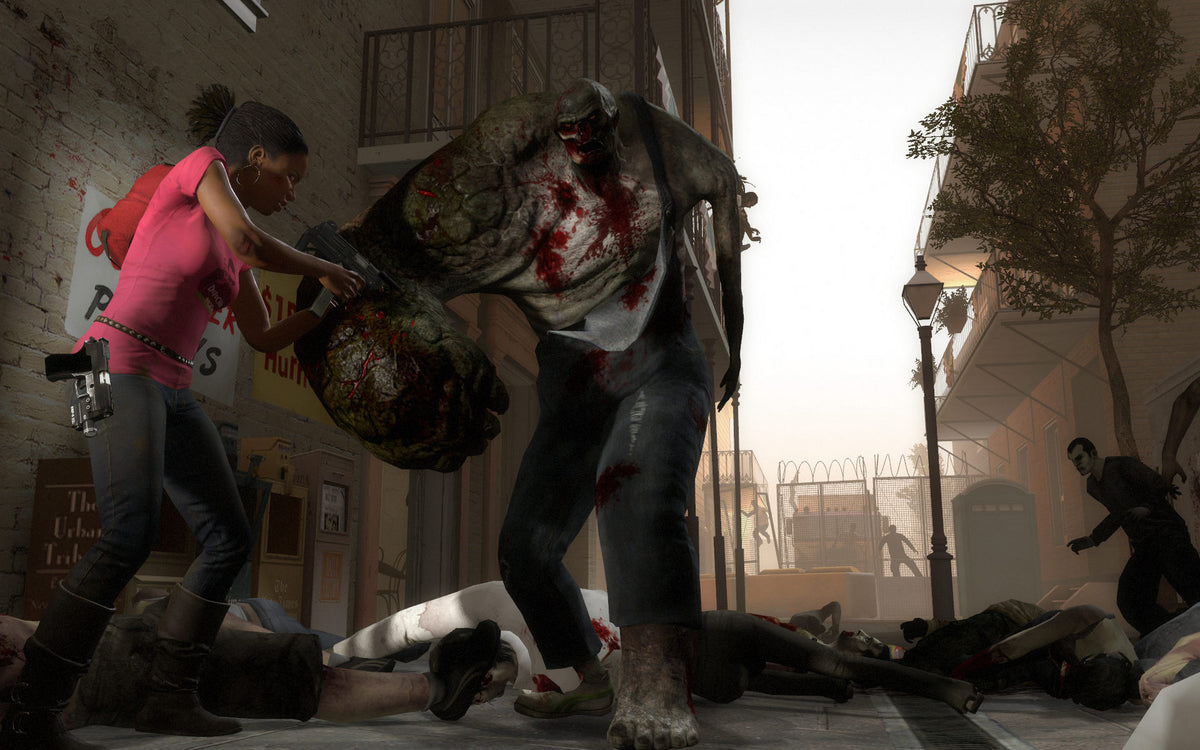
- The Charger
- A hulking infected with one oversized arm that barrels down corridors, scatters the team and carries one survivor off to pound them into the ground. Anyone caught needs the others to break them free, so a Charger in a tight hallway is a test of who is still paying attention.
- The Spitter
- Lobs a pool of acid that burns anyone standing in it, which turns chokepoints, closets and safe-looking corners into places you cannot stay. A well-placed spit during a Tank fight is the kind of thing that ends a campaign attempt on Expert.
- The Jockey
- A small, cackling infected that leaps onto a survivor's back and steers them away from the group, ideally toward a Witch, a ledge or a Spitter puddle. Cheap to kill, expensive to ignore, and the single best reason to keep a friend within arm's reach.
Over 20 New Weapons and Items
The sequel's headline addition is melee combat, and it changes how you move through a level. More than ten melee weapons let you get close to the zombies instead of backing away from them.
- The chainsaw shreds through a horde for as long as its fuel lasts, the axe and machete take heads clean off, and the katana barely slows you down mid-swing. The frying pan is exactly as satisfying as it sounds, and every hit comes with the right sound.
- The firearms roster grows too, with new pistols, shotguns, submachine guns and rifles, plus the grenade launcher for when a chokepoint needs clearing quickly. Incendiary and explosive ammo packs let one survivor upgrade the whole team's next magazine.
- New items reshape a team's survival math. The defibrillator brings a dead teammate back on the spot, adrenaline shots trade healing for speed when the finale alarm sounds, and the boomer bile jar sends a horde chasing something other than you.
AI Director 2.0
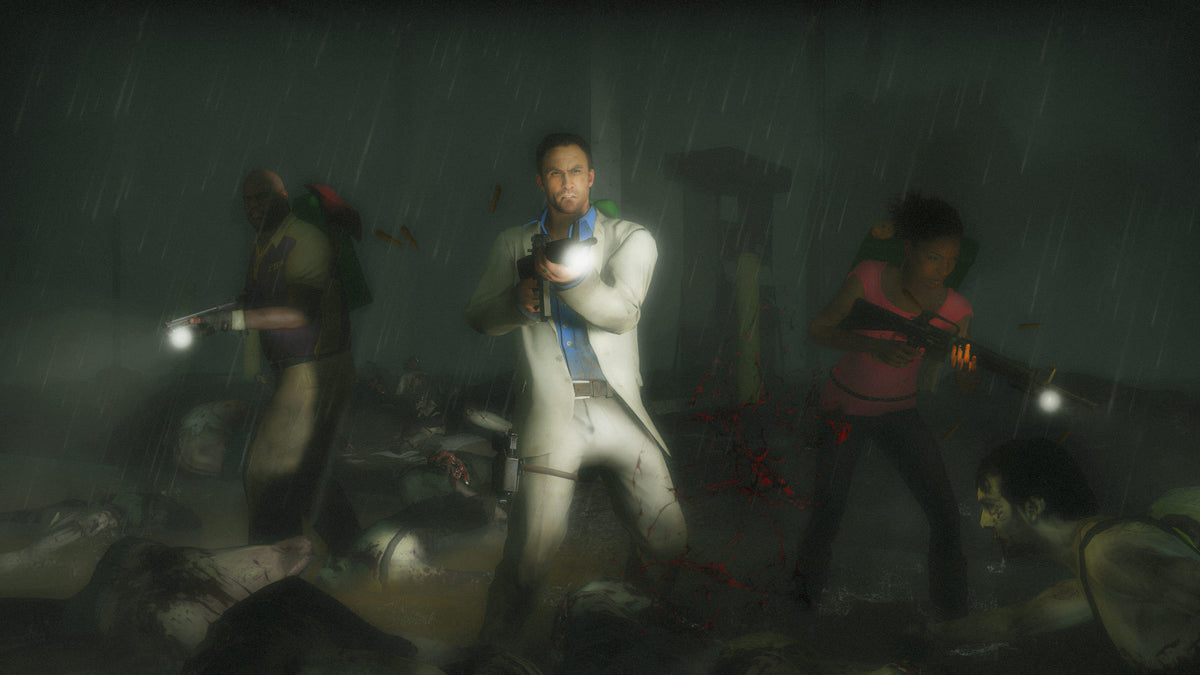
The original Left 4 Dead's AI Director built enemy waves, item spawns and music around how well the team was doing. AI Director 2.0 goes further: it can procedurally change the weather you fight through, the pathways you take and the lighting and time of day, on top of tailoring the enemy population, effects and sounds to your performance. The storm in Hard Rain is the clearest example. A calm walk to the fuel becomes a near-blind crawl back through thunder, rain and a horde you can barely hear coming. A stats, rankings and awards system tracks what you did well and what got you killed, so the run you finish is genuinely yours, and the next one will not look the same.
Versus, Survival, Scavenge and the Workshop
Co-op campaign play is the heart of the game, but Versus is where it gets ruthless. Two teams of four alternate between survivors and Special Infected through a campaign, and playing the infected side with a coordinated team is a different game entirely. Scavenge, new to the sequel, has the survivors racing to collect gas cans for a generator while the infected team stalls them, in short rounds that suit a single evening. Survival mode drops the team into a single holdout with an endless horde and a clock, and asks how long you can last. Adjustable difficulty scales all of it from a relaxed first run to Expert, where friendly fire and every mistake count.
Steam Workshop support and the included Source SDK tools are why the game is still busy this many years on. Community campaigns, weapon skins, survivor replacements, sound packs and full conversions install with one click, and the game supports a mix of local and online play so a full lobby is rarely far away. Valve continues to run the online services, so Versus, community servers and matchmaking are all still live.
Grab three friends, pick a campaign and get to the safe room. The Director already knows you are coming.
