

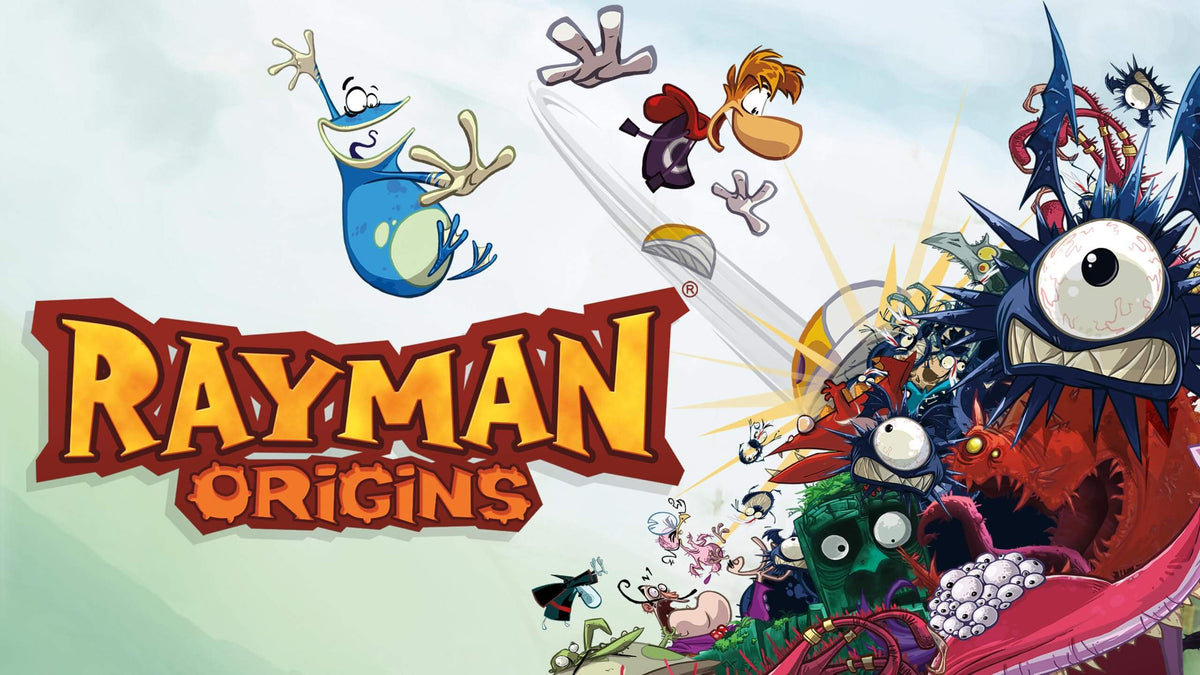




Rayman Origins took the limbless hero who first leapt onto screens in 1995 back to his 2D roots, and the result is one of the most joyful platformers of its generation. Michel Ancel, creator of Rayman and Beyond Good & Evil, led the UbiArt team at Ubisoft Montpellier in building more than 60 levels of fast, inventive side-scrolling action, playable solo or with up to three friends on the same screen.
A Hero Who Isn't Quite All There
The trouble in the Glade of Dreams starts with a nap. Rayman, his best friend Globox and two mischievous Teensies snore so loudly that they disturb the Land of the Livid Dead, which answers with an invasion of "nefurrious" Darktoons. The Electoons are caged, the nymphs who watch over the Glade are captured, and the heroes have to fight their way across a world slipping into nightmare. It is a light, gleefully silly story carried mostly by expressive animation, and it never gets in the way of the platforming.
Pure 2D Platforming With Plenty of Variety
At its core this is precise, momentum-driven platforming: running, jumping, punching and wall-running through stages that build steadily in speed and complexity. Freeing the captured nymphs grants new powers along the way, from the famous HairlyCopter glide to swimming and diving, and the level design keeps finding fresh ways to put them to use.
- Moskito Flights
- Some stages swap platforming for side-scrolling shoot 'em up action on the back of a mosquito, inhaling enemies and spitting them back out as ammunition while dodging everything the level throws at you.
- Epic Boss Fights
- A giant pink monster with hundreds of eyes, a possessed mountainous golem and a carnivorous flower are among the bosses waiting along the way, each one a test of timing, nerve and pattern reading.
- Treasure Chest Chases
- Runaway treasure chests lead the team on breakneck pursuits through collapsing, trap-filled stages where a moment of hesitation means starting over, and catching one earns a precious Skull Tooth.
Couch Co-op at Its Best
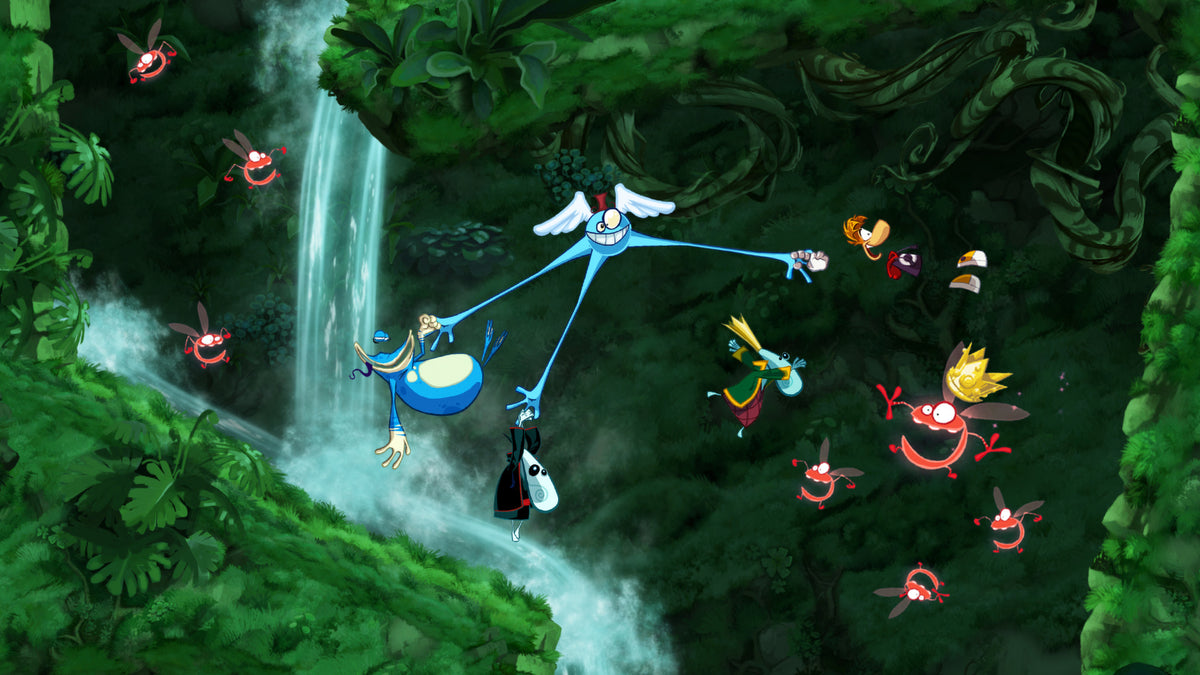
Play the campaign solo as Rayman, or let up to three friends join on the same screen as Globox and the two Teensies. Players drop in and out at any time without affecting anyone else's progress, and a player who takes a hit floats away in a bubble until a teammate slaps them back into play. With four people on one screen the game becomes gloriously chaotic: friends rescue each other, compete for every Lum and occasionally knock each other into a pit just for the laugh. Full controller support makes it easy to hand a gamepad to whoever is sitting on the couch.
Art and Music With Real Personality
The UbiArt Framework was designed so a small team of artists and engineers could put hand-drawn artwork straight into the game, and it shows. More than 100 characters and 12 distinct environments, from tangled jungles and singing desert dunes to frozen, food-filled kitchens and the depths of the sea, look like a cartoon you can play. The soundtrack by Christophe Héral and Billy Martin matches it beat for beat, all kazoos, nonsense vocals and jaunty percussion that shifts with the mood of each world.
Plenty to Find, Plenty to Master
- Lums are scattered through every level, and gathering enough of them earns Electoons and medals, with the Lum King doubling their value for a short window for anyone quick enough to keep the streak alive.
- Hidden cages are tucked behind secret walls and side paths, rewarding players who explore every corner of a stage instead of sprinting straight for the exit.
- Finished levels unlock time trials, where clean, fast routes earn trophies and reveal just how much speed was hiding in stages you thought you already knew.
- New abilities open earlier levels to fresh paths, and collecting the Skull Teeth opens a fiendishly hard bonus world that has earned its reputation among platforming fans.
Whether you grew up with Rayman or are meeting him for the first time, this is the perfect place to start. Add Rayman Origins to your collection, pass a controller to whoever is nearby and step into the Glade of Dreams together.
