



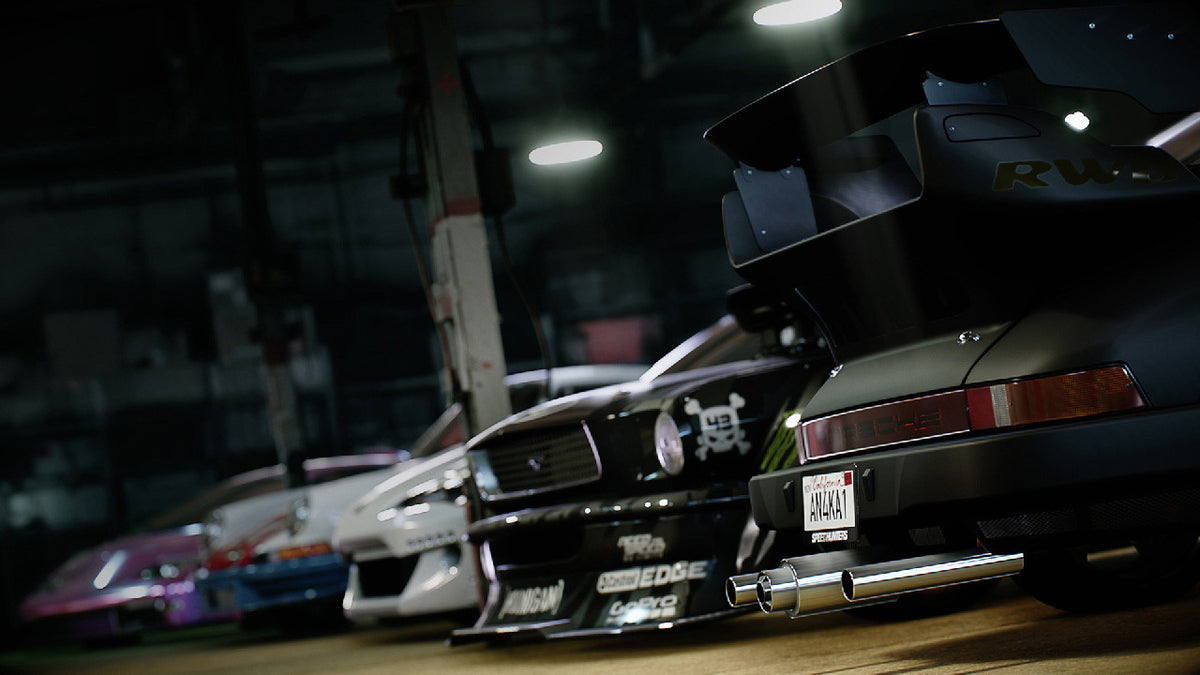

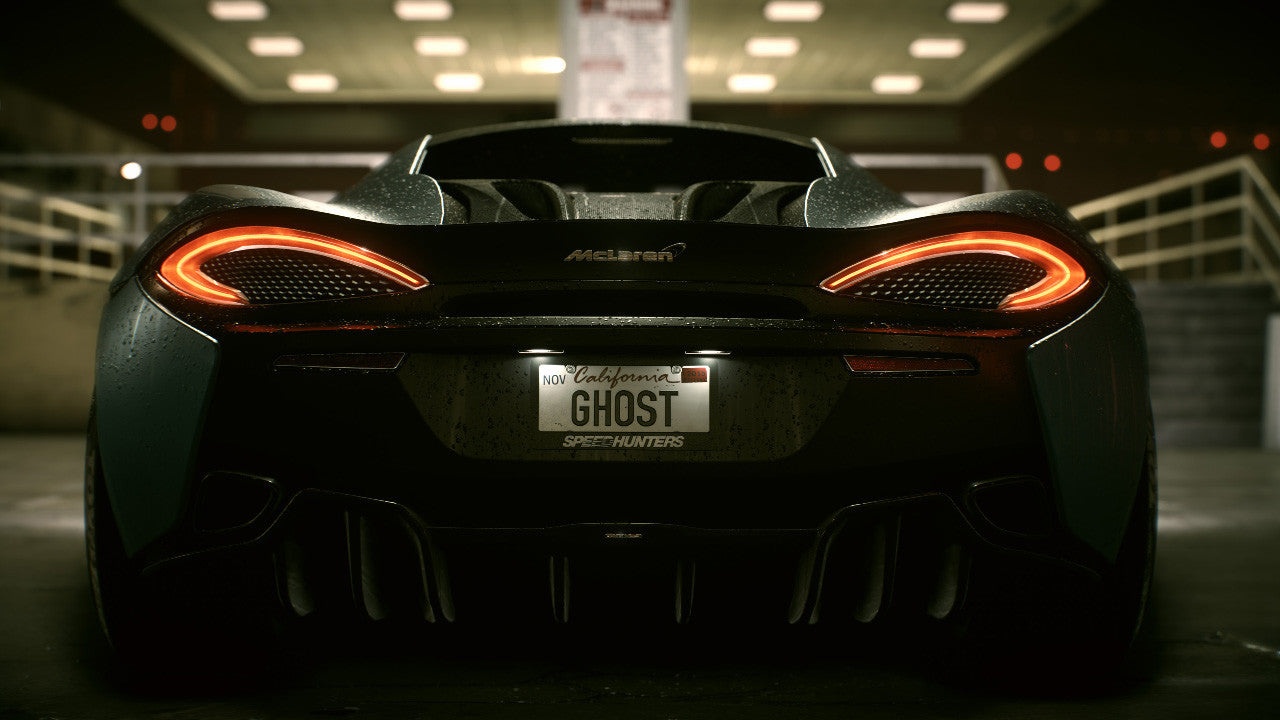

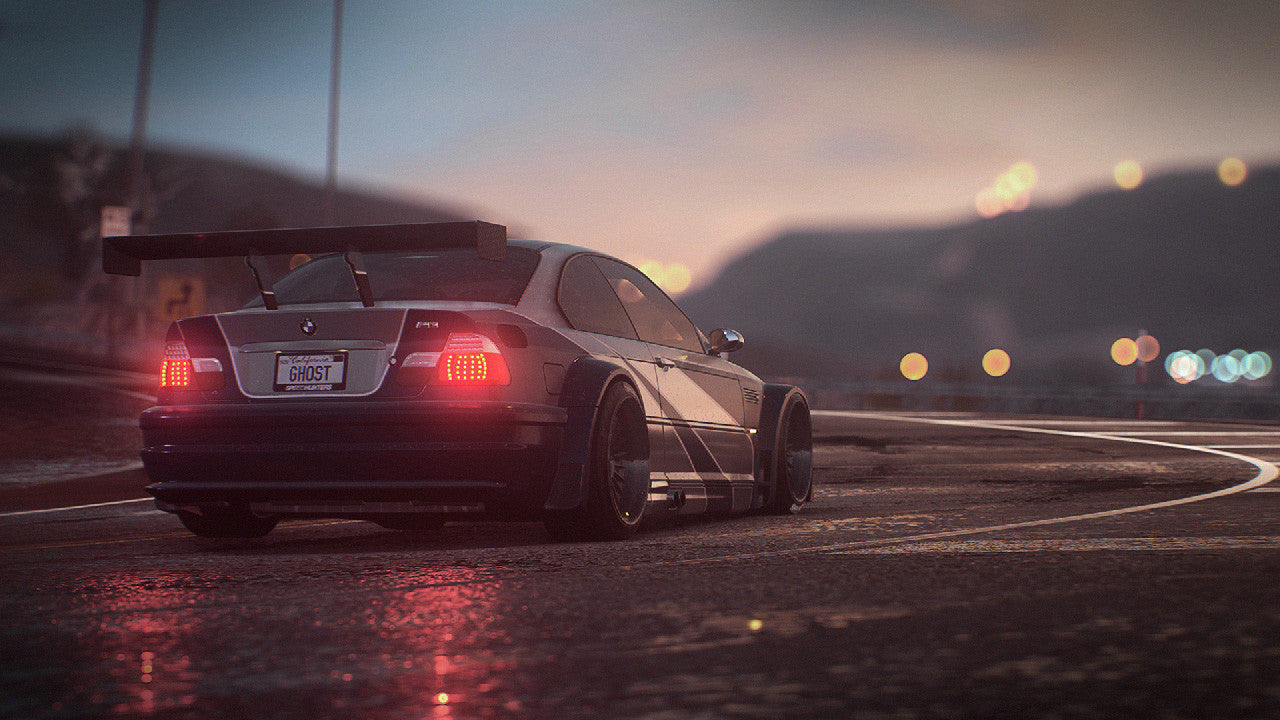
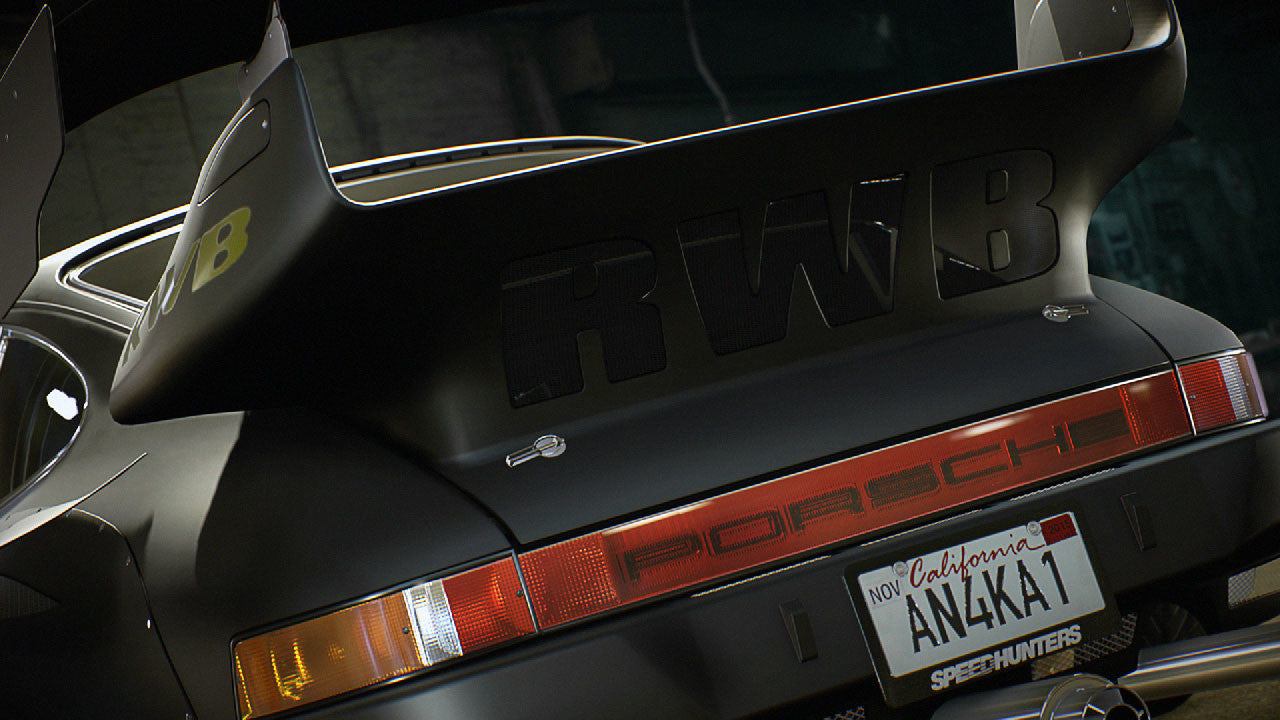


Ventura Bay is a West Coast city that only exists after dark, and Need for Speed hands you a beaten-up starter car and a reputation worth nothing in it. Ghost Games built this 2015 reboot around car culture rather than the leaderboard: real builders and drivers who turn up between races, a garage that matters more than any single finish line, and five separate ways to earn a name.
A city that stays open
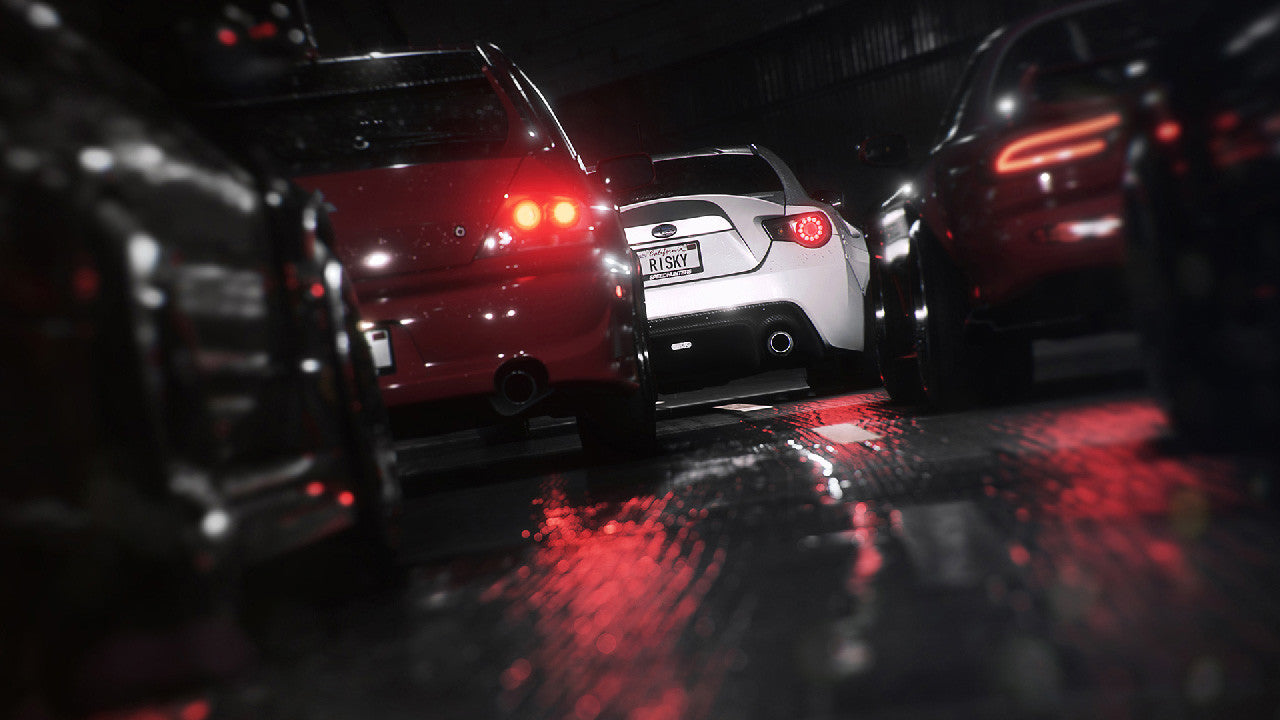
Ventura Bay is one continuous playground rather than a menu of tracks. Dense downtown grids give way to harbour access roads, industrial back lots and the winding canyon runs above the city, and the whole map sits under permanent night with wet asphalt throwing the neon back at you. Events are scattered across it, but nothing stops you cruising between them, hunting a corner you want to take again, or simply parking up somewhere the light is good.
Customization that changes how it drives
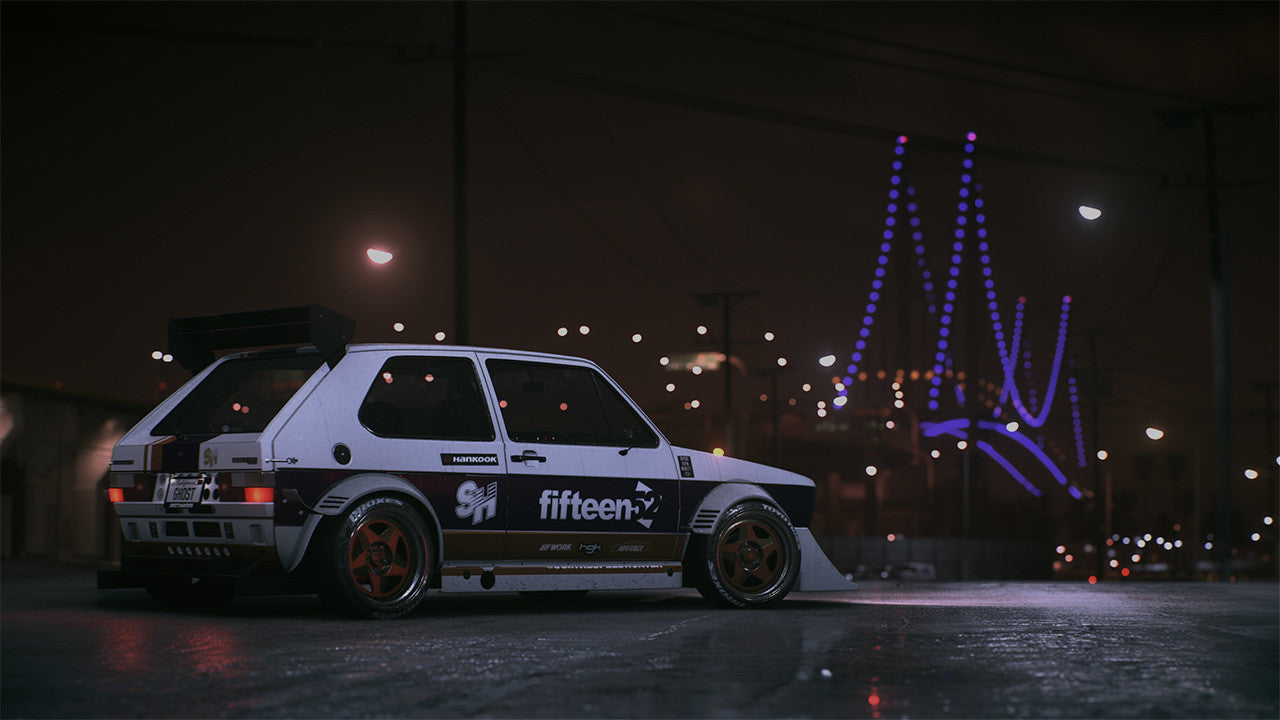
Building a car here runs deeper than a paint menu. The visual side covers body kits, ride height, camber, wheels, wraps and stickers detailed enough that two people can start from the same chassis and finish somewhere completely different. The performance side is where it starts to bite:
- Handling balance
- A live slider moves the car between grip and drift rather than locking you into one driving model, so the same build can be set up to hold a clean racing line or to hang the rear out through every corner. You feel the change immediately on the next run.
- Drivetrain and power
- Turbochargers, engine blocks, exhausts and gearing all stack into how the car pulls out of a corner and how much of that power you can actually put down. Upgrades arrive as you earn reputation, so the garage grows alongside your standing in the city.
- Stance and presence
- Ride height and camber are cosmetic and functional at once, which is the point of the whole thing. A car that looks right parked outside a meet is a car other players and the game's own characters react to, and that reaction is currency here.
Five ways to earn respect
Reputation is not one number. Every event feeds one of five paths, and each path has its own idea of what a good driver looks like:
- Speed is the straightforward one, built on outright pace through sprints, circuits and time trials where the fastest line wins and nothing else counts for much.
- Style rewards drift, angle and commitment, scoring how you get through a corner rather than how quickly, and it pairs naturally with a car set toward the drift end of the handling slider.
- Build is about the car itself, judged at meets and shows where the details of your work are the entry fee and turning up in something generic gets you nowhere.
- Crew pulls you into racing alongside other drivers, running events as a group and taking on rival crews rather than chasing a personal best in isolation.
- Outlaw is the one that ends in flashing lights, built on police pursuits and the long escape afterwards through streets you had better know well by then.
The people behind the cars
The story is told in live action footage cut into the game, with a cast of characters who call and text you between events and pull you into their own arcs across the city. Real car culture figures turn up as icons to chase down and learn from, and later free updates brought Eddie's challenge, the Snapshot Pro photo mode, Ken Block's Hoonicorn and Morohoshi-San's Diablo into the same world. It gives the reputation grind a reason to exist beyond the number going up.
Behind the wheel
The driving model sits deliberately between arcade and simulation, forgiving enough to throw a car sideways on instinct but responsive enough that a properly tuned build feels different from a stock one. Steering wheel and peripheral support covers hardware from Logitech, Thrustmaster and Fanatec for anyone who wants a rim in their hands, and an unlocked frame rate with 4K output means the rain-soaked lighting that carries the whole look of the game gets to do its job. Pick a car, take it out into the dark, and start building the reputation to go with it.
