

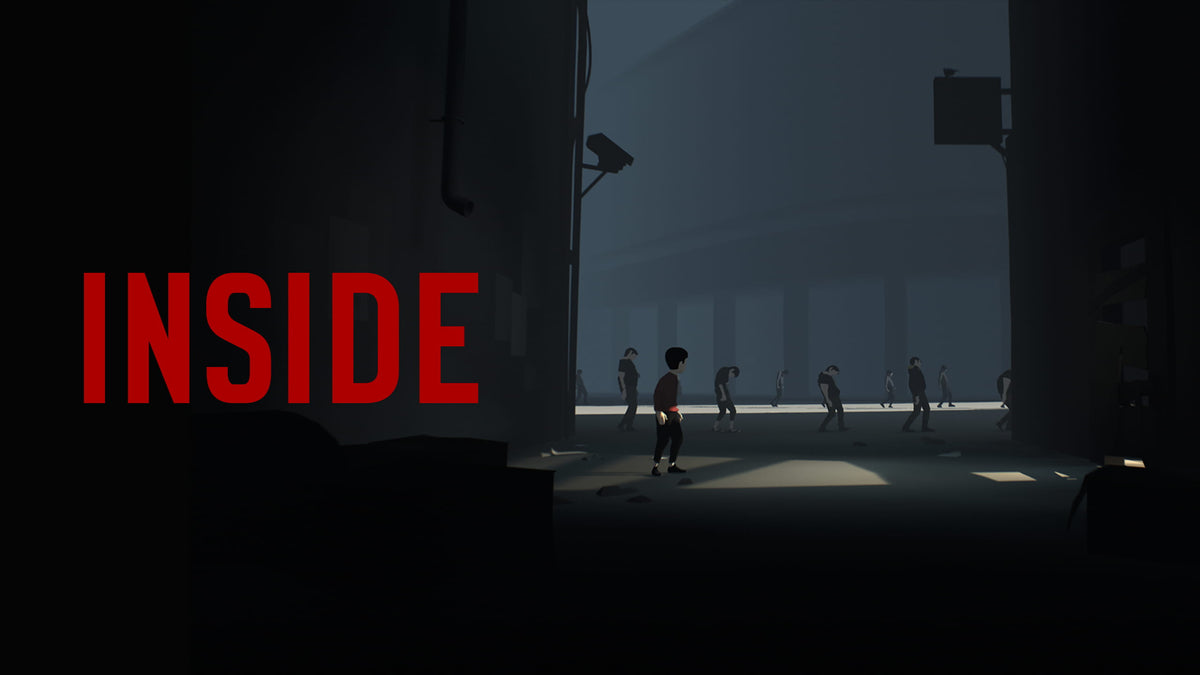
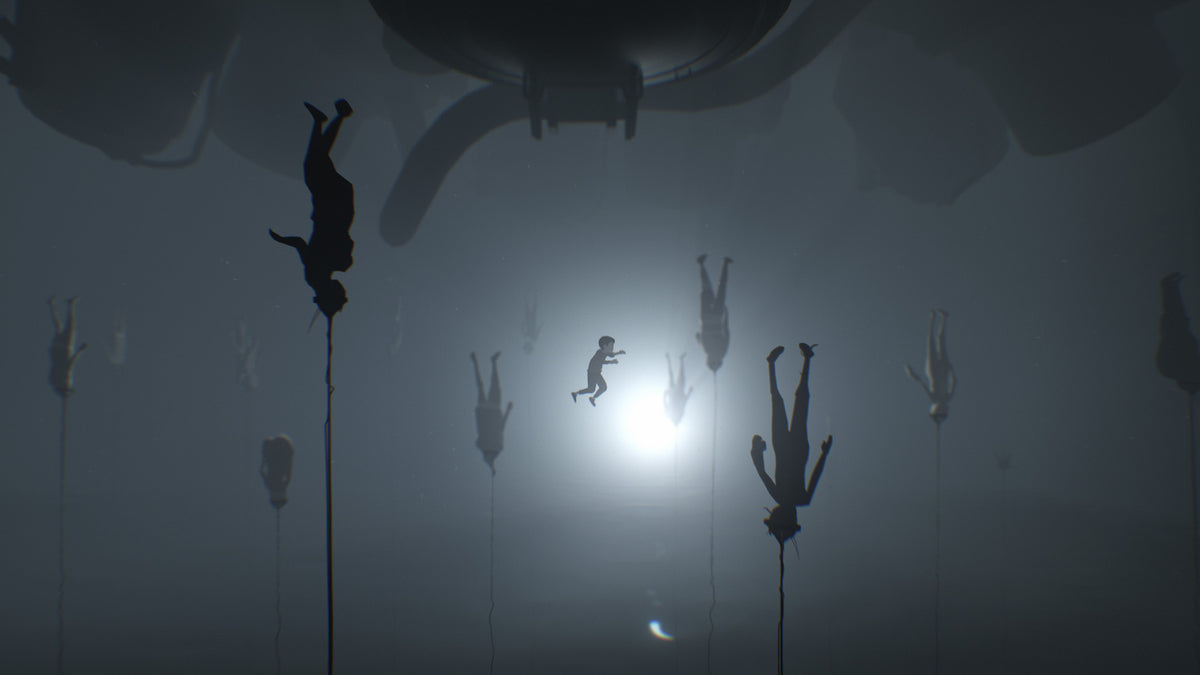
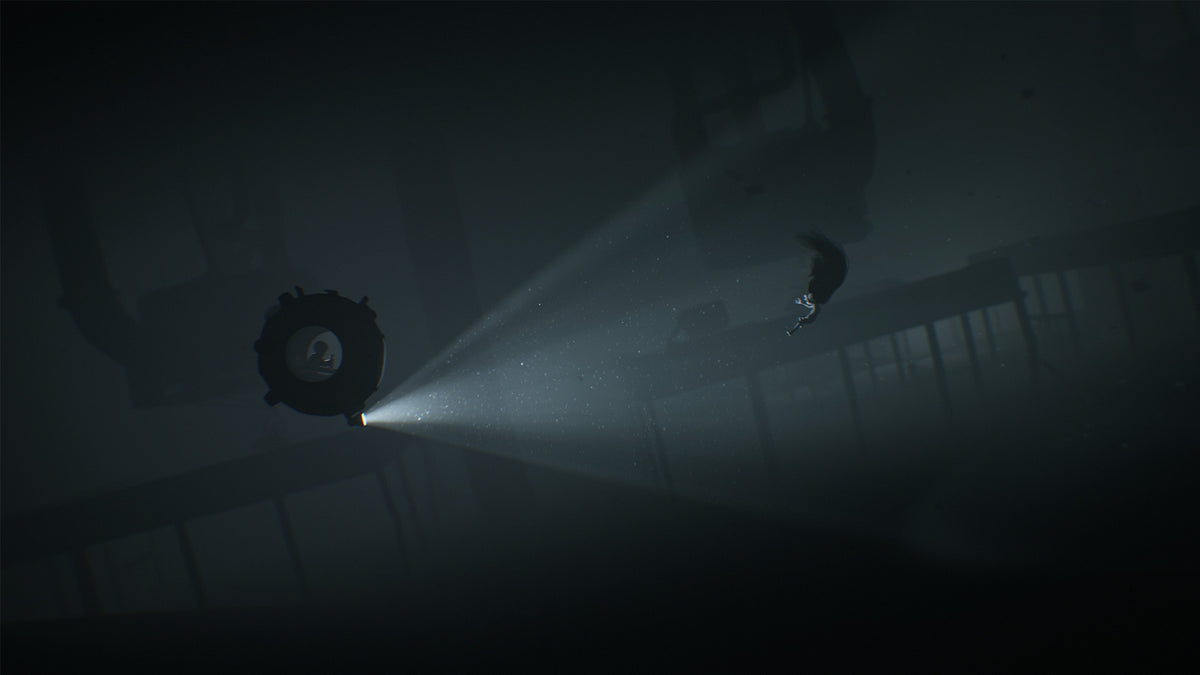
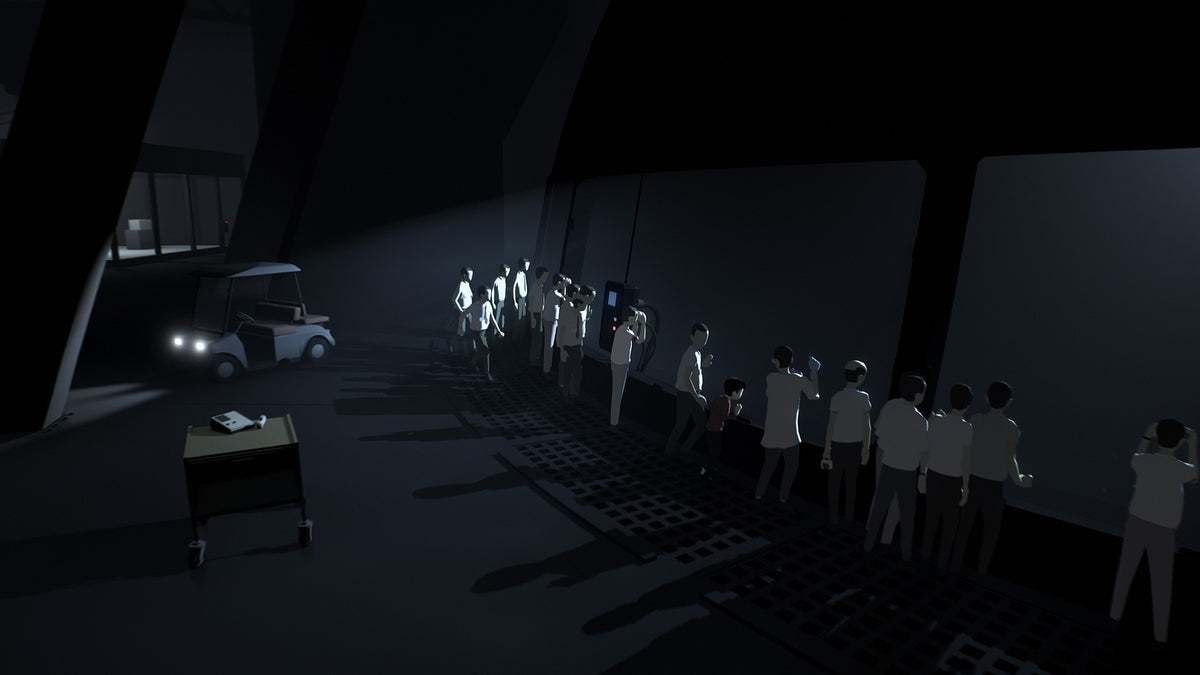


Hunted and alone, a boy in a red sweater slips through a moonlit forest and into the center of a dark project. INSIDE is Playdead's second game, the follow-up to LIMBO, and it takes everything that made that debut so unsettling and builds a larger, stranger and far more precisely engineered world around it. There is no dialogue, no text and no tutorial. There is only the boy, the things pursuing him, and a facility whose purpose you piece together one grim room at a time.
A Descent With No Explanation
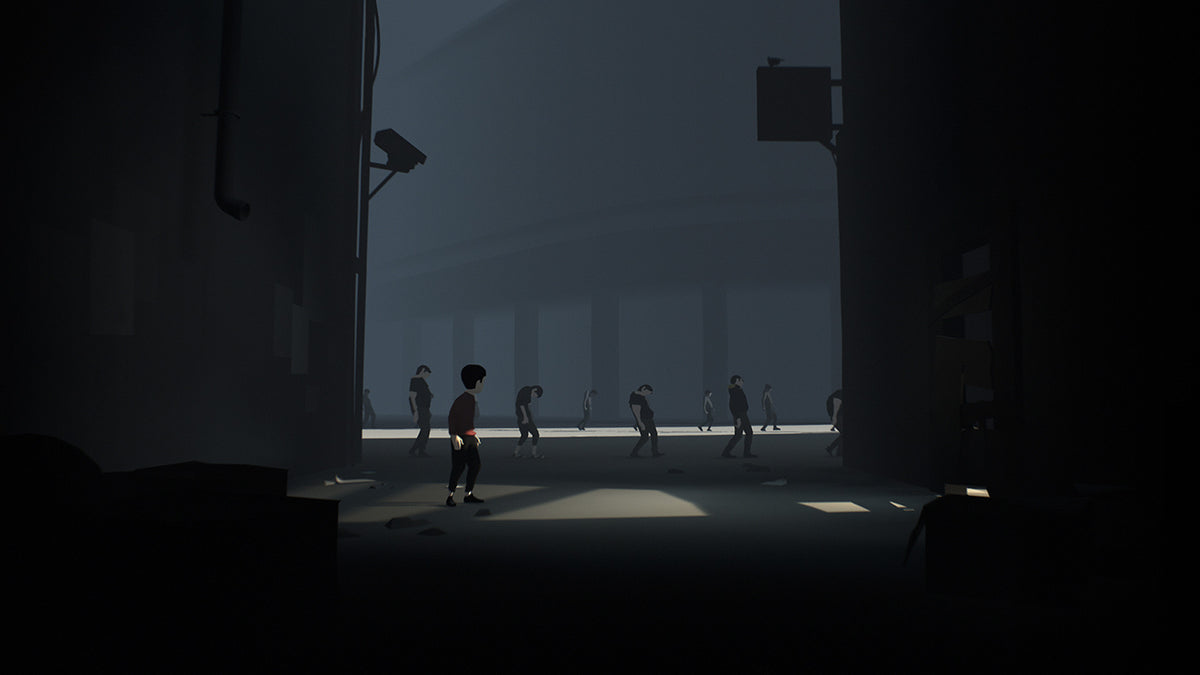
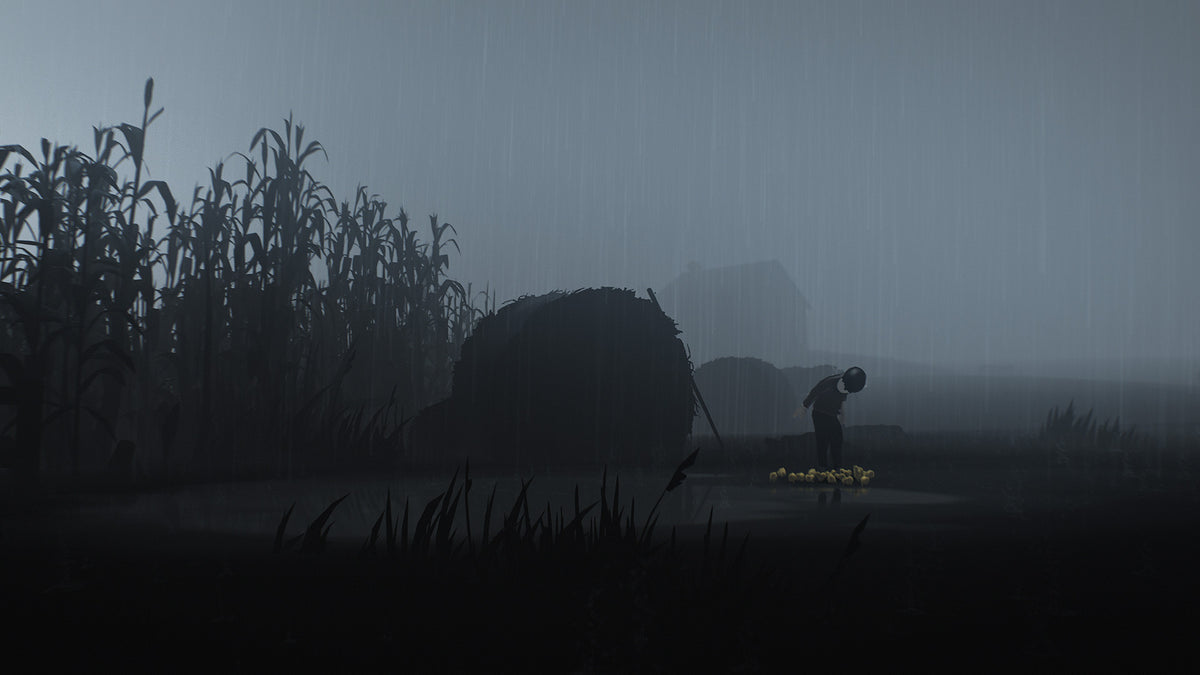
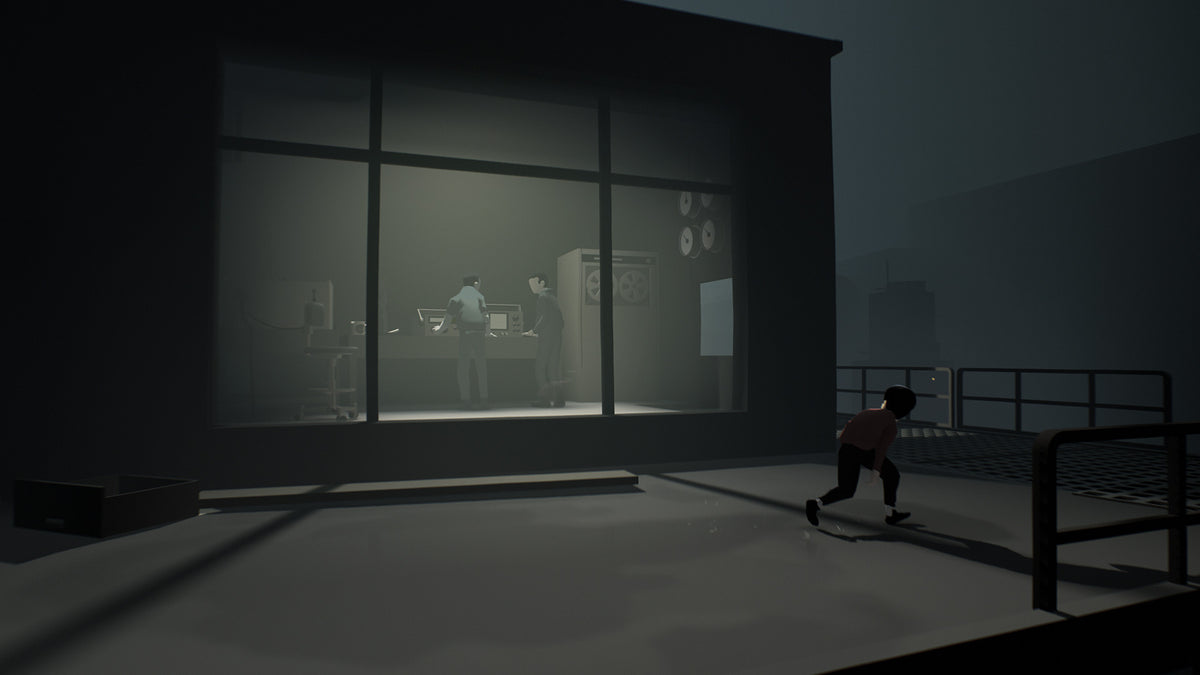
INSIDE opens mid-chase. The boy is already running, already being hunted, and the game never pauses to tell you why. Flashlights sweep the treeline, dogs tear through the undergrowth, and masked figures load limp, obedient bodies into the back of a truck. From there the journey moves steadily inward and downward: a farm where the livestock have gone wrong, a drowned laboratory patrolled by something with long hair that moves faster than you do, a corporate interior where employees watch the boy pass with unnerving calm. Every environment raises a question, and the game answers only with the next environment.
What Playdead understands better than almost anyone is that a story delivered through animation and staging can land harder than one delivered through cutscenes. The boy's body language, the way crowds of workers shuffle in lockstep, the small details in the background of a room you are about to leave, all of it accumulates. By the final act INSIDE turns into something genuinely unexpected, and the ending has been argued over since the day the game launched.
Puzzles Built on Weight, Timing and Control
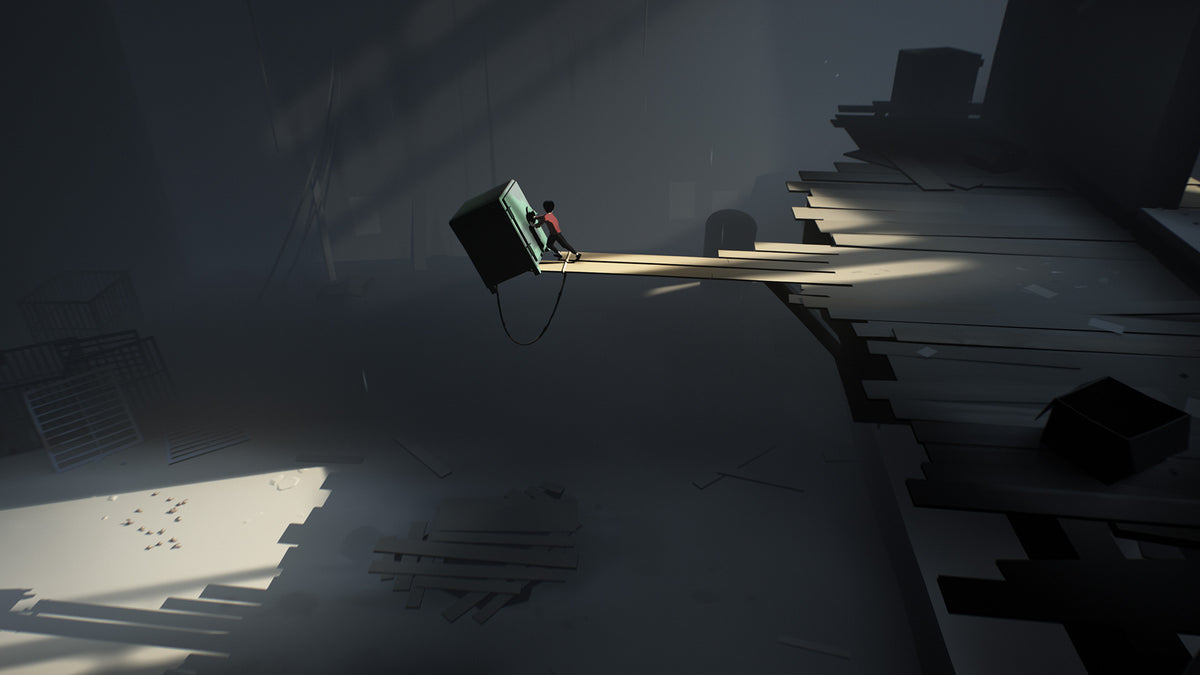
Mechanically this is a 2.5D puzzle platformer in the LIMBO tradition, but the puzzle language is broader and more physical. The boy can run, jump, climb, swim and push and pull objects, and that is the whole verb set. Playdead does the rest with the world itself.
- Physics you can feel
- Crates have real mass, ropes swing with momentum, and water drags at you the moment you dive. Many puzzles come down to reading how something will move before you commit, and the animation is honest enough that you can trust what you see.
- Stealth under pressure
- Searchlights, guards and dogs turn several sequences into tense timing exercises. Break cover a half-second early and the fail state is swift and grisly; wait for the right beat and the boy slips through untouched. Checkpoints are generous, so experimentation costs little.
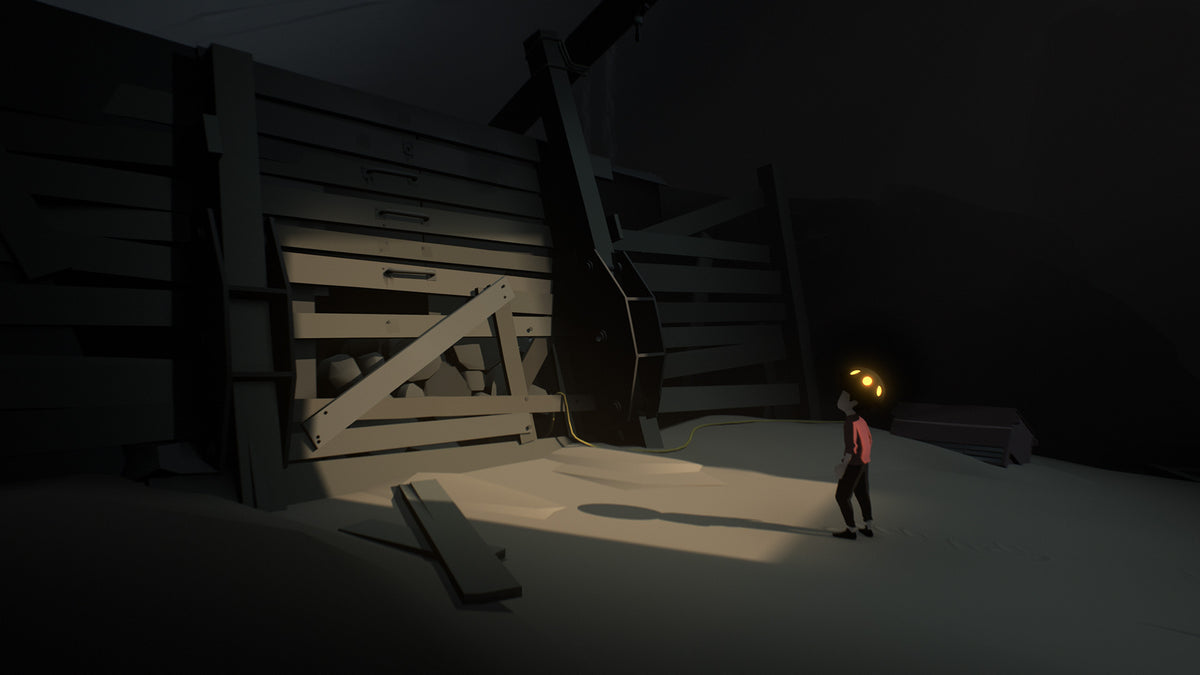
- Mind-control helmets
- The signature mechanic. Hook the boy into a dangling helmet and he takes control of nearby lifeless bodies, marching them in unison to stand on switches, form human ladders or take a fall he cannot survive himself. Later the game chains these controllers together, and the puzzle logic folds in on itself.
- Water and pressure
- Submarine sections, shockwaves that must be weathered from behind cover, and long breath-holding swims give the back half of the game a rhythm all its own. Each new hazard is taught by doing, never by text.
Hidden through the levels are a handful of glowing orbs tucked into places the main path never asks you to visit. They feed the achievement list, and the curious will find they add up to something more.
Art, Animation and Sound
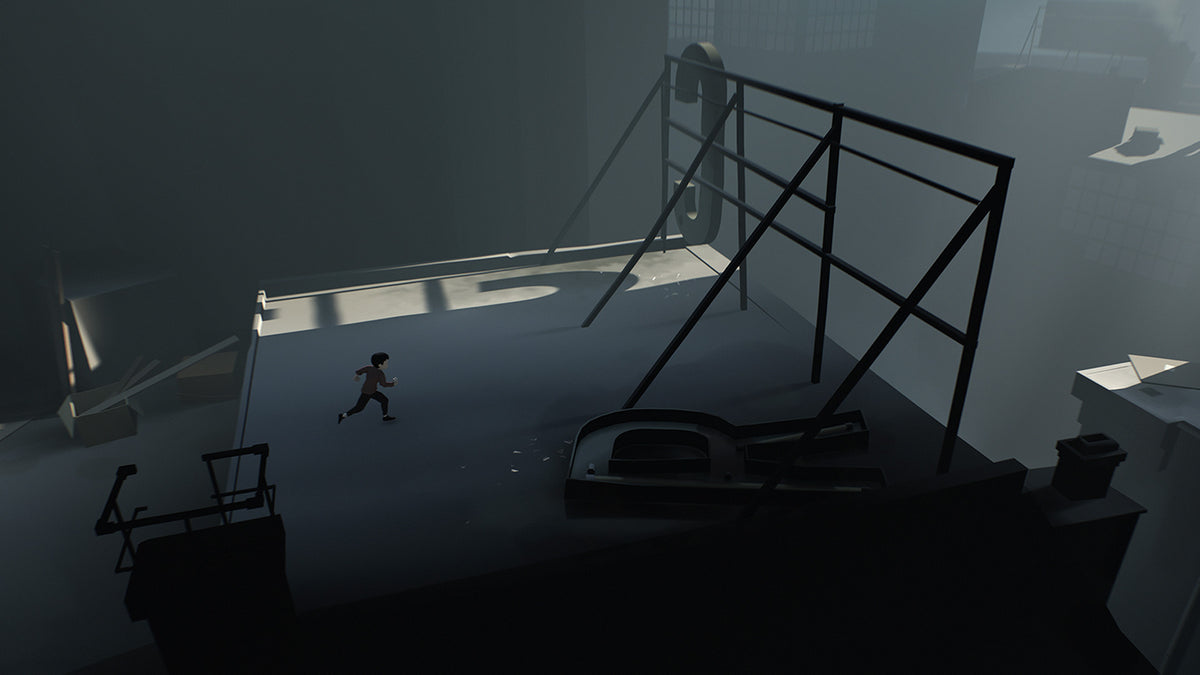
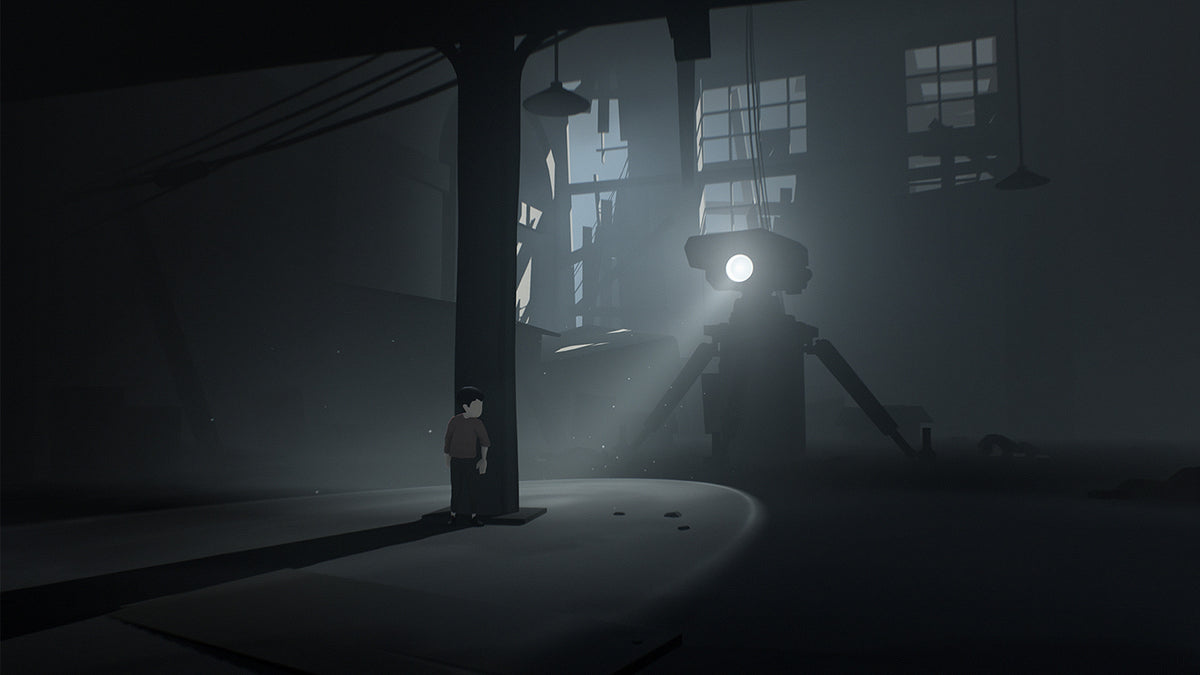
INSIDE looks like nothing else. The palette is muted grays, deep blacks and sickly industrial light, with the boy's red sweater the one warm color on screen. Because the game is rendered in full 3D and played on a 2D plane, the camera can drift, pull back and reveal depth in ways a flat platformer cannot, and Playdead uses that freedom sparingly and to devastating effect.
- The character animation is among the best in the medium. The boy stumbles, catches his breath, flinches at sudden noise and hauls himself over ledges with visible effort, all of which makes his deaths land harder than any amount of gore would.
- The score and sound design by Martin Stig Andersen and Søs Gunver Ryberg is sparse and largely ambient, built from hums, pulses and distant machinery. Andersen famously ran parts of the audio through a real human skull to give it a muffled, inside-the-head quality that fits the game's title perfectly.
- Playdead's sense of humor is pitch-black. INSIDE is grim, but it also has a sly comic timing in how it stages its horrors, and that balance is a large part of why the tone never becomes numbing.
Playdead's Craft
Directed by Playdead co-founder Arnt Jensen from the studio's home in Copenhagen, INSIDE took six years to follow LIMBO, and the patience shows. It arrived in July 2016 to a critical reception few games ever see, including a perfect score from IGN, and then swept the awards season: Best Art Direction and Best Independent Game at The Game Awards, four BAFTA Games Awards for Artistic Achievement, Game Design, Narrative and Original Property, three D.I.C.E. Awards including Outstanding Achievement in Game Direction, and Best Audio and Best Visual Art from the Game Developers Choice Awards.
It is a compact game, a single evening or two for most players, and it earns every minute. Nothing is padded, nothing repeats, and the credits arrive exactly when the story has finished saying what it has to say.
Step Into the Dark
Play it with the lights off and the volume up, and go in knowing as little as possible. INSIDE trusts you to watch, listen and work things out for yourself, and the reward for that trust is one of the most memorable final hours in modern games. Take the boy's hand and see how far down it goes.
