

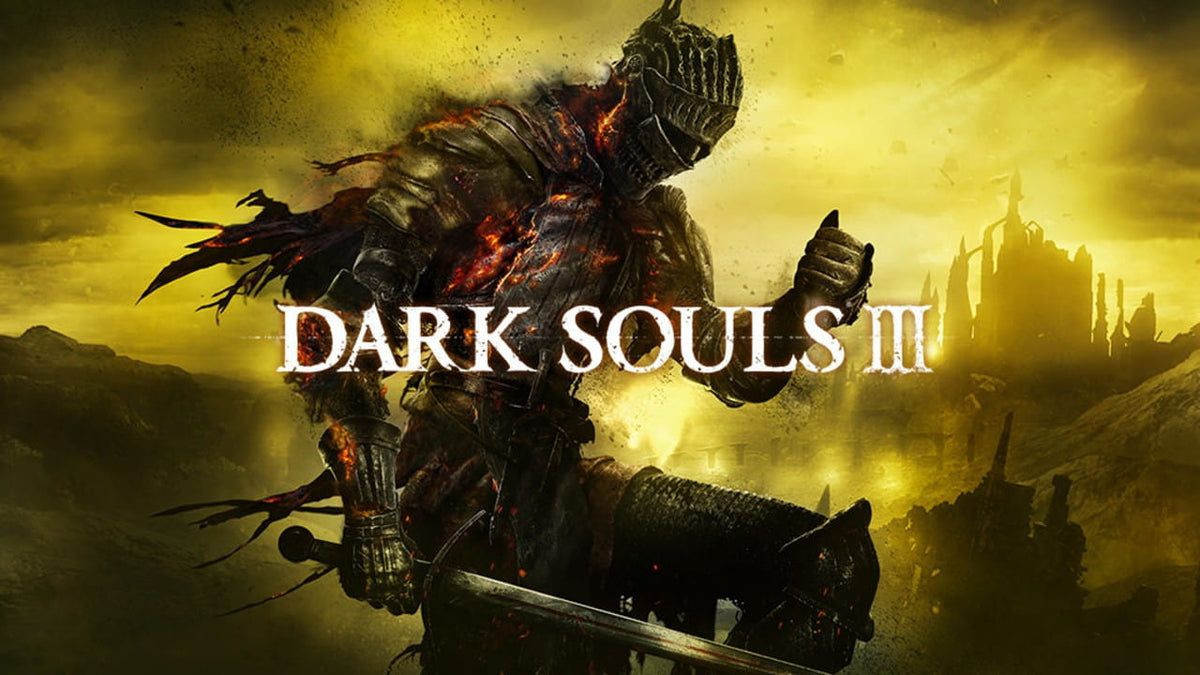
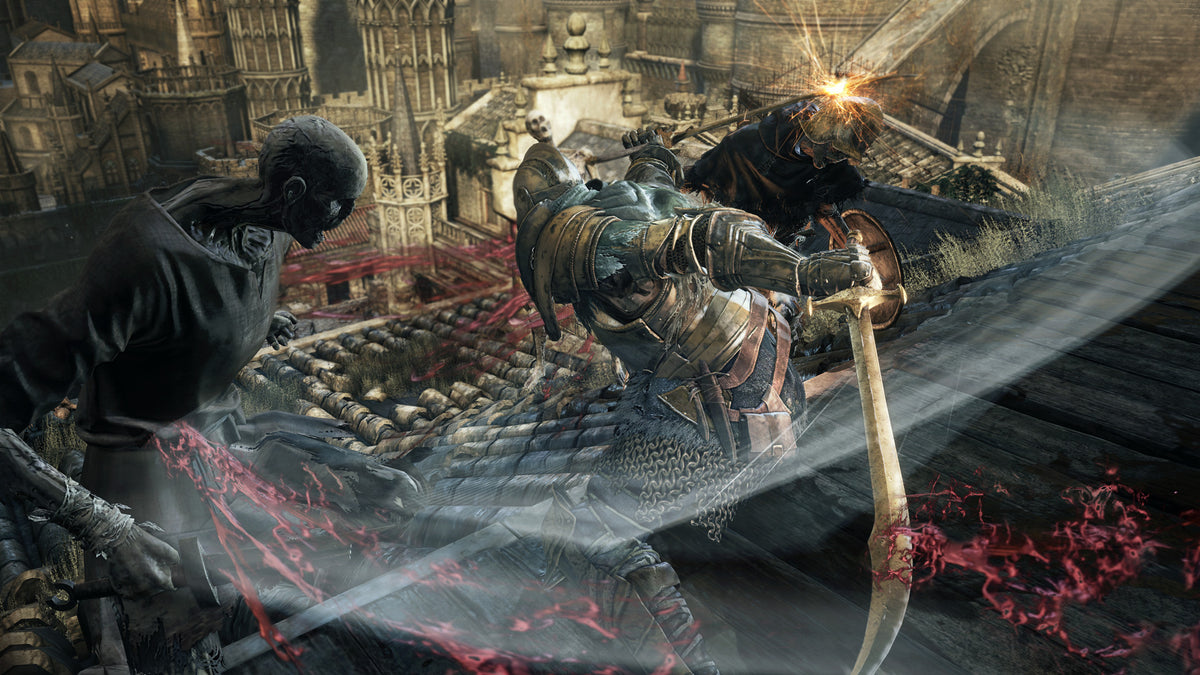
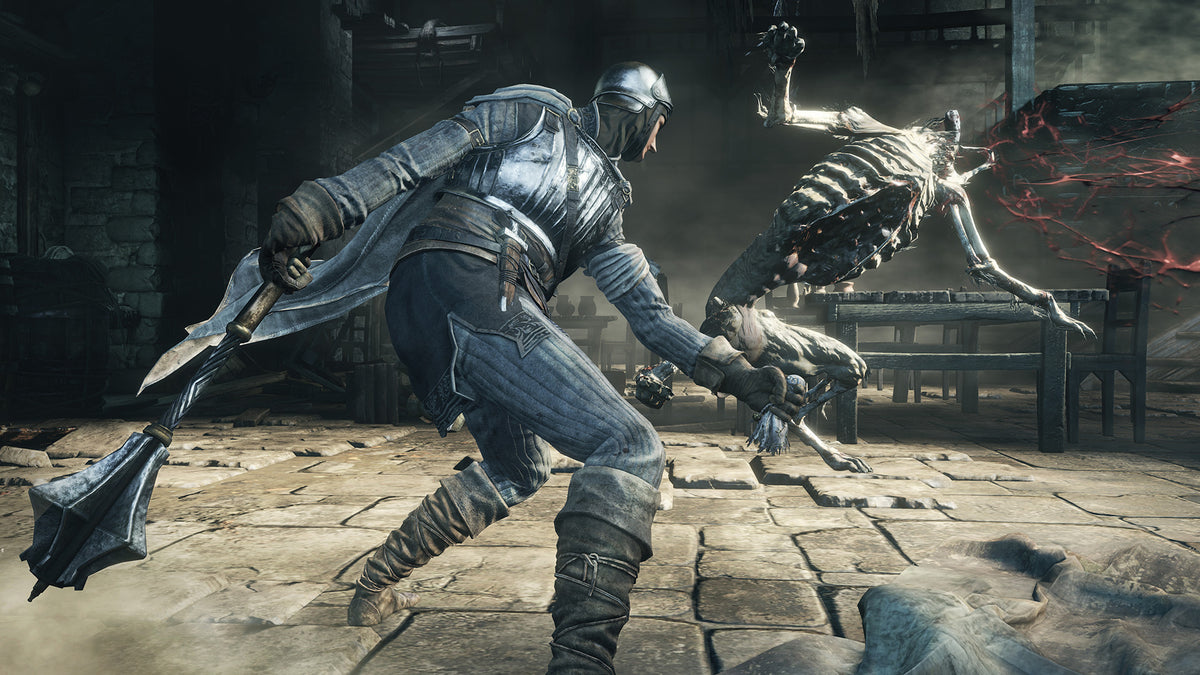
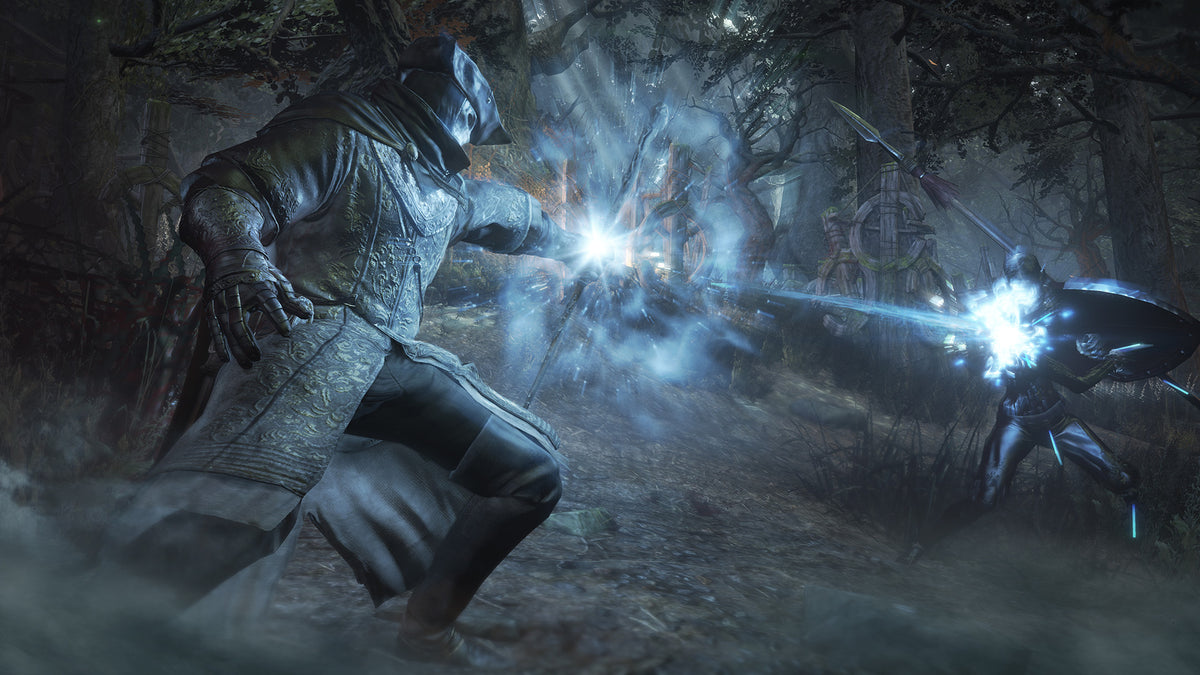
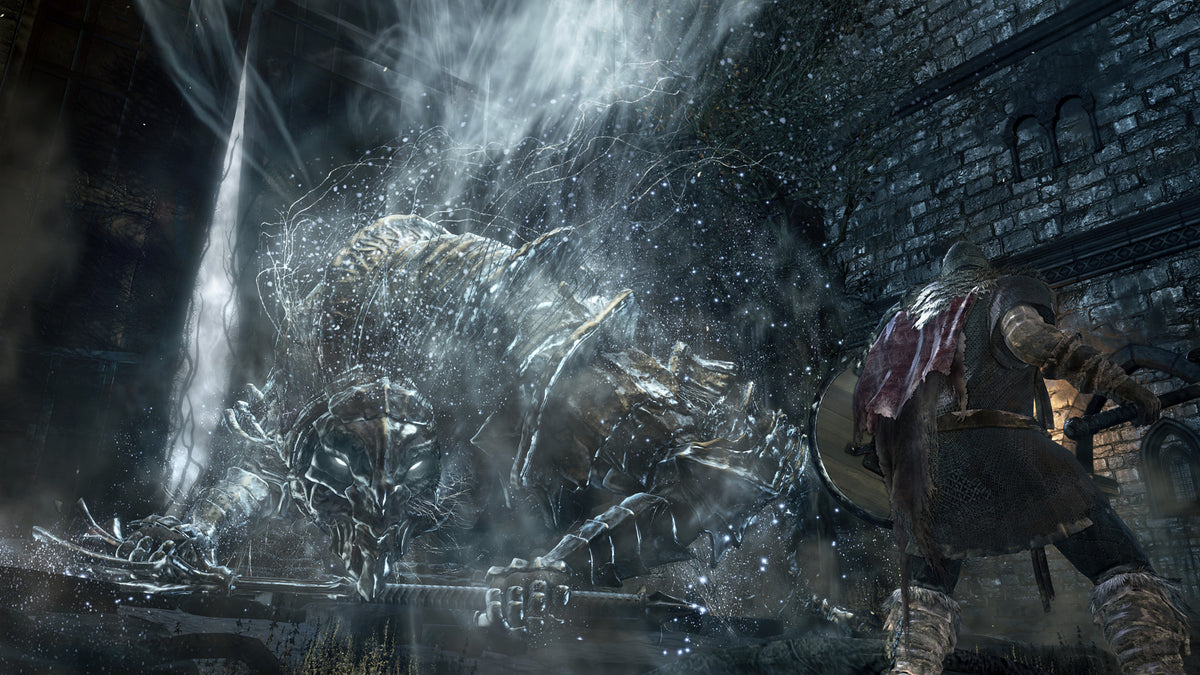
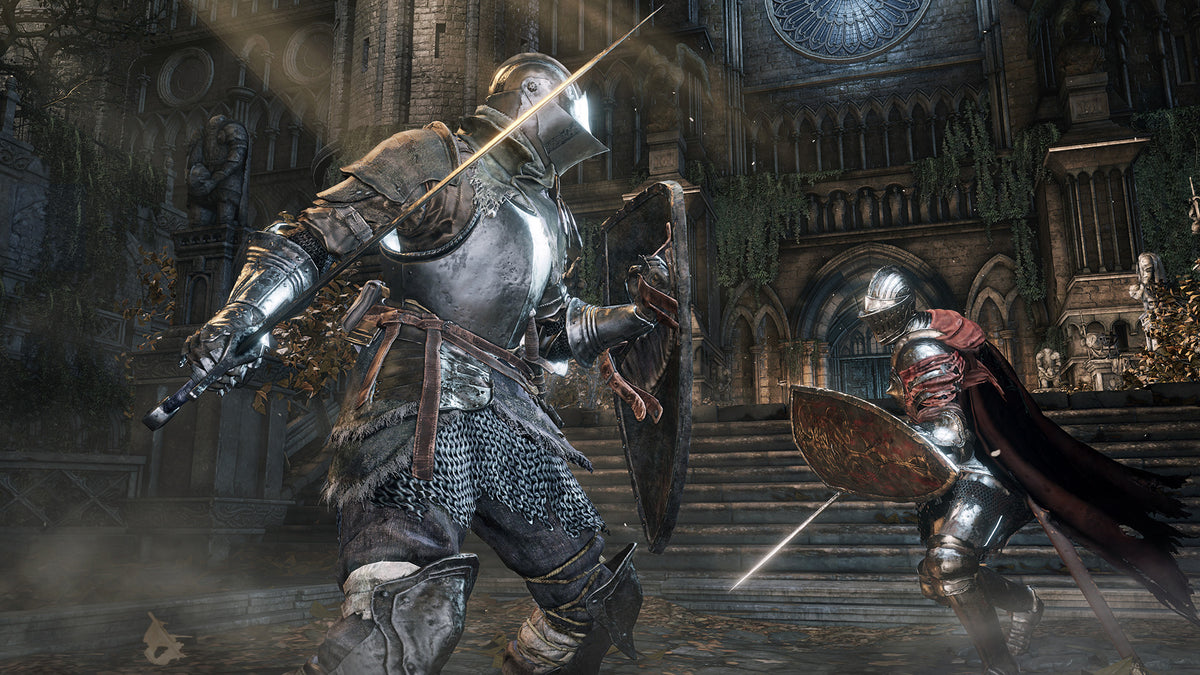
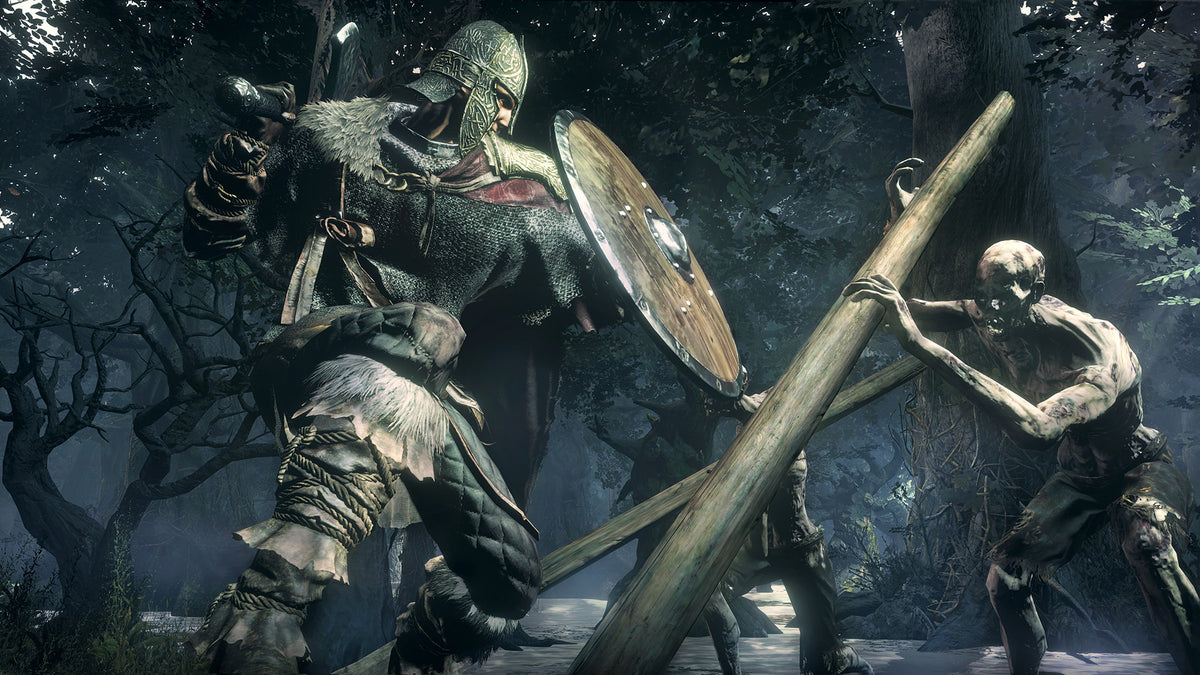
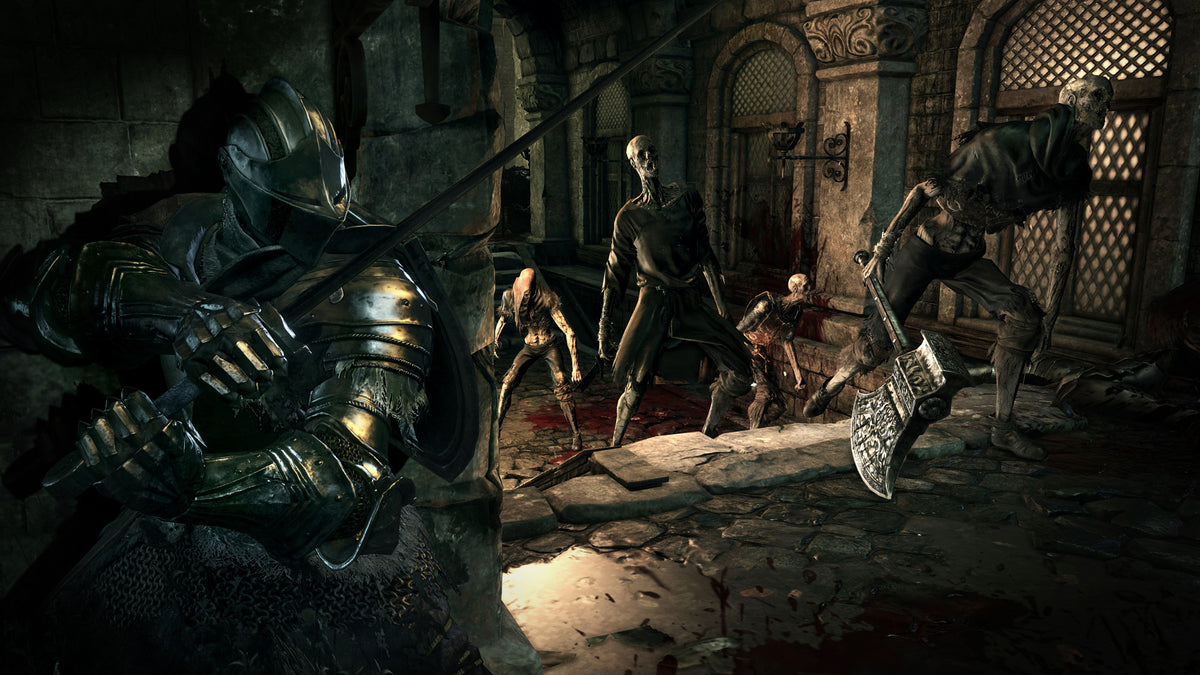


The First Flame is guttering out, and the Lords of Cinder who once linked it have abandoned their thrones. You rise from the grave as Unkindled Ash, a failed ember with a single task: drag them back to Firelink Shrine by force. Dark Souls III is the closing chapter of FromSoftware's trilogy, with Hidetaka Miyazaki back in the director's chair for the series' fastest and most confident entry, and the Golden Joystick Awards 2016 Game of the Year.
A Kingdom at the End of the Age of Fire
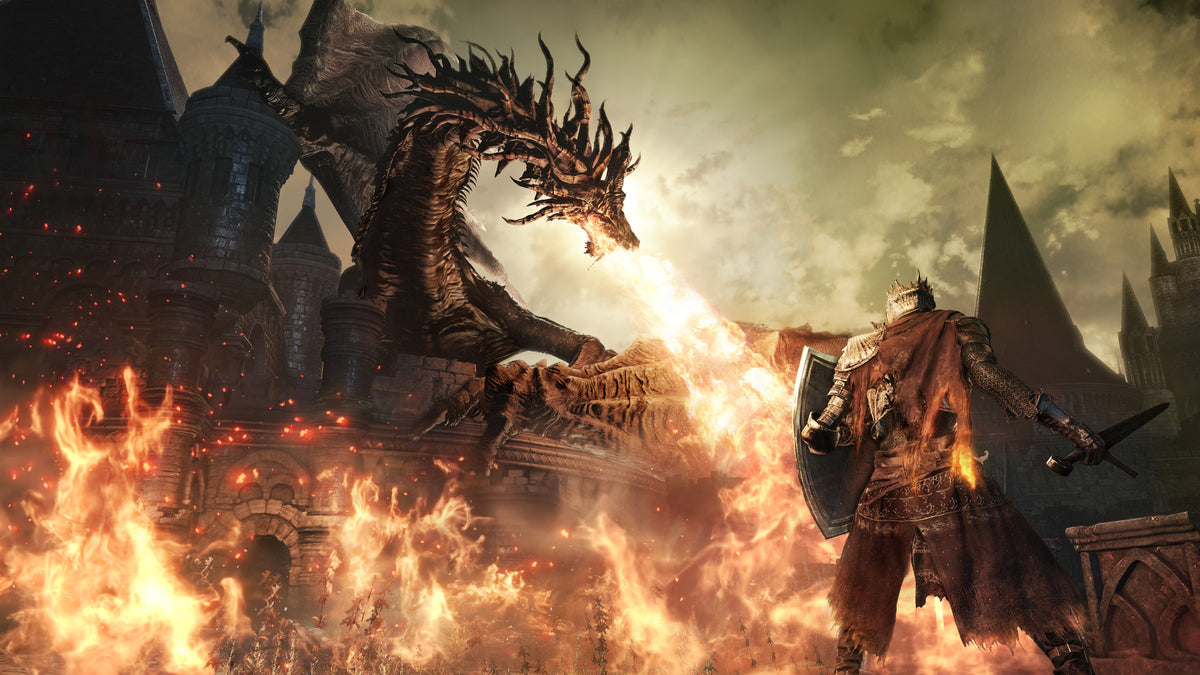
Lothric is where the transitory lands converge as the age of fire ends, and every region you pass through is a fragment of what came before. The High Wall of Lothric gives way to the Undead Settlement, the Road of Sacrifices, the Cathedral of the Deep, the poisoned mire of Farron Keep and the moonlit streets of Irithyll of the Boreal Valley, before a broken Anor Londo and the towering Lothric Castle bring you to the end of the road. Each area folds back on itself with shortcuts, hidden ladders and illusory walls, so that a bonfire kindled in the right place turns a brutal gauntlet into a manageable route.
The story is never handed to you. It sits in item descriptions, in the words of the Fire Keeper, Andre the blacksmith and the wandering knight Siegward of Catarina, and in the ruined architecture itself. Piecing together why the Lords fled and what the Unkindled truly are is one of the game's quiet rewards, and it pays back players who have followed the series since the first Firelink Shrine.
Combat Built for Aggression
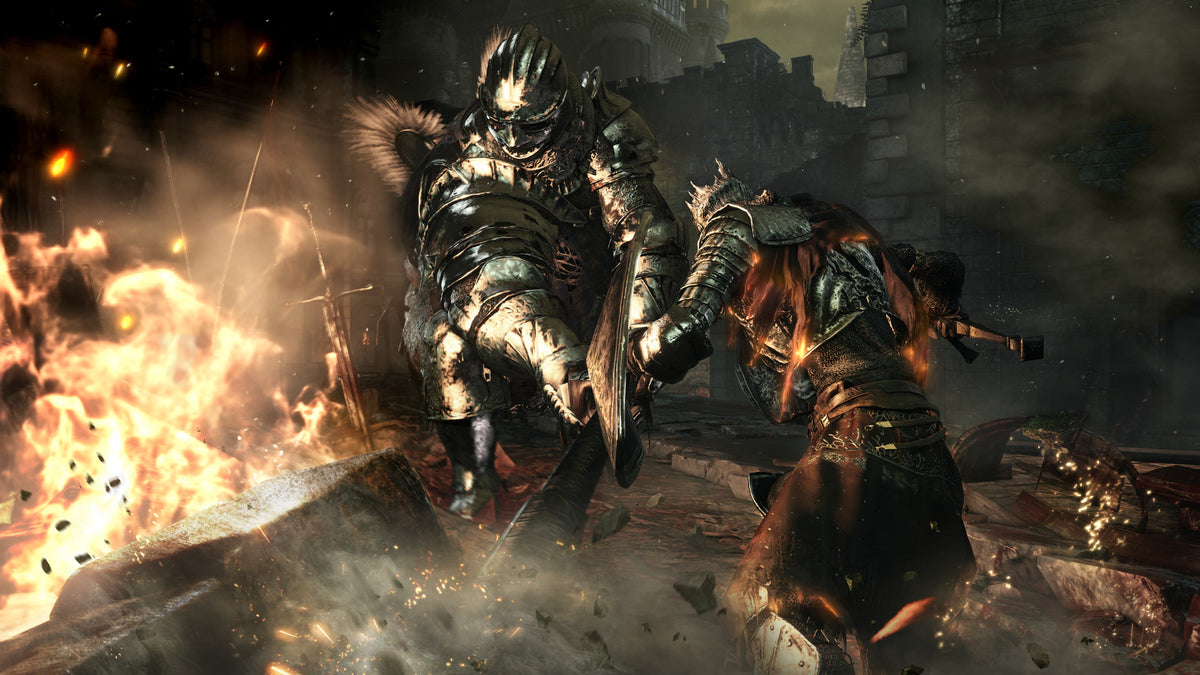
Dark Souls III moves faster than any earlier Dark Souls. Stamina recovers quickly, rolls are generous, and enemies close distance and combo with real intent, so hanging back behind a shield is rarely the safe option it used to be. Every weapon carries a Skill, a special art fueled by a new FP bar: a greatsword's stance attack, a spear's charge, a katana's quick draw. Estus is split between the familiar healing flask and an Ashen Estus Flask that restores FP, and you decide the ratio at the bonfire. Sorcery, pyromancy and miracles draw on the same FP pool, so a caster manages the bar as carefully as a knight manages stamina.
The bosses are where the design shows most clearly, and several of them are the best FromSoftware has ever produced.
- Iudex Gundyr
- The game's opening test. A measured halberd duel that becomes something far uglier partway through, and the first sign that you should never assume a fight is over.
- The Abyss Watchers
- A legion of Undead Legion swordsmen who fight each other as readily as you, then rise again as a single flame-wreathed Lord of Cinder. Fast, elegant and unforgettable.
- Pontiff Sulyvahn
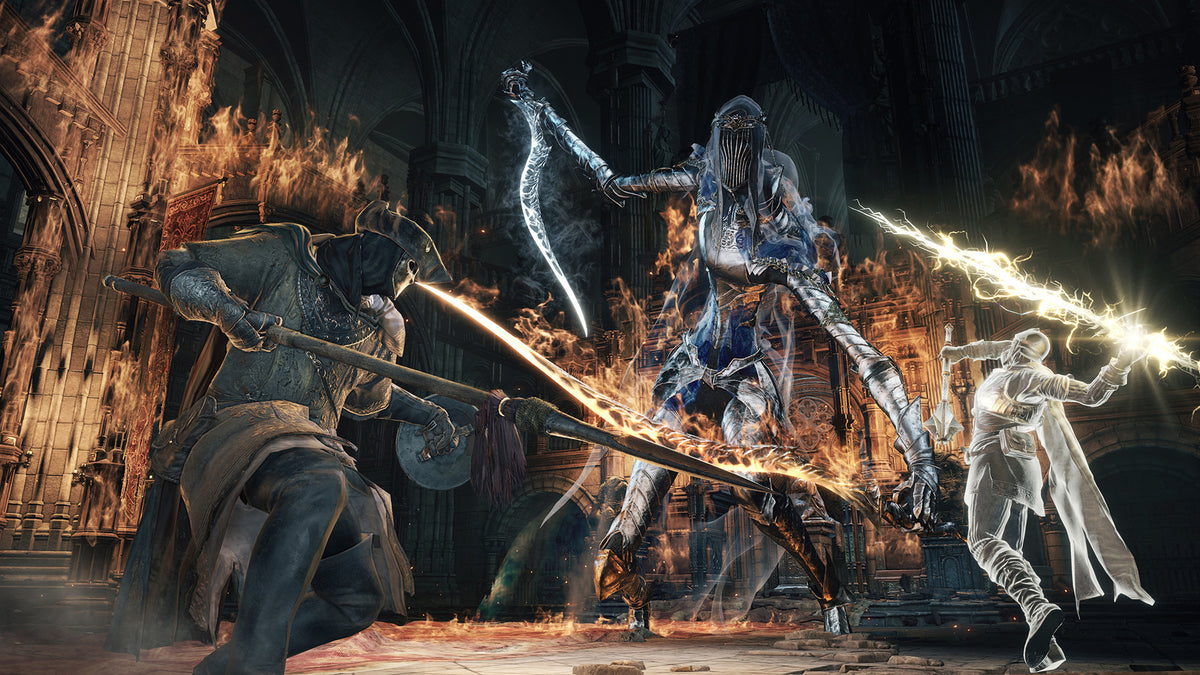
- The tyrant of Irithyll, wielding a sword of fire and a sword of moonlight at once. A dance of feints and delayed swings that punishes panic rolling more than any fight before it.
- The Nameless King
- An optional encounter at Archdragon Peak, and one of the hardest in the series. A storm drake and its rider, then a duel against a god of war whose every swing carries lightning.
Covenants, Summons and Invasions
Online play is woven directly into the world rather than bolted onto a menu, and it still runs on the rules Dark Souls established.
- Burn an Ember and your maximum health rises, but so does your visibility. Embered players can summon phantoms to help with a boss or an area, and can be invaded by other players looking for a fight.
- Covenants shape how you meet others. The Way of Blue calls for protection and the Blue Sentinels answer it; the Watchdogs of Farron and Aldrich Faithful guard their territory against trespassers; the Mound-makers simply want chaos.
- Password matchmaking lets friends summon each other regardless of level, with the summoned ally scaled down to match. A leveled veteran can walk a first-timer through the High Wall without trivializing the game entirely.
Built to Be Played Again
A first run through Lothric takes most players somewhere between forty and sixty hours, and it is rarely the last. Four endings hinge on choices that are easy to miss, from linking the fire to letting it die, with or without the Fire Keeper at your side, or usurping it altogether, and New Game Plus keeps your character, weapons and rings while raising the stakes. Stat builds change the game as much as the difficulty does: a Luck-focused bleed build, a pure pyromancer and a heavy-armor greatshield knight play three genuinely different games.
The bonfire at Firelink Shrine is lit and the thrones sit empty. Take up your sword, kindle your first ember and go find out what became of the Lords of Cinder.
