

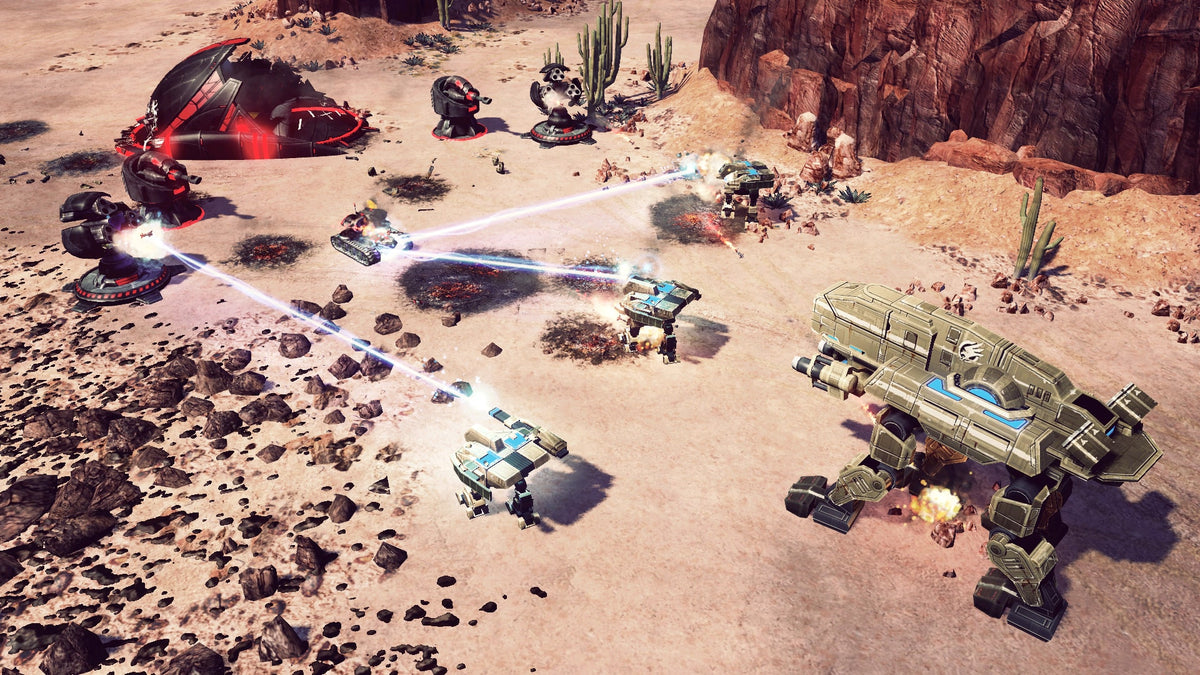
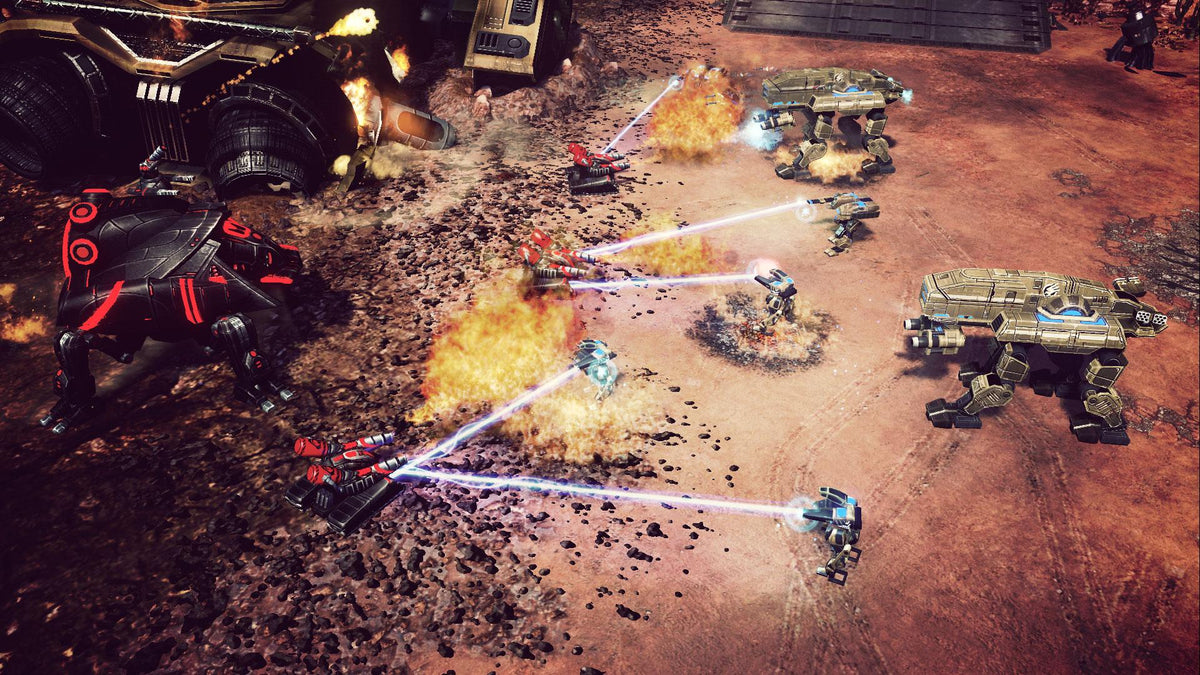
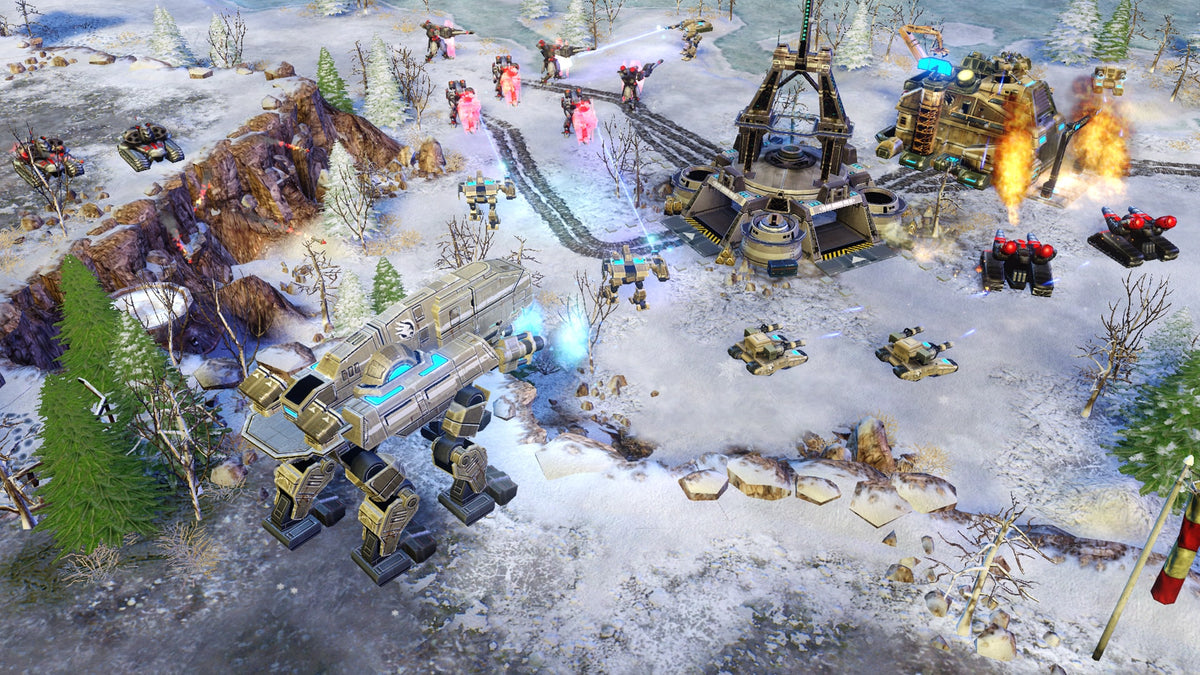
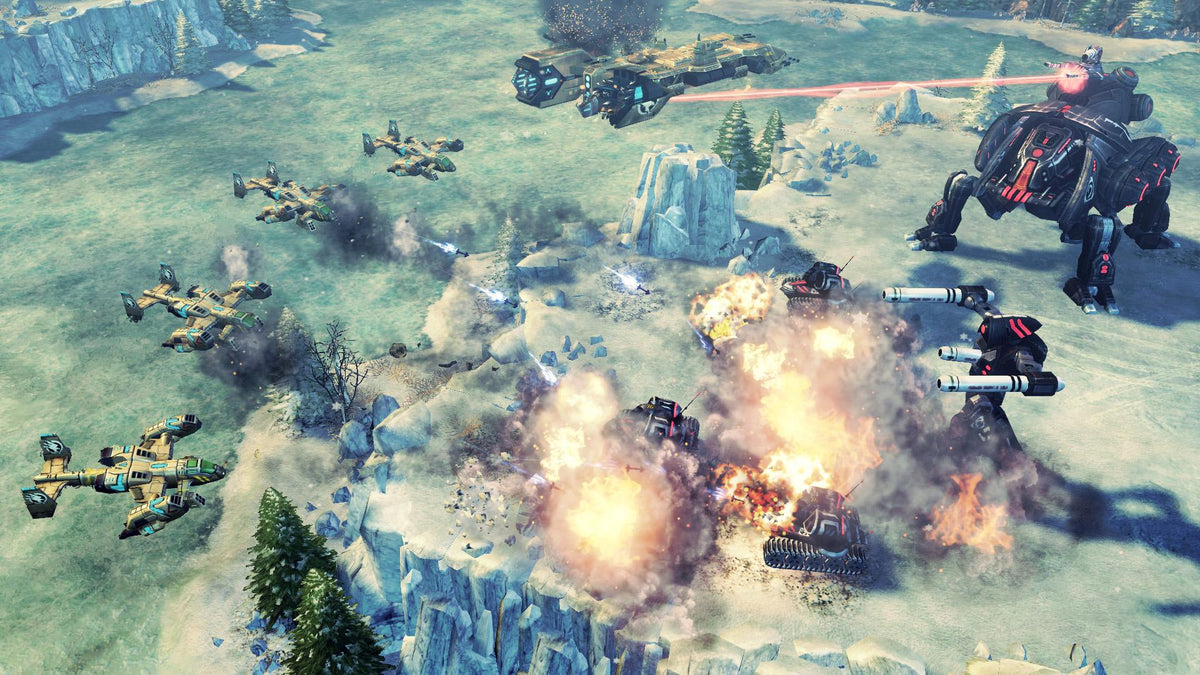
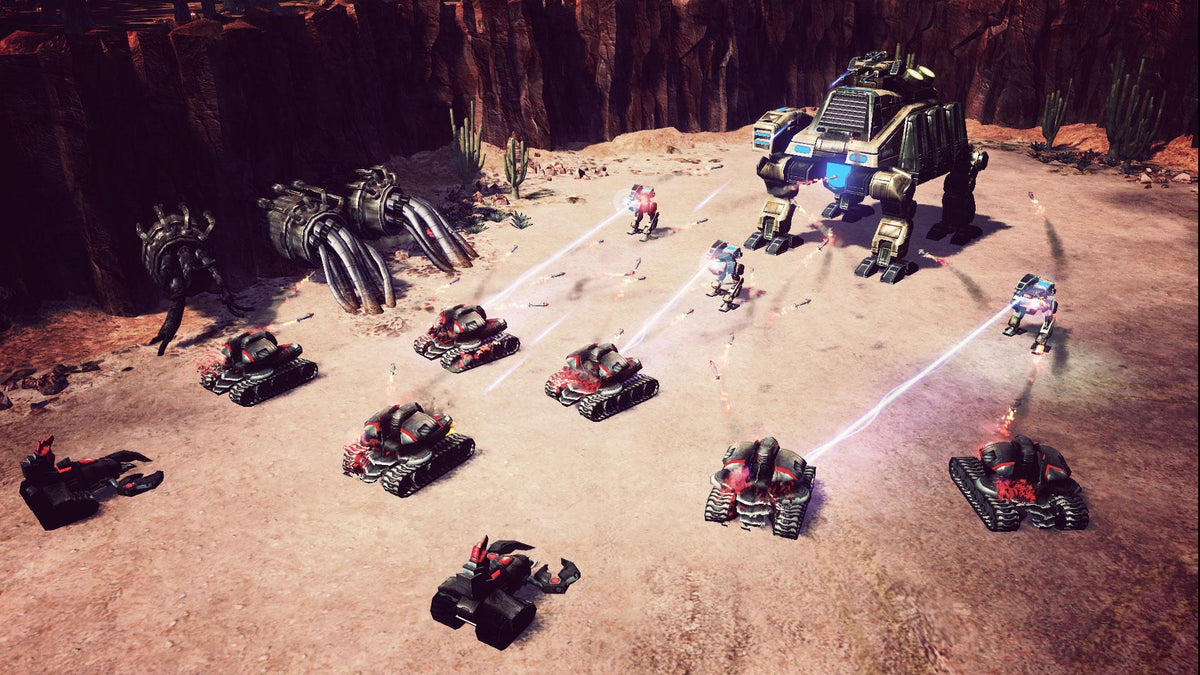
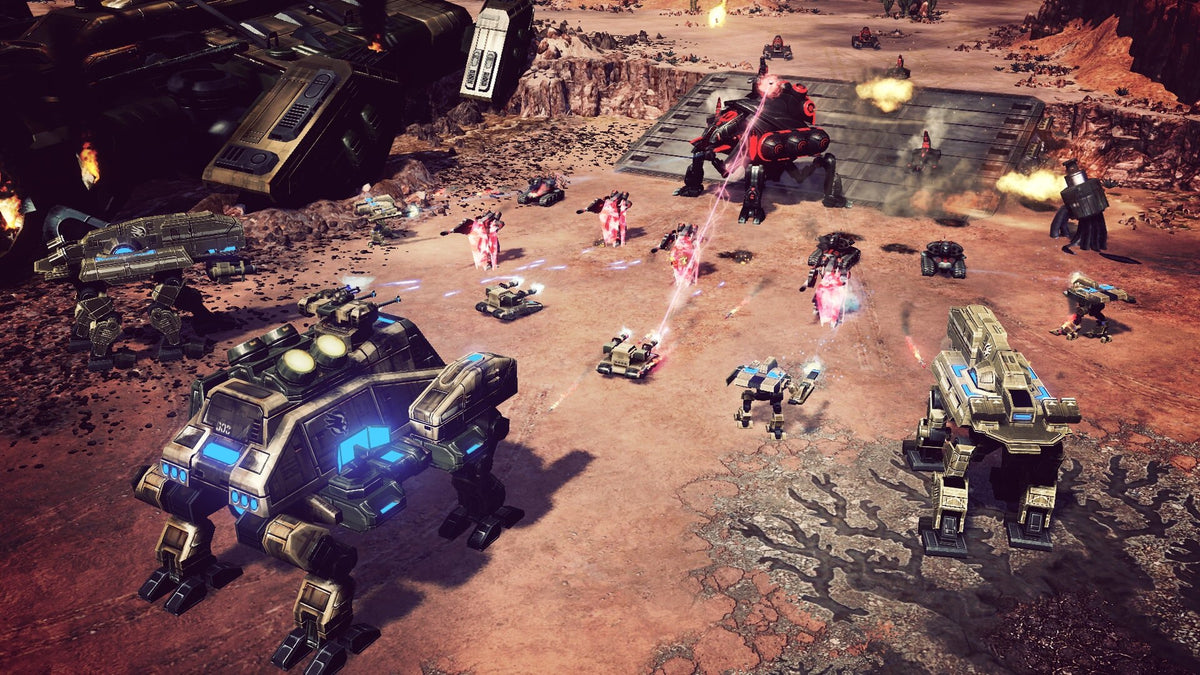
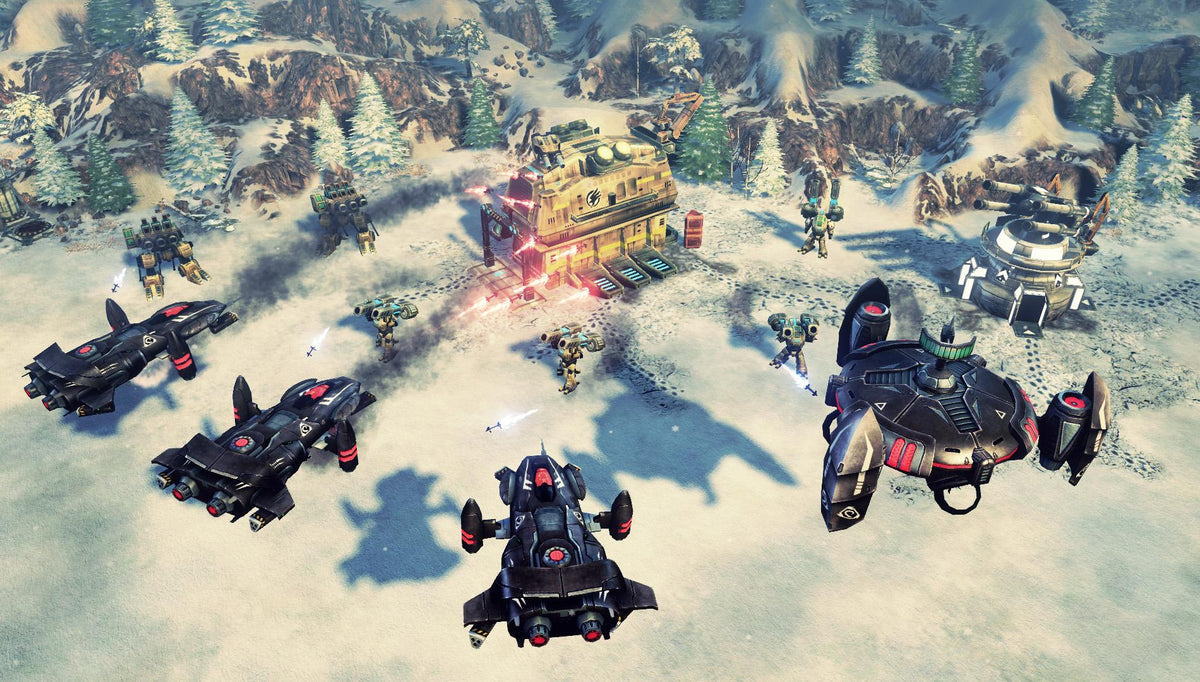


Command & Conquer 4: Tiberian Twilight brings the Tiberium saga to a close. It is the year 2062. The alien crystal behind decades of war between the Global Defense Initiative and the Brotherhood of Nod is close to making Earth uninhabitable. Then Kane, Nod's prophetic leader, comes out of seclusion with a message for GDI: he has developed a system that could control Tiberium and harness its power. What follows is the final chapter of a story that began with the original Command & Conquer in 1995.
The Last Chapter of the Tiberium Saga
Tiberian Twilight is built to answer questions the series spent fifteen years raising. Kane is at the center of it. Joe Kucan plays him once again in the live-action cutscenes that have defined Command & Conquer from the start, and this time his long game plays out in full. You can follow the story from either side, with separate GDI and Nod campaigns that show how each faction faces the end of the Tiberium era and what Kane intends to do with it.
The Crawler and Three Classes of Command
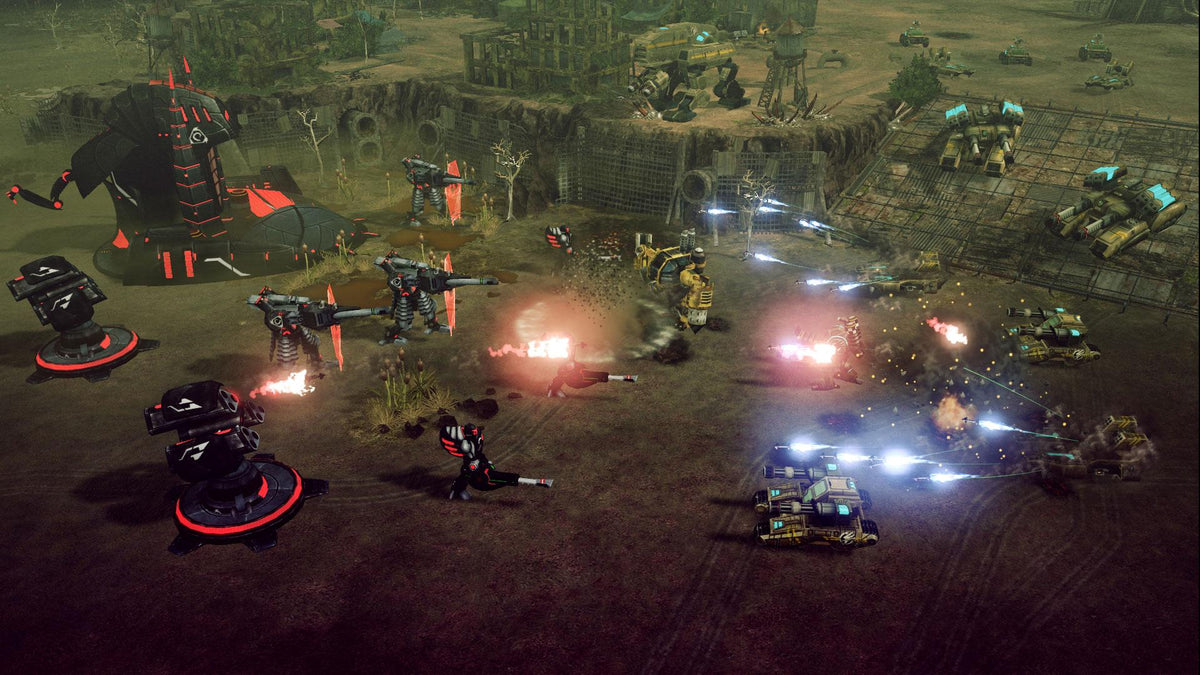
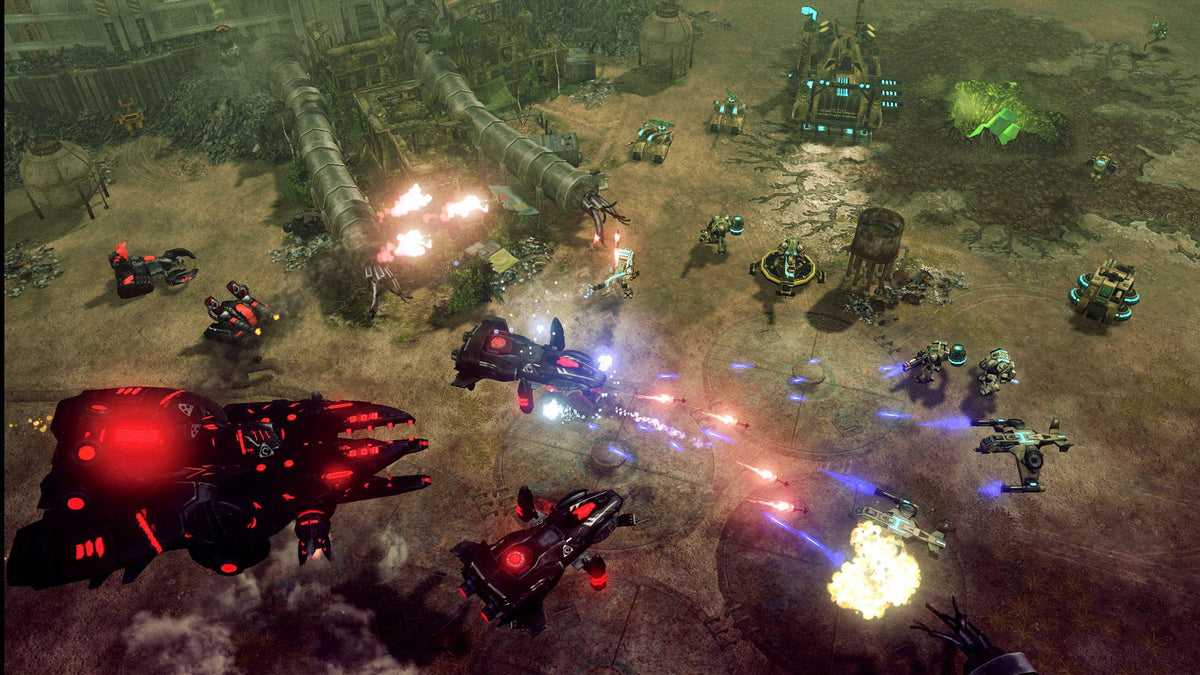
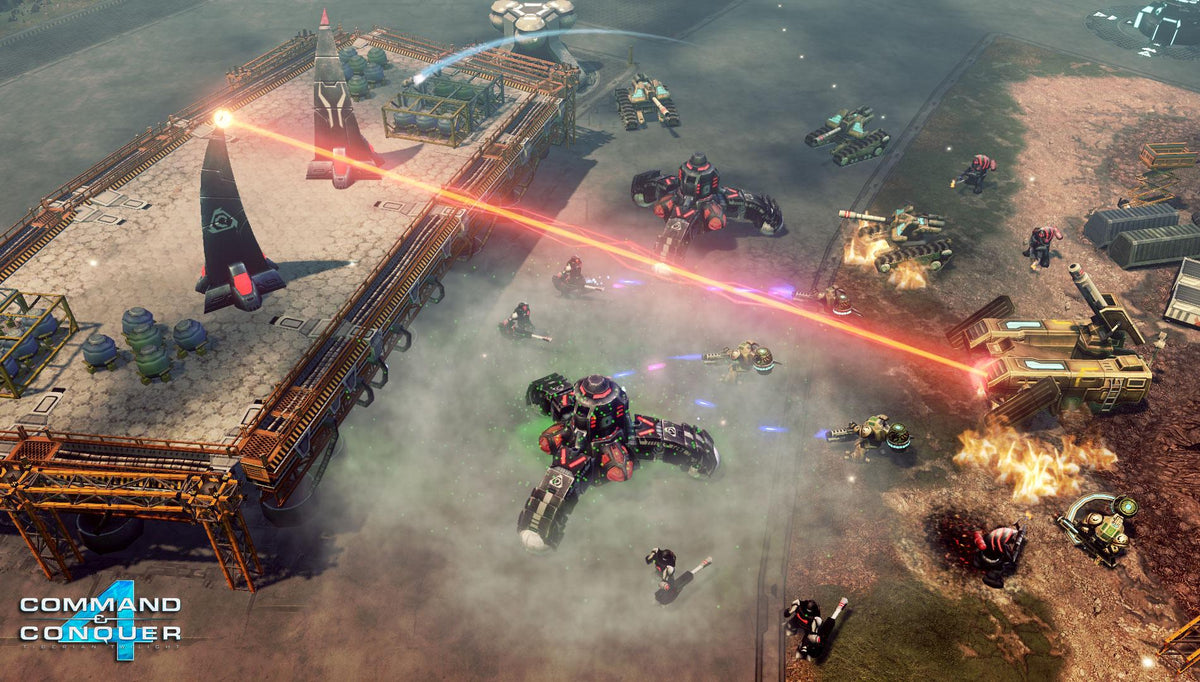
For this final entry, EA Los Angeles set aside traditional base building and resource harvesting. In their place is the Crawler, an all-in-one mobile base that produces your forces and can pack up and redeploy across the battlefield. Your headquarters moves with the fight instead of anchoring you to one corner of the map. Every Crawler you deploy for GDI or Nod belongs to one of three classes:
- Offense
- A frontline class built around heavy ground forces and direct assault. It is the natural choice when you want to push into enemy territory, break through defensive lines and keep up the pressure until the objective is yours.
- Defense
- The only class that can build structures, from turrets to fortifications, within the limits of the power available to it. Defense players dig in, hold ground and turn a contested position into something the enemy has to pay heavily to take back.
- Support
- A class built on specialized units and powers that strengthen the rest of your force, whether you are covering a teammate or backing up your own assault. Support rewards players who read the battlefield carefully and act at exactly the right moment.
If your Crawler is destroyed, or you choose to self-destruct it, you can return as a different class. That lets you change your whole approach mid-battle as the fight develops.
Experience That Builds Your Arsenal
Tiberian Twilight rewards aggression. The more enemies you destroy, the more experience points you earn, and that experience upgrades your faction and unlocks powerful new units and weapons. Progress belongs to your faction rather than to a single mission, so every battle adds to the army you bring into the next one, and each class's roster grows as you rank up.
Campaigns, Co-op and Multiplayer
- Single-player campaigns: separate GDI and Nod campaigns carry Kane's story to its conclusion, with missions that put the Crawler and the class system to work in story-driven battles across a Tiberium-ravaged Earth.
- Co-op campaigns: both the GDI and Nod campaigns can also be played with a second player. Two commanders split the battlefield, combine their classes to cover each other's weaknesses and see Kane's story through side by side.
- Online multiplayer: up to 10 players face off in 5-versus-5 objective matches, fighting for Tiberium Control Network nodes. Coordinating Offense, Defense and Support across the team decides who holds the map.
- Skirmish: traditional skirmish matches against AI opponents let you try every class for both factions, experiment with different ways of using the Crawler and sharpen your tactics at your own pace before you take them online.
Every mode, including the single-player campaigns, requires an EA account and a persistent internet connection.
If you have followed Kane since the first Tiberium war, or you want to see how one of strategy gaming's defining stories ends, Tiberian Twilight is where it all comes together. Deploy your Crawler, choose your class and take your place in the final battle for Earth.
